

The Death of the Department Store
Picture this: it's 2003, and you're ready to drive down Rodeo with your best friends in your Jeep. School is the least of your worries; how can it be when you NEED the newest Fendi baguette bag?!
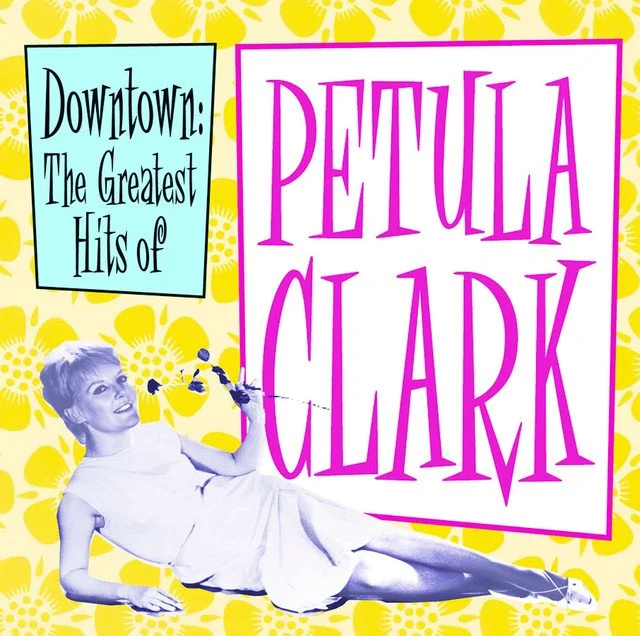
Downtown: The Greatest Hits of Petula Clark
You can always go downtown. When you've got worries, all the noise and the hurry seems to help, I know, downtown…
Petula Clark’s famous jingle rings true on Melrose, Rodeo, and any mall within one’s grasp. She speaks of finding an escape and connection downtown, where the streets are filled with boutiques. Each shop lustfully entices people to enter and indulge. Macy’s, Nordstrom’s, Neiman Marcus, the list is endless.
But now… The department stores are dead. Why would anyone step into a vast store when they could so easily scroll on their phone to find their newest prized possession? Instead of scouring a store for a Fendi baguette, they can find twenty of them, of different shapes and sizes, on eBay. As of 2025, eBay has had 872 million e-commerce sales, rivaling Neiman Marcus’ 40% decrease in revenue.
The department store that once functioned as a shared physical space of community and discovery has disappeared with the rise of online shopping. Driven by algorithmic individualism, instant gratification, and an accelerated trend cycle, e-commerce has eroded this collective experience.
But how did this come to be?
In 1796, the world’s first department store opened in London. Harding, Howell & Co. was home to anything that could be mass-produced. Women of any class were free to browse rows of anything that could be mass-produced, from textiles to porcelain. The department store presented these women with a leisurely experience that was socially accepted outside of their homes. Before this, women were subjected to a homely life, but a trip to the department store freed them of this.
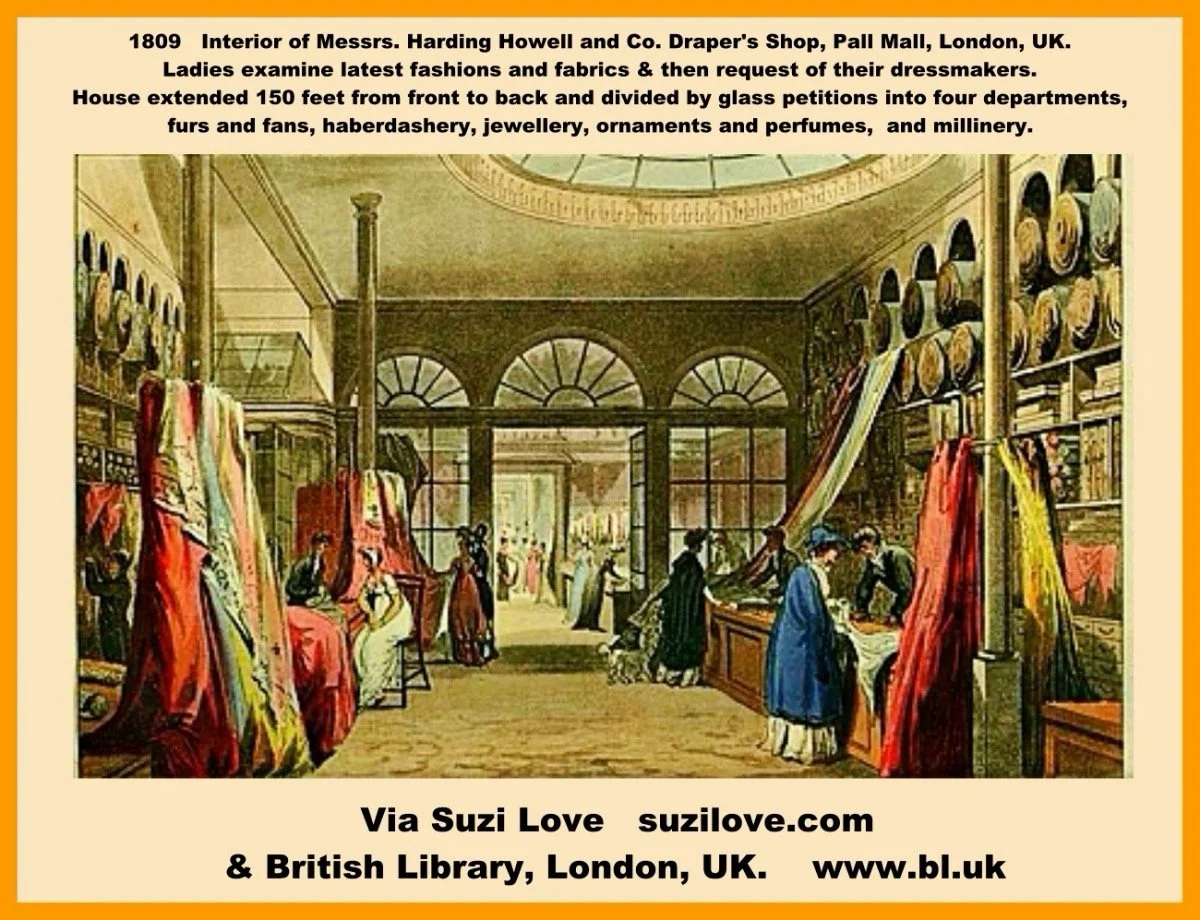
London. Harding, Howell & Co.
An increase in accessibility to material culture allowed for a middle class to emerge. No longer was there a class that could afford rubies and diamonds, or a class that could not favor bread for the week; instead, a social class that could afford certain small luxuries while still living quaintly arose. The department store allowed greater accessibility for certain things. Stepping foot into one was synonymous with status.
As the demand for department stores grew, many began to be built. Harding, Howl, & Co. was built in London, England. Its significance to the middle class was so great that it led to a chain reaction of stores being built. With the stores’ popularity, architects began to display their skills in the skeletal structures of the stores.
By the 1900s, the middle of Helsinki was home to the Stockmann stores. In the East, the shockingly modern stores of Kaufhaus Schocken were a frequent sight on the streets of Germany. To the west, in France, Le Bon Marché and La Samaritaine were built in the style of the Art Nouveau and Art Deco.
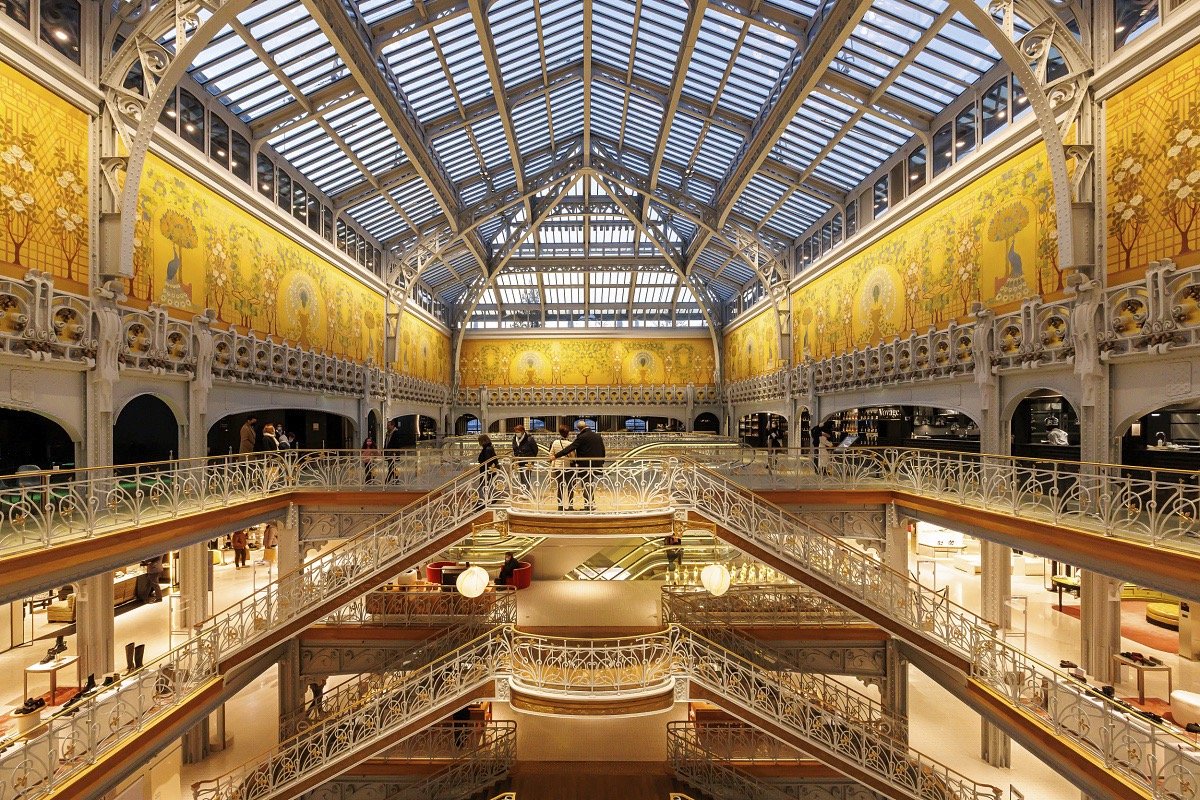
La Samaritaine.
Department stores were no longer simply a status symbol or a place to buy anything you could want; they were leaders in architectural modernity.
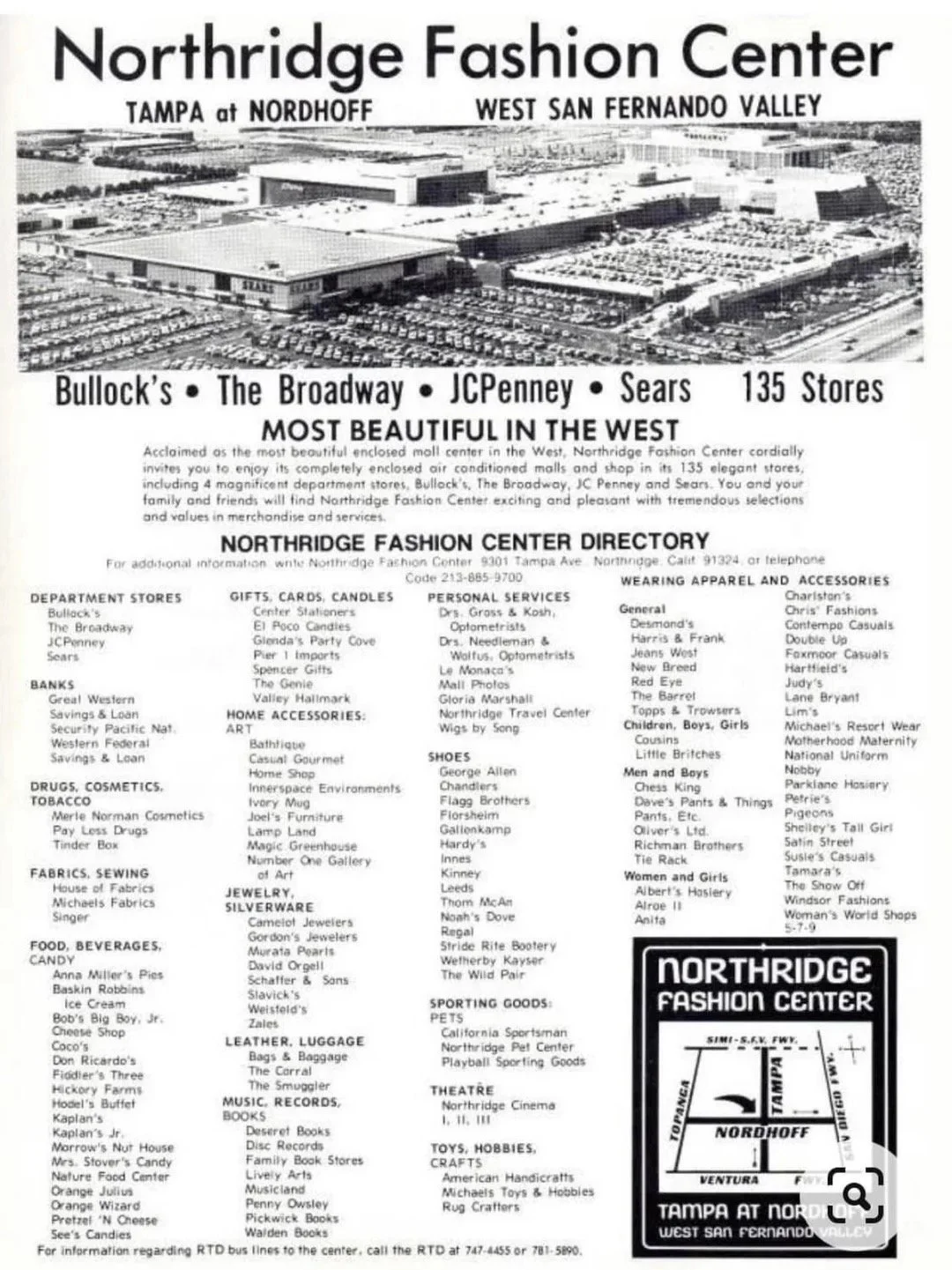
Northridge Fashion Center.
By the early 2000s, department stores equated to current trends in fashion, design, household goods, and more; they had it all. Every hip, cool, chic thing one could want or need lay inside a Macy’s. These stores were not just about buying things; they were about experiencing modern life together.
With the rise of the Y2K aesthetics of “bubblegum” and “cyber”, fashion giants and logo-mania rose. No longer were luxury brands such as Gucci or Fendi the stars of the show. By this point, department stores had evolved. They were no longer elite European institutions; they were democratized hubs of trend culture. Saks carried both high fashion and emerging contemporary brands. Nordstrom stocked Juicy Couture. Macy’s displayed everything from designer handbags to prom dresses. Department stores were up to date.
Sherman Oaks Galleria, Laurel Plaza, and Northridge Fashion Center bustled with people from every kind of background. Adored by all, these malls carried a great attraction: a department store. Los Angeles malls are dense ecosystems of department stores and brand boutiques. The love for the mall corresponds to a love for abundance, choice, and physical discovery. Department stores curated many identities under one roof, reinforcing shared taste and collective trends.
As technology had not yet restructured daily life, brick-and-mortar stores remained dominant. Shopping still required physical movement. Trends were visible on mannequins, not feeds. Discovery happened by wandering, not searching. The department store still functioned as a communal mirror of taste.
Then came the 2010s social media explosion. And it all changed.
Deserted malls and shuttered stores became the reality, and the collapse of the department store began.
Online shopping became convenient, frictionless, and dominant. Now, shopping no longer requires movement, time, or social interaction. Instead, it happens through endless scrolling on platforms like Amazon, eBay, or AliExpress. Such a transformation is indicative of the rise of algorithmic individualism, a system in which each consumer inhabits a personalized shopping universe.
Instead of wandering aisles, we scroll feeds. Instead of shared displays, we see curated recommendations. Instead of collective trends, we follow microtrends (it seems that everyone and their mother wants a peacoat).
Department stores are unable to keep up with the speed of microtrends. Back in the day, department stores would only receive new inventory once or twice a year. Now, fast fashion stores such as Shien, Urban Outfitters, and Pacsun welcome new arrivals every day.
Shopping has become a solitary activity. Each rapid scroll quiets the dopamine addict within every shopaholic.
Department stores encouraged browsing without a specific goal. One could wander the halls of a store for hours on end, no care in mind.
Online shopping encourages searching, comparison, and endless optimization. Purchasing decisions become faster and less deliberate, turning shopping into a private habit rather than a shared event.
Social media has accelerated trend formation. Rather than seasonal fashion cycles, trends disappear as quickly as they arrive. Microtrends such as polka dots, pastel tights, utility wear, rise and fall faster than traditional retail can respond. Department stores, which are built around seasonal inventory, cannot keep pace with these rapid shifts. They cannot keep dopamine-fueled shopaholics constantly engaged as online platforms can.
Online shopping has created a constant awareness that a better option exists elsewhere. Standing in a store, shoppers hesitate, knowing they can compare endlessly online. This mindset erodes the impulse to buy in person and further weakens physical retail.
The fun experience of wandering meaninglessly through the department store with your best friend is gone. Instead, it is replaced by doomscrolling on Amazon. The relaxing, slow-paced activity of meandering through the department store has disappeared.
In our modern era, a fast-paced life is prominently visible in all aspects of life, even in leisurely activities. When we want to shop, we quickly scroll through infinite options.
Shopping has become solitary, optimized, and invisible. Yes, we gained convenience, but at what cost?