

What Is an It Girl, Really?
The It girl appears with the authority of inevitability, as if she has simply wandered into view – heels in hand, draped in fur and covered in Tiffany necklaces. She is everywhere and nowhere. The paparazzi capture her leaving a party, slipping into a taxi barefoot, and laughing mid-conversation. She is less a person and more of a feeling. The It girl is instantly recognizable and yet, strangely undefinable. She does not announce her arrival. Instead, culture arranges itself around her presence.
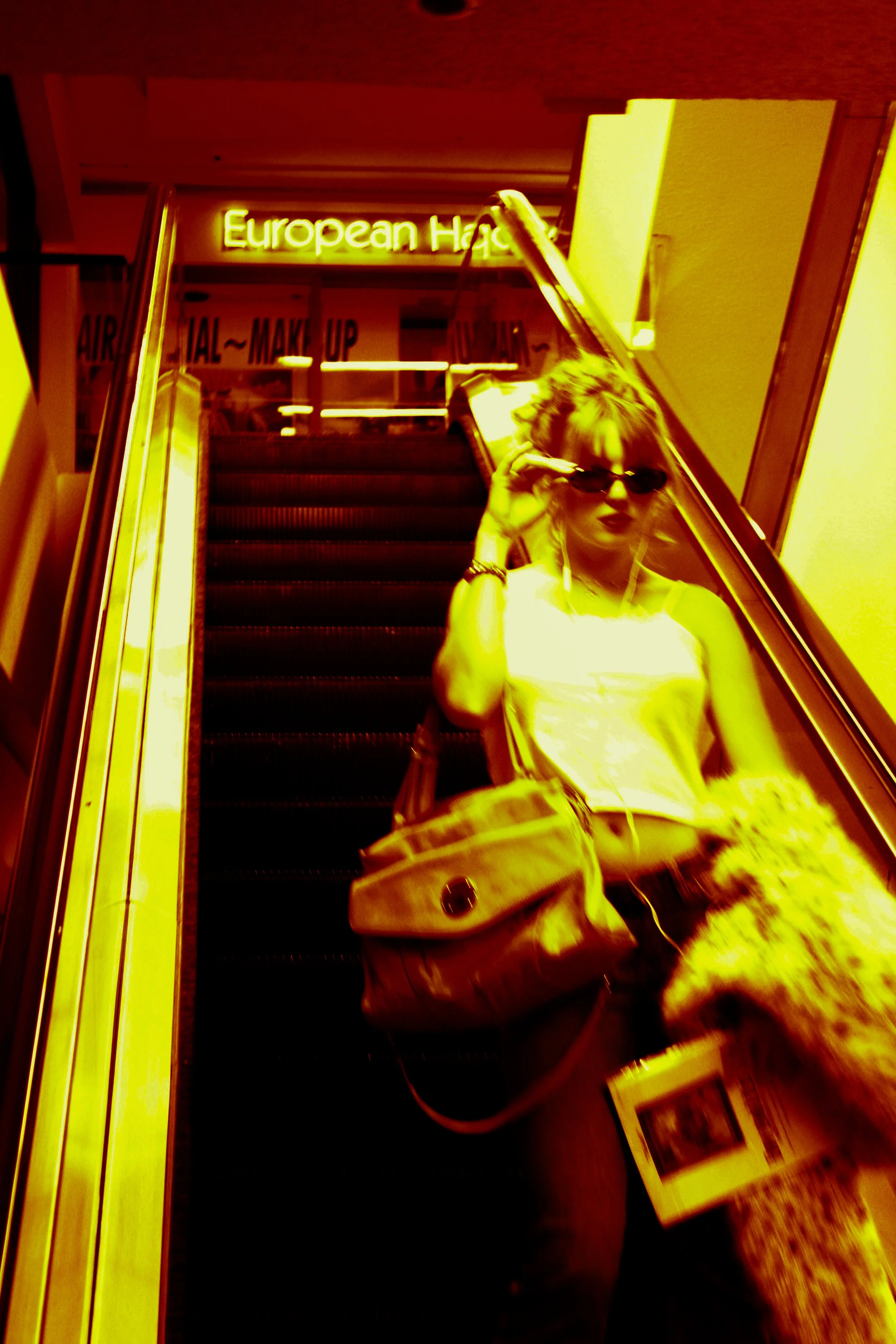
Original photoshoot by FAST at UCLA. Creative Direction by Presley Liu and Joanna Bui. Photography by Joanna Bui. Modeling by Megan Murray. Wardrobe styling by Jolene Esmailzadeh and Jae Ou. Makeup by Téa Wagstaff. Hair by Nicole Holmes. Production Assistance from Ava Bozic and Jae Ou.
Across the decades, different faces have carried the title. Grace Jones with her sculptural defiance. Kate Moss exposed the intimacies of the undone. Paris Hilton shaped fame into performance. Alexa Chung blended sleaze and romance.
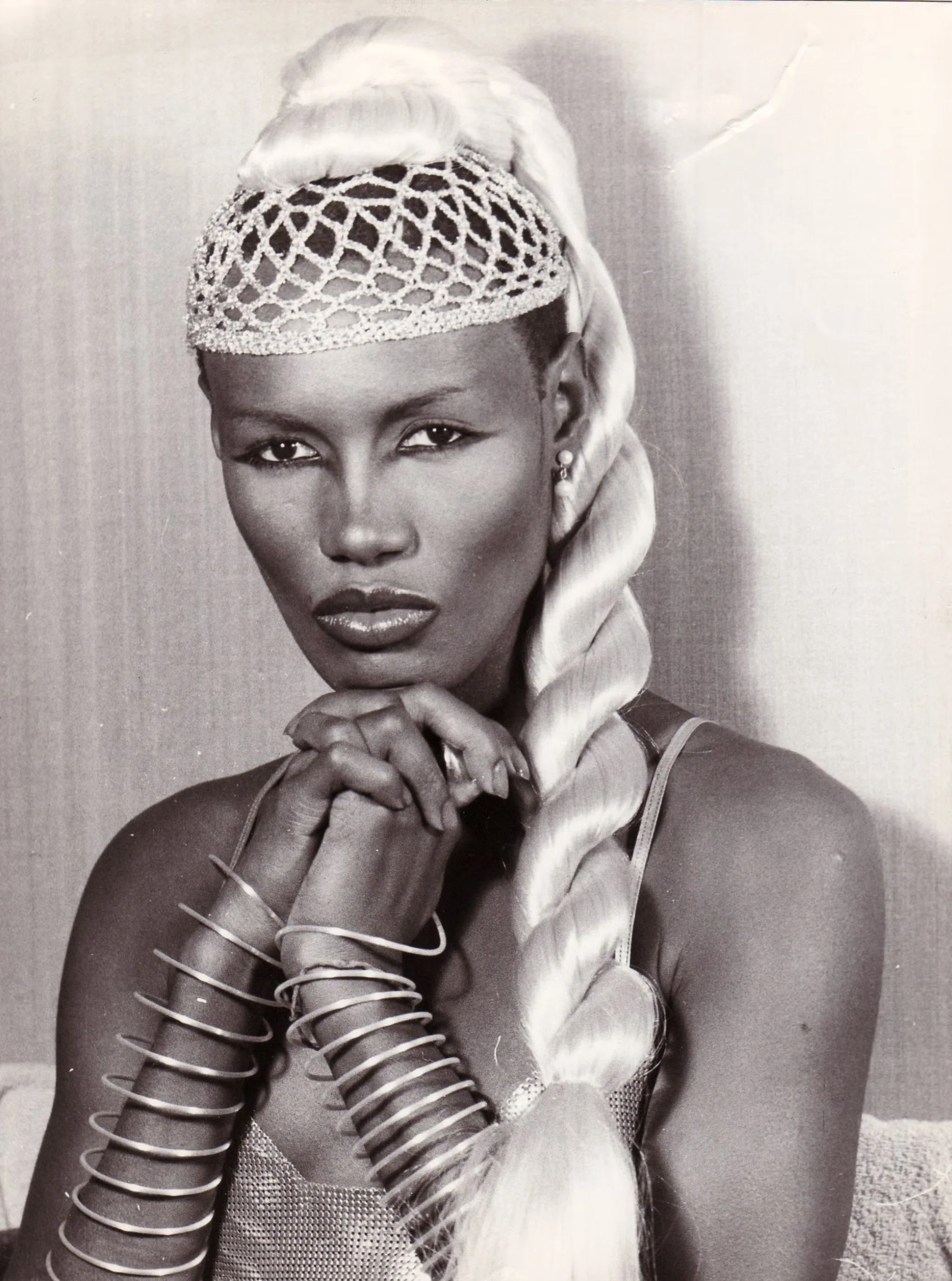
Grace Jones posed in 1977. Source: Elle
Each seems radically different. Yet, they share an invisible thread – the ability to crystallize the moment.
She is not characterized by beauty, wealth, or achievement. She is defined by atmosphere. In her charm, aesthetic, and imperfections, society starts to recognize itself. So, what explains this effervescence for effortlessness? And how does “effortless” even materialize in a world where nothing feels truly accidental?
The story of the It girl unfolds not as a biography but as the undercurrent of an era, told through clothes and photographs: a basket slung over an arm, a casual tilt of a hat, or perhaps a well-timed cigarette.
Who is the “It Girl”?
Vogue said it best: “An It Girl is a nebulous concept.” She is a break from cultural homogeny, but soon, an audience attempts to replicate her likeness. She may be a socialite from old-money origins. She may also be a downtown party rat.
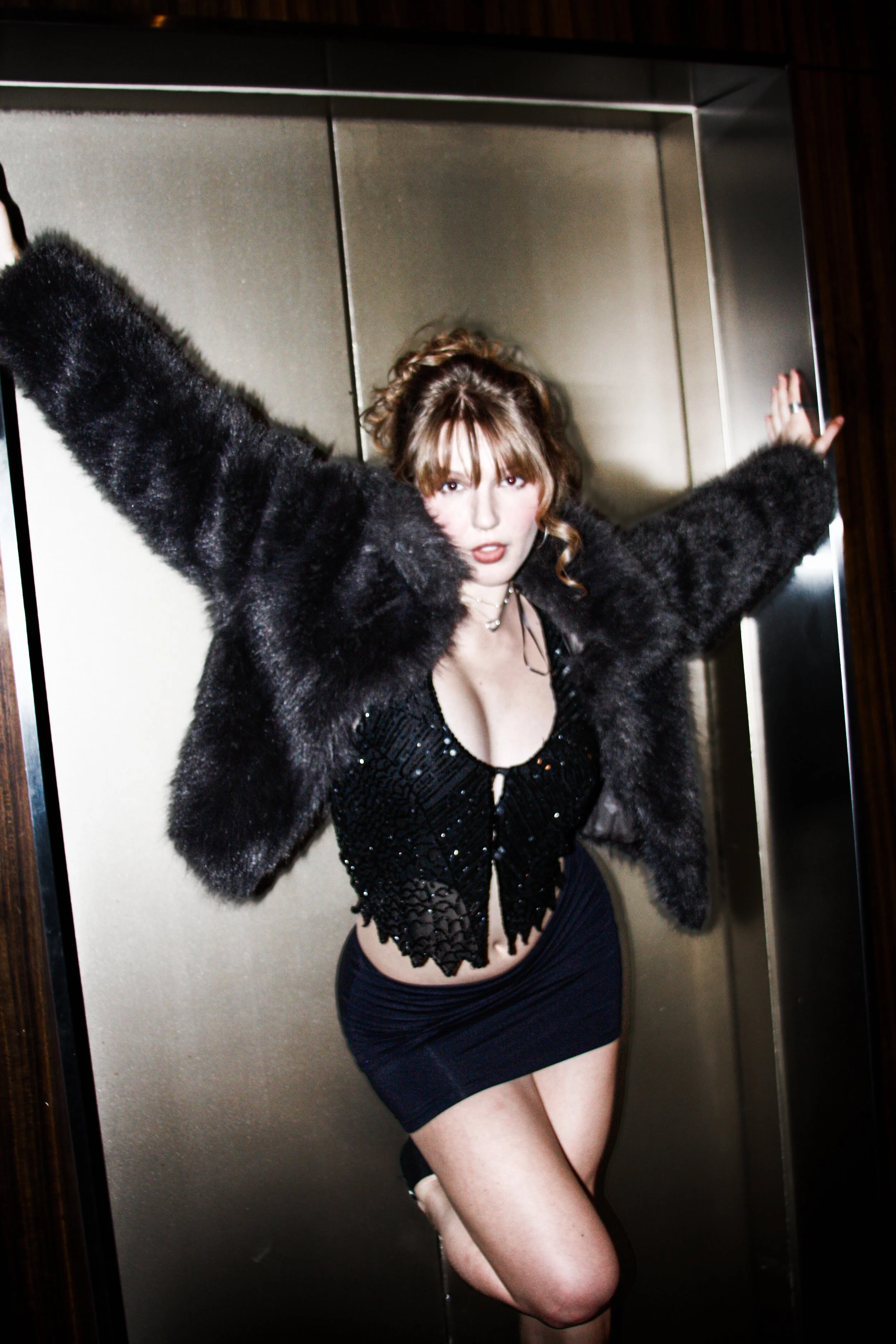
Original photoshoot by FAST at UCLA. Creative Direction by Presley Liu and Joanna Bui. Photography by Joanna Bui. Modeling by Megan Murray. Wardrobe styling by Jolene Esmailzadeh and Jae Ou. Makeup by Téa Wagstaff. Hair by Nicole Holmes. Production Assistance from Ava Bozic and Jae Ou.
The term itself dates back to the 1920s and the silent film star Clara Bow. In 1927, Bow starred in “It,” for which she garnered the nickname of “It girl” for her magnetic, sex appeal, and intangible charm. Ambiguity was essential. The It girl was not another celebrity. Nor a muse, influencer, or socialite.
Her status takes root in her effect. She changes how people want to look and feel — often, without even trying.
Yet, the archetype has historically been narrow in scope. Though the It girl is framed as effortless and universal, it has been embodied almost exclusively by young, thin, white women – legible to the media landscape that documented her. The cultural mirror she provides has long reflected only a slice of society, a reminder that the ideals of desirability can be as much shaped by access as by style.
Even within this limited frame, the figure of the It girl evolves. Each iteration tells us less about the individual women than the collective moods, desires, and anxieties of a moment.
A Cultural Mirror
Anti-glamour glamour: Jane Birkin
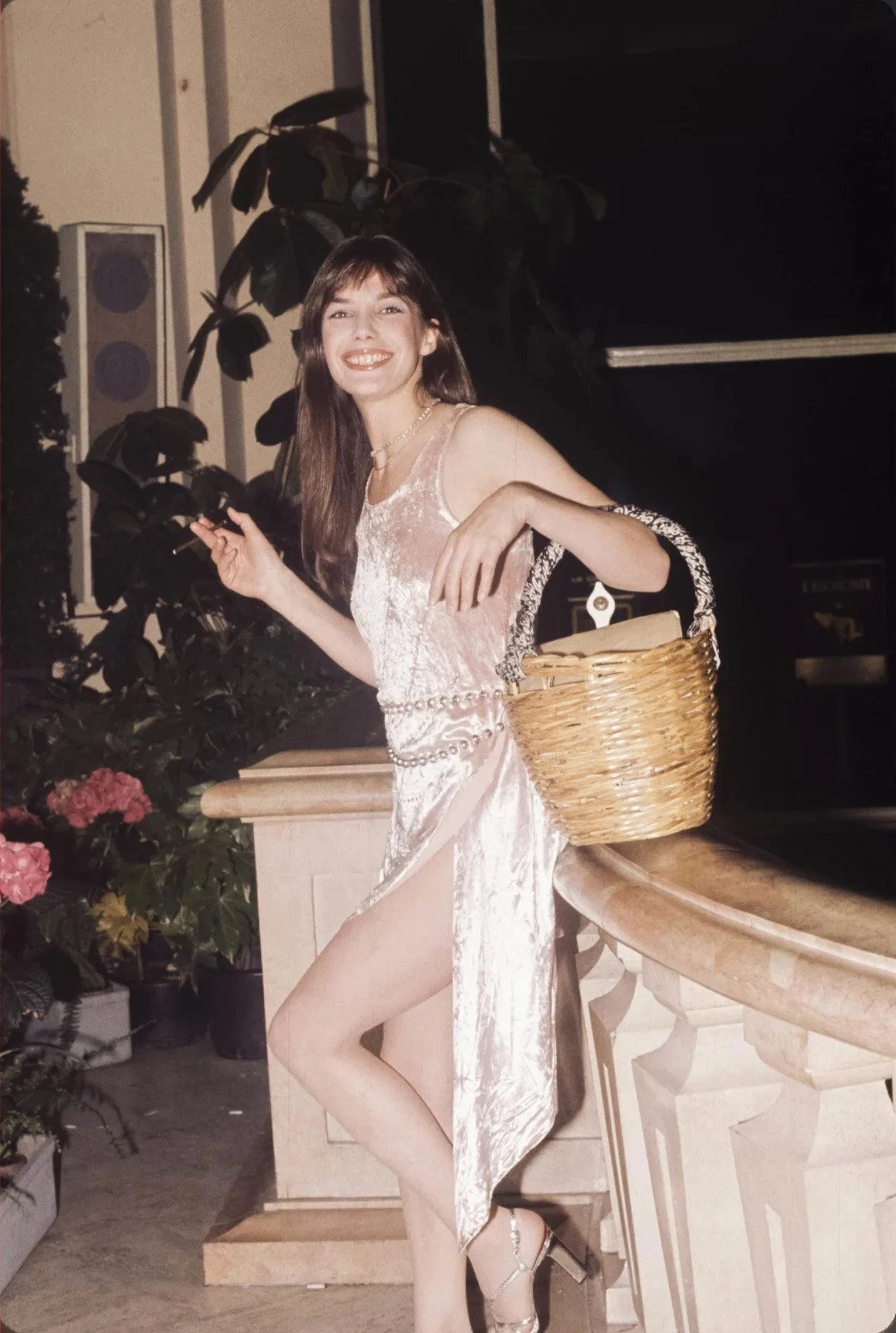
Jane Birkin attended a red carpet event at Cannes in 1974 in a blush-toned dress with her basket bag. Source: CNN
In the late 1960s and 70s, Birkin’s aesthetic offered a contrast to rigid femininity. Her appeal lay in anti-glamour glamour: undone hair and baskets instead of handbags.
Second-wave feminism and youth-led counterculture movements challenged the polished ideal of the 1950s. To look “put together” began to carry different connotations – suggesting compliance rather than aspiration. Birkin’s unstudied way of dressing reflected this growing desire to collapse the distance between private and public selves. Effortless, in this moment, read a way to opt for the demand of performing femininity.
Cool Distance: Kate Moss
The 1990s saw the rise of grunge, indie film, and a broader rejection of overt polish. Moss’s slight frame – at five feet seven inches – and air of mystique contrasted with the supermodels who preceded her. Her appeal seemed to reside in not quite performing at all. The model gained industry attention after a series of stark, unstylized photographs of her were published in the youth magazine The Face.
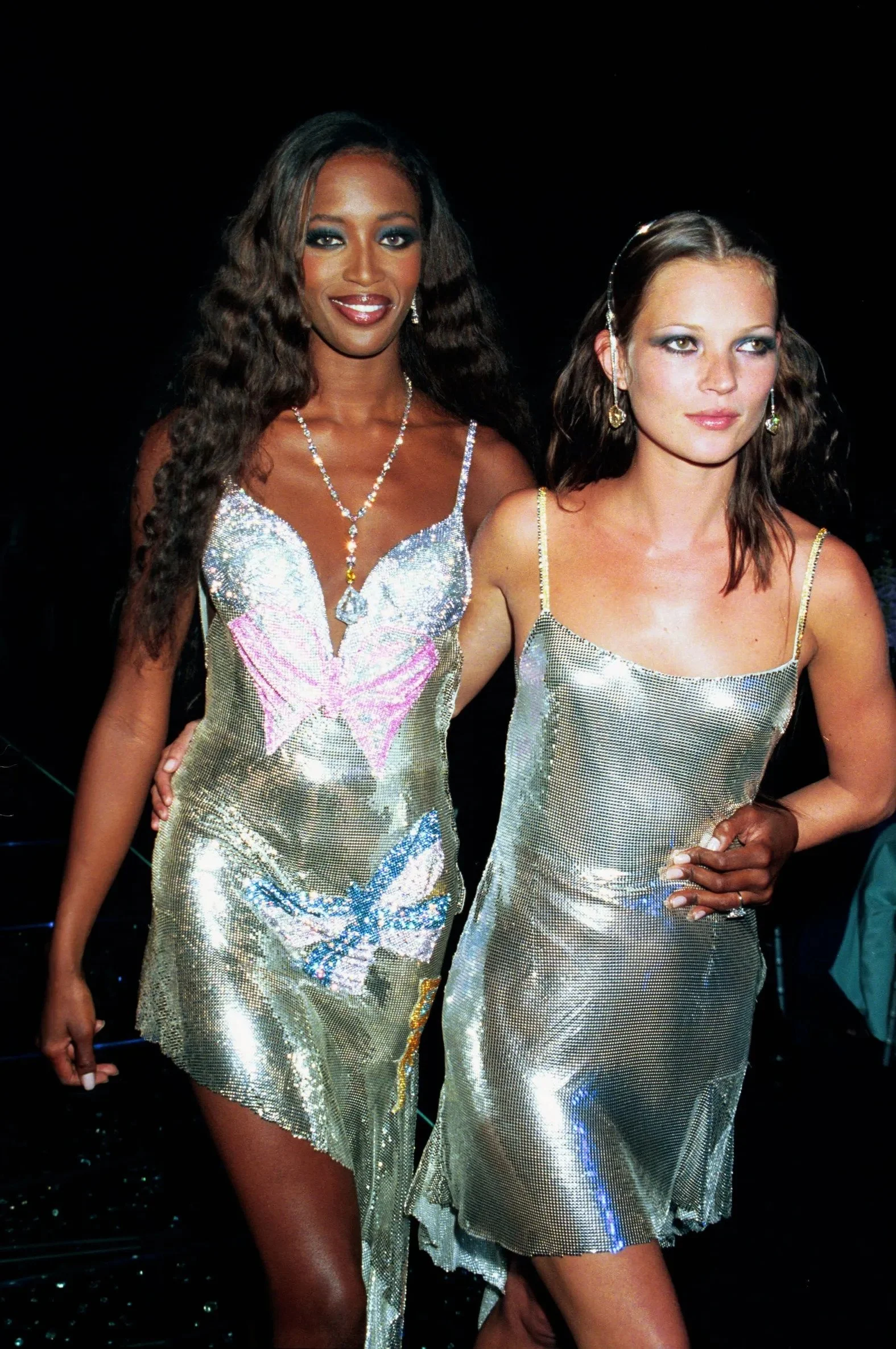
Kate Moss and Naomi Campbell sparkled in sequins on a night out in London in 1999. Source: British Vogue
She appeared indifferent to the very attention she commanded amidst an increasingly invasive media culture. As paparazzi images blurred the boundaries between candid and constructed, the result was a new kind of It girl. Her power lay in distance – even as distance was steadily eroded by the very act of being seen.
Visibility as Power: Paris Hilton
By the early 2000s, the terms had shifted again. Visibility became currency as the influence of reality television, gossip blogs, and digital photography surged. Figures like Paris Hilton strategically grasped this shift. Rather than resisting attention, the hotel heiress, socialite, and “The Simple Life” star amplified it. Her life morphed into a continuous spectacle.
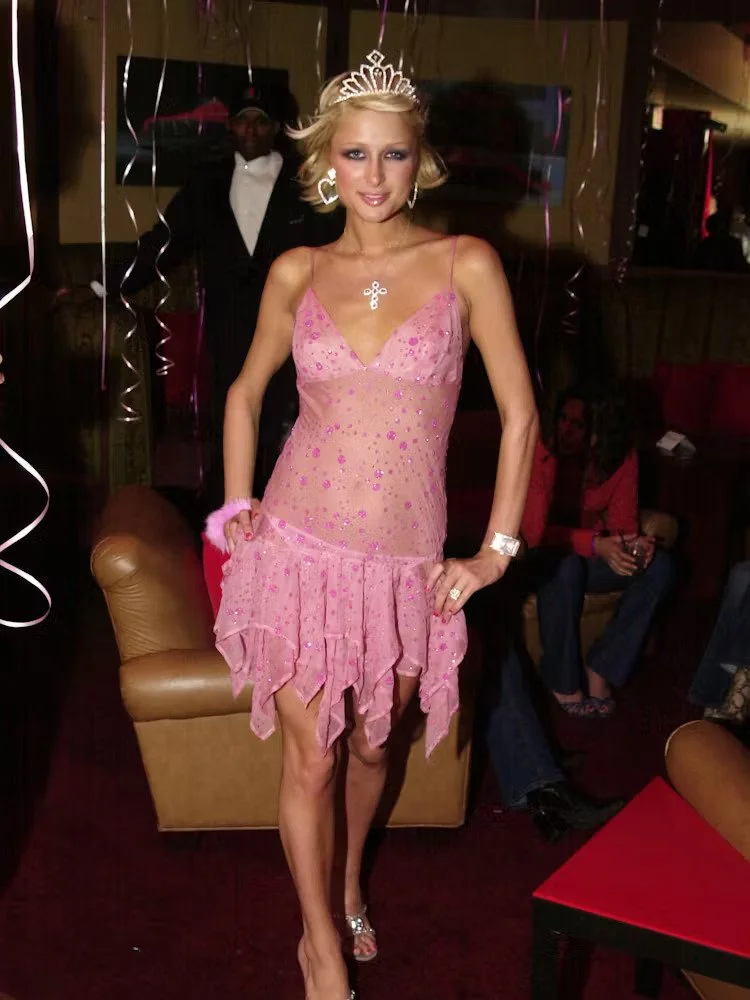
Paris Hilton in a sheer pink dress and tiara in celebration of her 21st birthday in Los Angeles. Source: W Magazine.
Hyperfeminity – characterized by pink, sparkles, and deliberate excessiveness – became an aesthetic and an approach for garnering maximum attention. The logic of the It girl converted. Mystery was no longer a requirement. Instead, saturation equated to power. To be everywhere was to matter. The It girl no longer suggests an escape from scrutiny, but a mastery of it.
Why the It Girl Endures
The endurance of the It girl has always been legible through visual symbols from smudged liner to oversized coats. These details signal imperfection – but not carelessness. Imperfection becomes authority. It suggests a life too interesting, too complex, too fascinating to curate completely.
Yet, effortlessness contains a paradox. Looking effortless often requires access. From time, confidence, cultural literacy, and proximity to creative worlds, this undone look is rarely accidental.
Her endurance reveals something deeper about fashion cycles. She embodies a fantasy of freedom within constrained systems – gender norms, economic realities, and social expectations. During moments of cultural transition, communities gravitate toward those who appear unburdened. The It girl grants symbolic permission to be spontaneous or even contradictory. She offers emotional relief by suggesting that life might be lived intuitively.
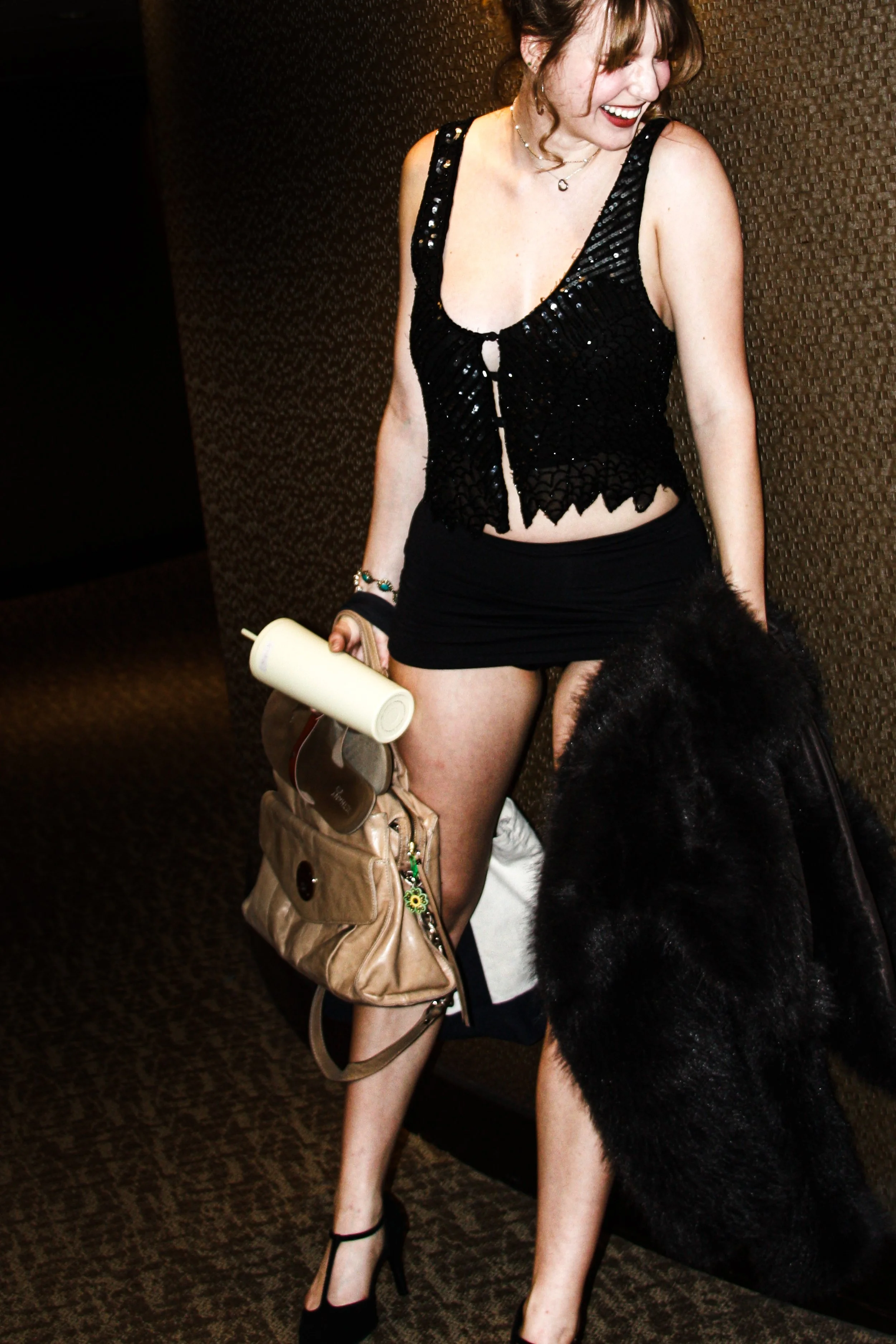
Original photoshoot by FAST at UCLA. Creative Direction by Presley Liu and Joanna Bui. Photography by Joanna Bui. Modeling by Megan Murray. Wardrobe styling by Jolene Esmailzadeh and Jae Ou. Makeup by Téa Wagstaff. Hair by Nicole Holmes. Production Assistance from Ava Bozic and Jae Ou.
The Contemporary Moment
Today’s cultural landscape is marked by surveillance and algorithmic performance. Everyone is visible. Everyone is branding themselves. Identity is optimized – and, inevitably, monetized.
Against this backdrop, fatigue emerges. Overt hustle, hyper-viability, and aggressive branding feel exhausting. The recent rebellion against the “quiet-luxury” aesthetic signals a desire to retreat from performing altogether.
At the same time, the conditions that once produced a seemingly singular It girl have shifted. Historically, the archetype represented an exclusionary ideal of young, thin, white, socially legible women. But there has been a visible expansion in who is allowed to occupy cultural space. Diversity operates as a value, slowly reshaping fashion imagery and broadening the range of bodies, identities, and sensibilities that can be seen and admired.
Yet, this widening has unfolded into an equally significant change: the fragmentation of attention itself. The internet has dispersed cultural focus into countless micro-audiences, each with its own references. In this environment, it is difficult for a single figure to consolidate meaning in the way earlier It girls once did. Influence no longer coheres around one image but circulates across many, shifting quickly and often contradictorily.
The It girl doesn’t disappear. Instead, she multiples. Not a singular cultural figure. Instead, a series of localized ones.
If past It Girls embodied mystery or detachment, today’s version embodies fluency – an ability to traverse through digital culture without appearing consumed by it. Each new It girl reflects not a unified cultural mood, but a landscape in which shared attention is incredibly rare.
The appeal of effortlessness rests in appearing unoptimized – existing online without being shaped by it. An It girl knows the camera is there. Yet, she refuses to center it. She participates. But she never overperforms.
The Mirror We Keep Returning To
The It girl has never been a fixed archetype. She evolves alongside our collective longing. Each era crafts the version it needs — rebellious, restainted, excessive, ironic. She functions as a mirror for the contemporary moment.
So what does it mean to be “It” in an era that sees everything? Perhaps the modern It girl’s true power lies in suggesting that – despite constant observation – some part of the self can remain unclaimed, unoptimized, and unknowable.
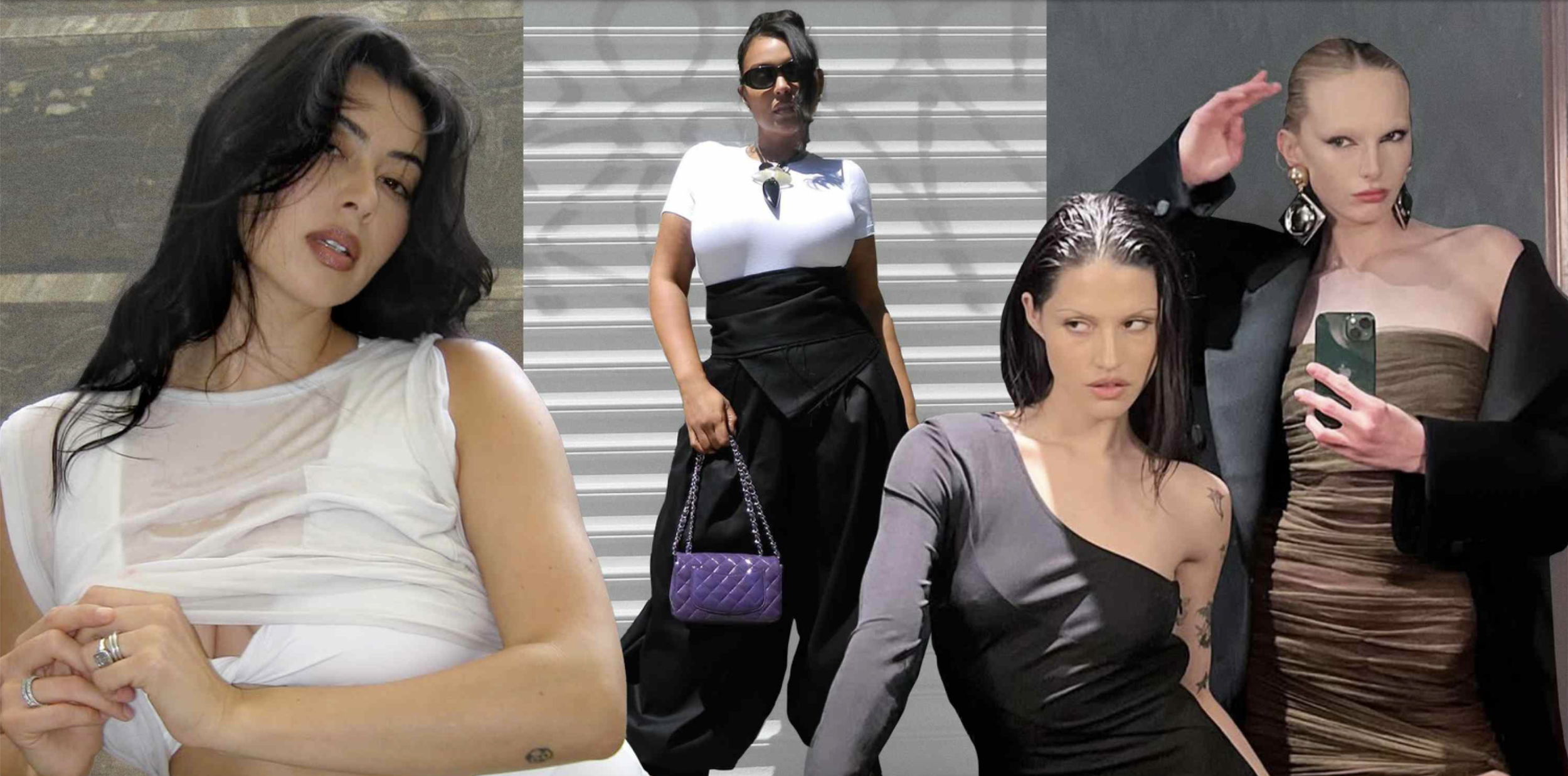
Some of today’s rising “It girls” include Paloma Elsesser, Lauren Chan, Gabbriette, and Alex Consani. Source: Byrdie