

“Tragically Beautiful”: Disability Representation in Fashion
“Wicked” is a story of overcoming adversity. Elphaba Thropp, a witch born with bright green skin, learns that, despite others who may put her down due to her unique appearance, she is capable of greatness and deserving of love. “Wicked” also spotlights Elphaba’s younger sister, Nessarose, who uses a wheelchair.
In one scene from Wicked (2024), we meet the condescending Miss Coddle, who refuses to let Nessa do anything for herself. She wheels her around without asking for permission and, most noticeably, refers to her as “tragically beautiful” with a glance at her wheelchair. This isn’t the only time Nessa’s beauty is reduced to her disability. When the school dance comes around, Nessa is used as a pity case for popular witch Glinda to get her dream date (“see that tragically beautiful girl/the one in the chair/it seems so unfair”). As a result, Nessa is showcased as plain and uninteresting because her beauty is marred by this dastardly adverb: “tragically”.
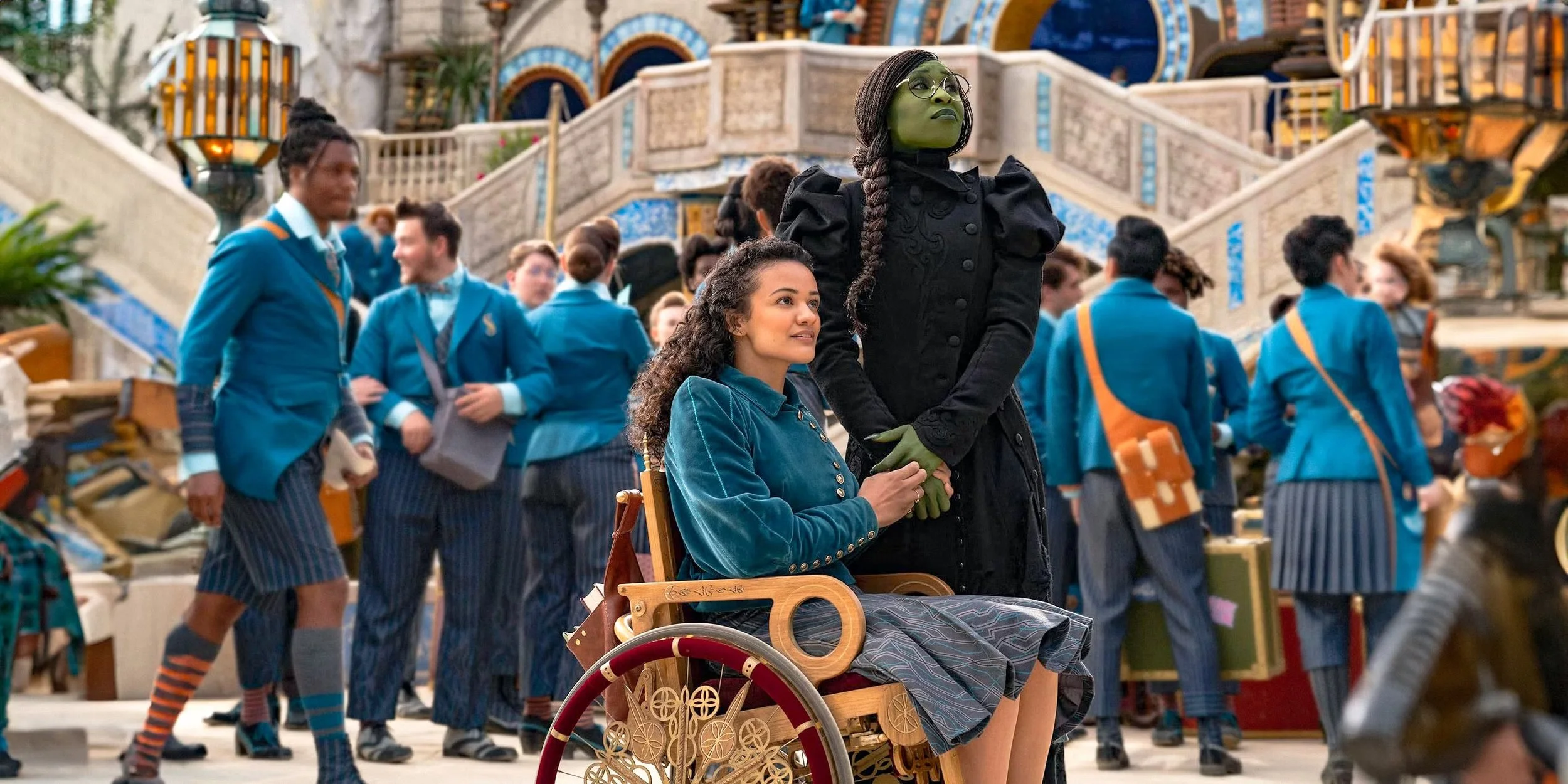
Nessarose (Marissa Bode) is taken care of by her sister Elphaba (Cynthia Erivo).
These scenes were memorable to so many people because disabled people live a daily struggle to be seen as beautiful without the perceived need for pity. Though there might not be many people with rainbow skin colors in real life, there are certainly millions living with both visible and invisible disabilities. The coddling they endure strips away confidence and stems from the historically rooted notion that disabled people have no autonomy in their lives. Their beauty is reduced to how other, able-bodied people see them. When they’re seen through this lens of “just their wheelchair” or "just their cane”, it ignores every triumph that these disability aids have helped people achieve.
Disabled people’s beauty is completely separate from any “tragedy” resulting from their conditions, and disability, while something many disabled people choose not to celebrate or embrace, is never a pity party or a loss of expression. Through adaptive fashion and design, it becomes a form of creative autonomy and a visible demonstration of invisible strength. As medical aids continue to push towards the forefront of the fashion scene, it fights back against years of stereotyping of the crutch as a symbol of weakness instead of what it is–a bold and functional expression of triumph and ability.
Before this battle can truly be won, we must understand why medical aids such aswheelchairs and compression garments are considered symbols of weakness. It all starts where most fashion culture takes root–in Hollywood. For example, the latest del Toro hit, a Frankenstein adaptation, has Jacob Elordi wrapped in prosthetics that reminded me more of a burn victim than a fantastical, reanimated corpse. The movie takes more time promoting images of twisted flesh and monstrosity than it does in establishing who the actual monster is. Similarly, The Hunchback of Notre Dame has become a Disney classic that more people know for the disability than the actual message. Yes, the point is that Quasimodo is a good and just person, but his main conflict is around how his disability ruins his life, making him a recluse who is perceived as both ugly and unlovable. It’s a tale as old as time. The actual messages fall flat under the toe of the disabled characters, who are remembered by the casual audience for their appearance if not for the following message: “Their physical body and the way they express themselves is scary, but I should come to ‘realize’ that I feel pity for them because of their disability”.
The fact that these two examples are most prominent in the cinematic zeitgeist shows just how shameful disability representation has been for several decades. The public’s perception of disability automatically jumps to “deformity” rather than more nuanced takes on both visible and invisible illnesses. It creates an immediate association with these cruel caricatures rather than looking at the person behind the condition. It becomes a self-gratifying experience for the able-bodied to watch disabled people overcome their adversities, usually with the assistance of other able-bodied people. Especially for people who don’t know many disabled people, this association of fear and monstrosity with the disabled community begins to twist the word “disabled” into something much more physical, such as “disfigurement” or “deformity”, both words with an inherent undertone of ugliness.
“Normal” is Beautiful
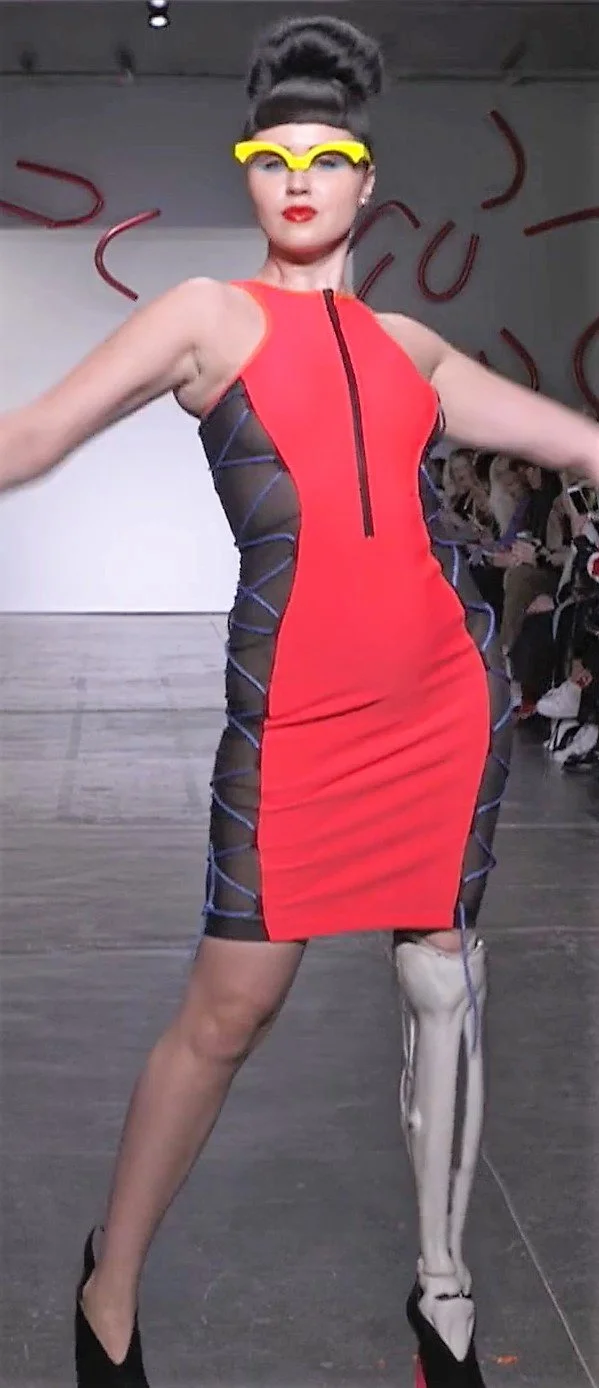
When the media equates physical differences with ugliness–not to mention the many invisible illnesses that impact people’s daily lives– it creates this notion that being “normal” is beautiful. Disabilities are often depicted as disruptions of society. It’s why there are (now-redacted) medical studies on whether or not chronically ill women can still be attractive to men! But this obsession with the physical image of disabled people is but a facade for one of humanity’s biggest turn-ons: autonomy.
When humans purposefully alter our bodies through tattoos or plastic surgery, it’s often viewed as sexy and an exercise in autonomy, autonomy that disabled people are judged not to have. This is partly why disabled people being “exposed” to the real world is such a common trope in cinema (as in Frankenstein or Hunchback)–it’s a kind of inspiration porn to imagine them as brand-new to society, needing to be helped. When Scott Hamilton infamously said, “the only disability in life is a bad attitude”, he created this notion that when disabled people overcome obstacles (usually obstacles built on societal inequalities, of course), it shows that there’s no excuse for the able-bodied to be lazy. It completely disregards the fact that not all disabled people are equally capable or even consistent in their own bodies.
Fashion is defined by “normal” bodies, and although the industry is slowly accepting more POC and plus-size voices onto the runway, disabled models and designers seem to be considered a separate issue. The reason why disabled voices are so heavily marginalized is that they’re seen through the lens everyone uses, the lens that says that fashion is defined by form over function. If the fashion community took a look at the runway from the other point of view, the one that says that beauty lies in functionalism as well as aesthetics, these medical accessories would be seen as creative self-expressions rather than representations of tragedy.
If more people understood the wonder of mobility aids and how medical fashion can uplift someone’s life, there would definitely be a bigger audience for disabled fashion. But it’s not just enough to have anaudience–disabled people want the sameamount of buzz as everyone else. It’s like the Paralympics and Olympics. Both showcase amazing feats of strength on so many levels, but the difference in public interest is staggering–the 2000 Sydney Olympics were watched by over1,200% more people than the corresponding Paralympics, and it was just in 2024 that all Paralympics sports were broadcast for the first time. There is some necessary separation, of course, when it comes to adapting industries (Olympic or not) to fit individual needs and capabilities. But the reception should never feel as distant as it is. It pushes the notion that disabled people are trying to fit into “normal society” by walking the runway or playing wheelchair basketball, diminishing the genuine interests and talents of these people.
Shower Chairs are Sexy
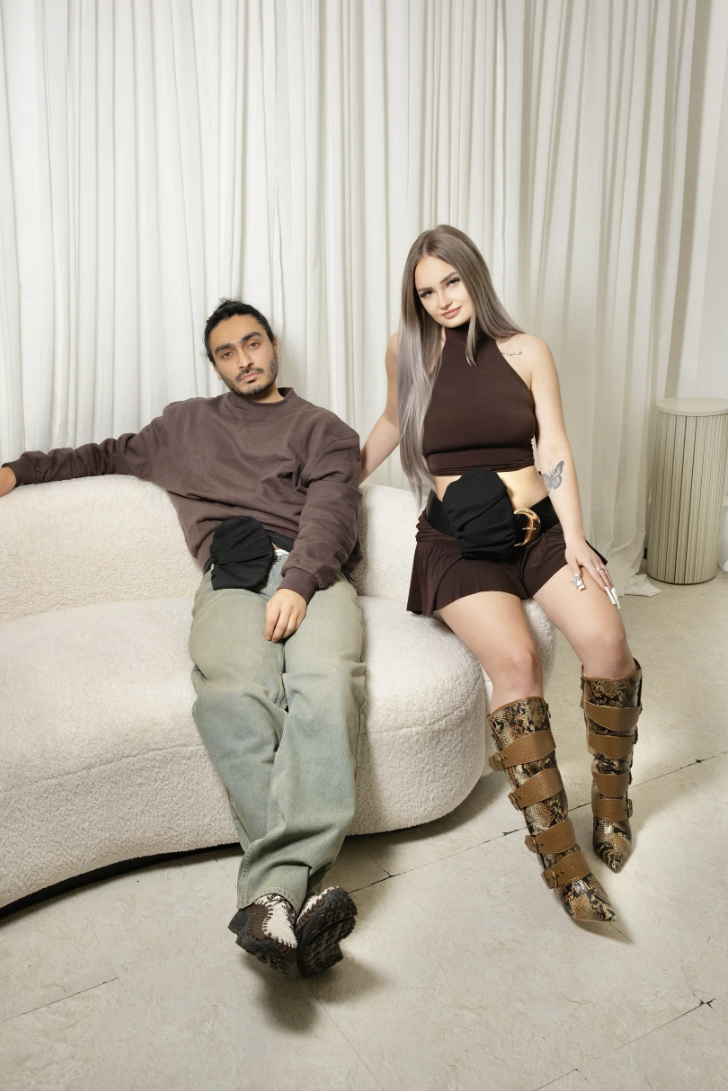
Models wearing custom ostomy bags designed by medical fashion designer Destiny Pinto (@bydestinypinto on Instagram).
Being into fashion in a society that expects you to have no interests outside your disability is hard. What’s even harder is trying to convince yourself of the fact that sitting in a shower chair, scrubbing your hair so you don’t faint, is somehow sexy.
There is so much history and pain behind every piece of medical equipment–a word as tough and impersonal as the memories that come with it. Everyone, from amputees to the medical zebras (a term for rare diagnoses coined by the Ehlers-Danlos syndrome community), has a different experience with their disability. Yet, there’s something so memorable and heartbreaking about a hospital visit, a place where helplessness is common and just a little bit of beauty can go a long way in lifting one’s spirits.
But finding that beauty is just a step away. Whether it’s a shower chair or a shampoo cap to help bedbound individuals feel clean, the medical world is pushing towards more compassionate treatment methods. In 2018, USC students designed “couture” hospital gowns that provided more privacy and creative flair for Keck Hospital patients. Designer Destiny Pinto went viral online for custom wheelchair and ostomy bags that are now statement pieces in many fashionistas’ collections. Dexcom has released new lines of patch stickers for diabetes patients.
For so long, these items have been associated with this idea of helplessness and tragedy. But now, medical aids are beginning to break away from associating with medical trauma to become methods of expression and self-worth instead. After all, taking care of oneself is beautiful, and there is no single definition of autonomy when all these wonderful aids exist at our whim, enabling people to do things the able-bodied often take for granted. One never fully sees whether the wheelchair holding someone up keeps the weight off their paralyzed legs or helps someone with a heart condition avoid fatigue. All that matters is that the chair is there for them.
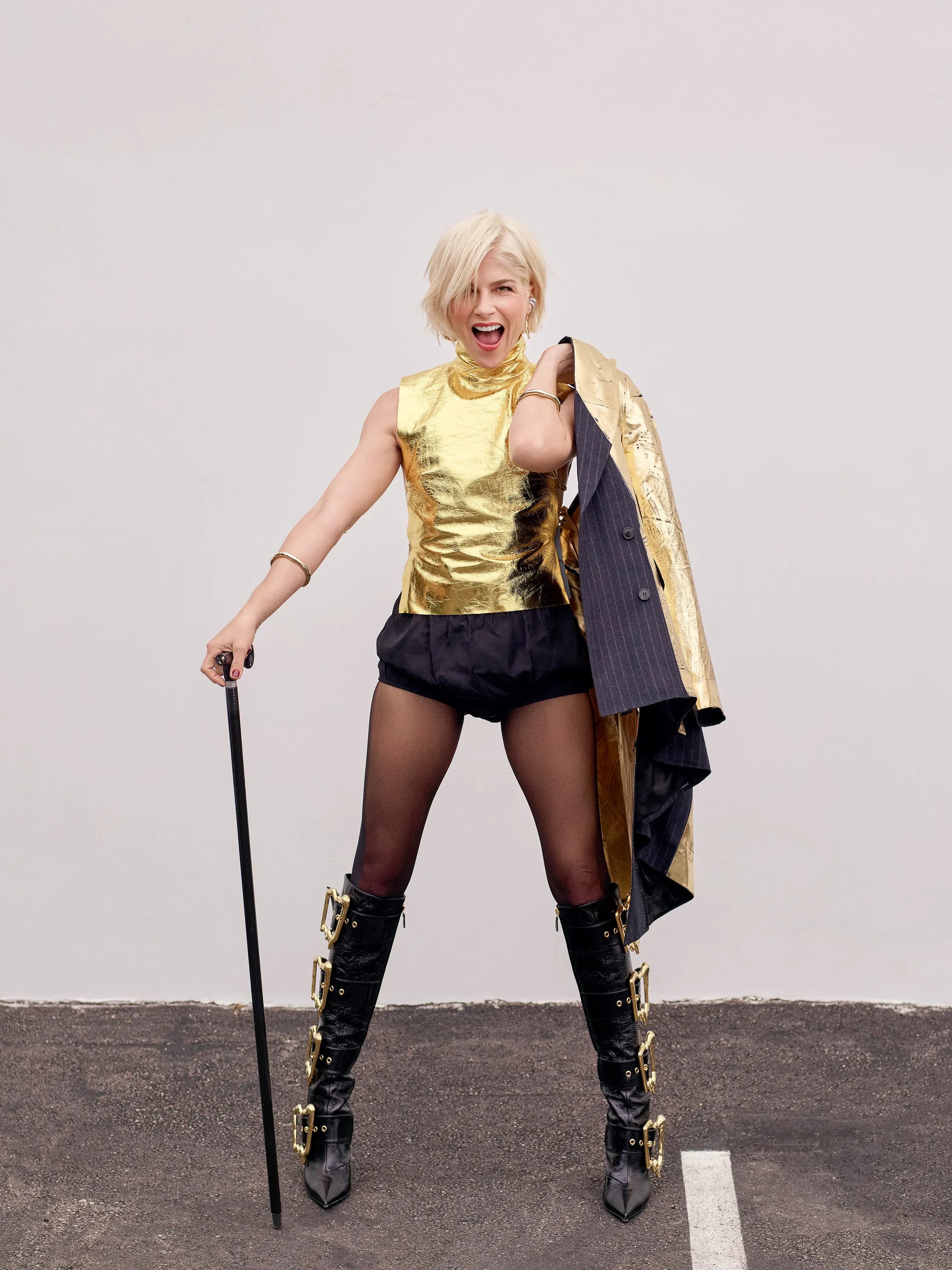
Actress Selma Blair went viral for her decorated canes as she appeared on red carpets while battling multiple sclerosis.
When people show off their mobility aids proudly, it attracts questions (mainly because years of media representation have trained able-bodied people to see other people’s disabilities as their problem). Whether or not someone chooses to answer those questions is another issue, one far too personal to capture in a single opinion. But it’s true that speaking out about disability, especially from celebrity voices, has greatly advanced the public perception of medical aids. Sometimes, all it takes is seeing someone else celebrating what their aids can help them do to feel inspired yourself.
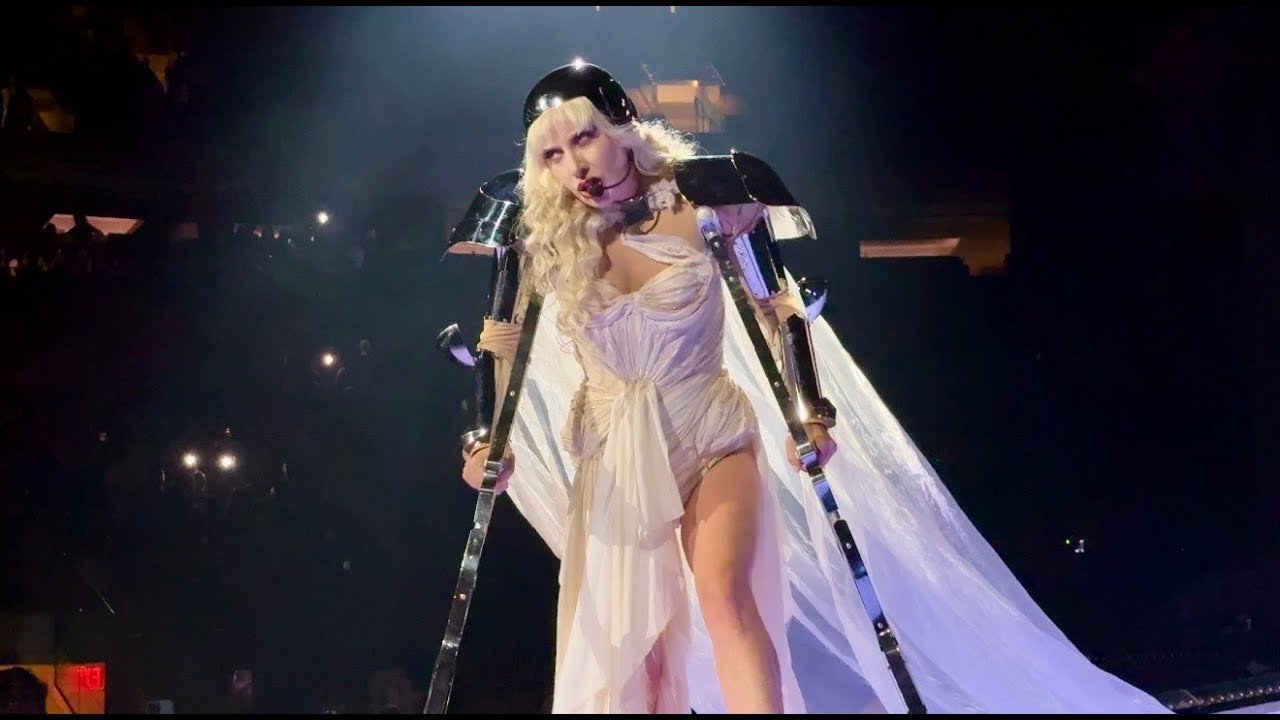
Lady Gaga performs "Paparazzi" at Madison Square Garden, sporting a pair of crutches. Crutches are common mobility aids for fibromyalgia, as they can help relieve muscle and joint pain caused by movement.
While it’s true that most celebrities have a certain privilege and access to medical care that other people do not, they also have the pressure of appearing superhuman to their fans. As someone with an invisible illness, I’ve felt embarrassed going out with my crutch because it “ruins my outfit,” and I’ve forced myself to wear pants on hot days to hide my compression garments because they “look weird”. All these feelings come from the internal pressure that I’ll come off as stronger if I choose not to show my medical aids, and the fear that my classmates will laugh at me (which they have–it’s something I know disabled UCLA students sadly have to deal with). But when I saw Lady Gaga in concert, I stood up and cheered every time she used a cane or crutch (or a sneaky lift from some of her background dancers). Seeing her standing up there with a device I’d felt so much shame using in public for months, she seemed more superhuman to me than any celebrity before.
So every time I see someone with an aid in public, whether it be a crutch, compression socks, or a back brace, I try to be as supportive as possible. It’s a hidden connection in the disabled community–not one of pain and fear, but one of autonomy. These accessories reflect the choice to keep fighting, to keep trying, even when the odds are against you, and every single sticker, pattern, or decoration is living proof of that fight.
Why is Fashion So Important?
Fashion is such an important medium of expression for disabled people because it is one of the few art forms that directly connects to the body. It goes beyond superficial markers of beauty (like a full set of teeth, healthy hair, and the mental associations long pushed onto us that different = scary) to see not just the beauty, but the sexiness of the human form.
Sexiness can be such a tough word to use because you can’t say it and not mean it, especially when it comes to a body that has not always been so kind. But the truth is, disabled people are just as sexy with their medical aids–it’s not a compromise of comfort versus style. Fashion is a series of choices that go far beyond just the fabric, and one of those choices is to be present in one’s body. There’s nothing tragic about it. In fact, it’s a celebration of the body and the agency we possess over it. Since our ancestors praised and celebrated the bodies that could sustain life, why don’t we uplift those bodies that fight so hard today? It’s why disabled voices in fashion are more crucial than ever. It’s why the public needs to look at things from the Hunchback’s point of view, not the townspeople’s. And it’s why young girls like Nessarose should never be reduced to just a wheelchair.
Because they are beautiful with their disability–not because of it, not in spite of it, but with it.