

POMP AND CIRCUMSTANCE: WHY THEATRICALITY BELONGS IN FASHION
Fashion, periodically, forgets to be seen.
via. bioamoris.
On minimalism
Fashion, throughout the decades, has always existed on a fluctuating continuum. Class might divide it into societal factions, time might mark it in periods of relevance and obscurity—yet style fundamentally evolves on a spectrum, ebbing and flowing across timelines both miles apart and centuries wide. In a concrete sense, style changes in fabric, texture, color, dimension, or silhouette. In a cultural sense, we meet metrics of expression, complexity, and its relevance as a social currency. Clothing can be one of the most revealing windows into the human condition, in both a material and anthropological sense.
One of the major ways we can decode fashion is through its cycle of excess and restraint. The swing between censorship and liberty has always been decisive in societies beyond the political sense, because what’s considered an appropriate level of expression is always changing. In response, hemlines rise and fall. Some moments, especially those containing revolution and civil unrest, have produced styles that defy containment through visual spectacle: volume, detail, intensity. In others, aesthetics revert to a mode of security, draining out color and intricacy.
While the early 2000s were decked out in rhinestones, textures, and logos, the 2010s saw the early rise of the mute and the minimal. After several major crises and financial shutdowns, the infamous era of millennial gray emerged, donning the world of home decor in beiges and whites. A decade later, the popularity of neutral, stripped-back designs peaked in fashion, through the clean girl aesthetic. The same teen and early-20s audiences that were once enamored by cheetah print, neons, and layered lace camisoles now become the new ambassadors for slick-backs, linens, and monotone closets. An obsession with quiet luxury followed soon after, highlighting the understated, “old-money” designs of ultra high-end brands. This stark contrast illustrated a significant shift in the dominant aesthetic of pop culture, and more importantly, the rise in neutral, conservative dress. Beneath sleek palettes and crisp lines was a new philosophy of dressing to appease, rather than to stand out.
Neutrality is easy because it blends in. It brings a basic range of shades and forms that read as mild and approachable, therefore having common appeal. It is universal, simply because there is nothing to refute. The cost of this is that it also sets an inherent limit: on vibrance, on experimentation, and on personality. When there’s less of everything to work with, neutrality makes it difficult to articulate the self. Whether it is characterized by overflowing ornamentation or minimality, fashion thrives on attention, not invisibility; it is a lexicon that speaks volumes about its wearer, and one that demands presence, regardless of the visual weight of a design itself. This article seeks to challenge the place of invisibility in contemporary dress and explore fashion’s identity as a stage.
On theatre, couture
Fashion, in its most explicit medium, is costume. While ready-to-wear often has a commercial purpose, couture still retains complete artistic sovereignty. In that register, fashion is less of a product, but more an artistic medium—the same used in areas like theatre and film to enshrine characterization into a fabric canvas. A serious and uptight person portrayed might be dressed properly to the nines, while the aloof one could be donned with a disheveledness in crumpled shirts and colorful neckties. These physicalities grow inseparable from the characters themselves; after all, who would Elle Woods be if seen devoid of pink, or Cruella without her black and white hair? Costume crystallizes identity into direct, interpretable visual motifs that communicate to viewers at lightning speed.
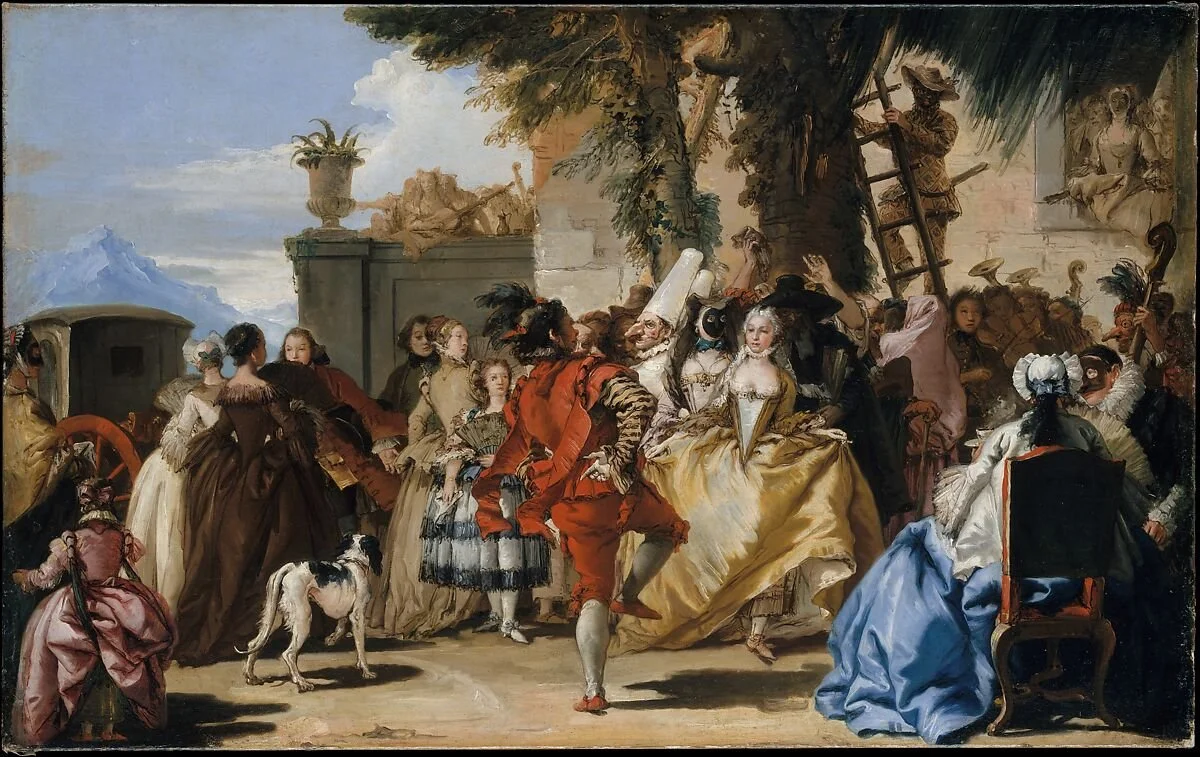
A Dance in the Country by Giovanni Domenica Tiepolo, showcasing
commedia dell’arte. via. The Metropolitan Museum of Art.
Costume does not aim for subtlety. It shoots for exaggeration and exuberance, in hopes of being recognized by even the unobservant eye. Performers understood this far before fashion even became an accessible medium to the masses, in crowded theatres centuries ago. Commedia dell’arte was one example of this, a form of 16th-century Italian theatre that combined an improvised performance with a constant, set cast. No figure quite captures the power of costuming like the famous Arlecchino, or the harlequin, originally dressed from a stitched mass of fabric scraps, a reflection of both resourceful improvisation and poverty. Over time, the patchwork crystallized into a colorful quilted grid, a pattern now synonymous with the harlequin name. As a jester that can often tread the line between being comical and sinister, the cluttering of shapes and forms in its costume reads equally as ambiguous as the character itself. Society’s fascination with the diamond grid has, over time, turned it into a piece of cultural iconography, appearing in fashion and art alike.
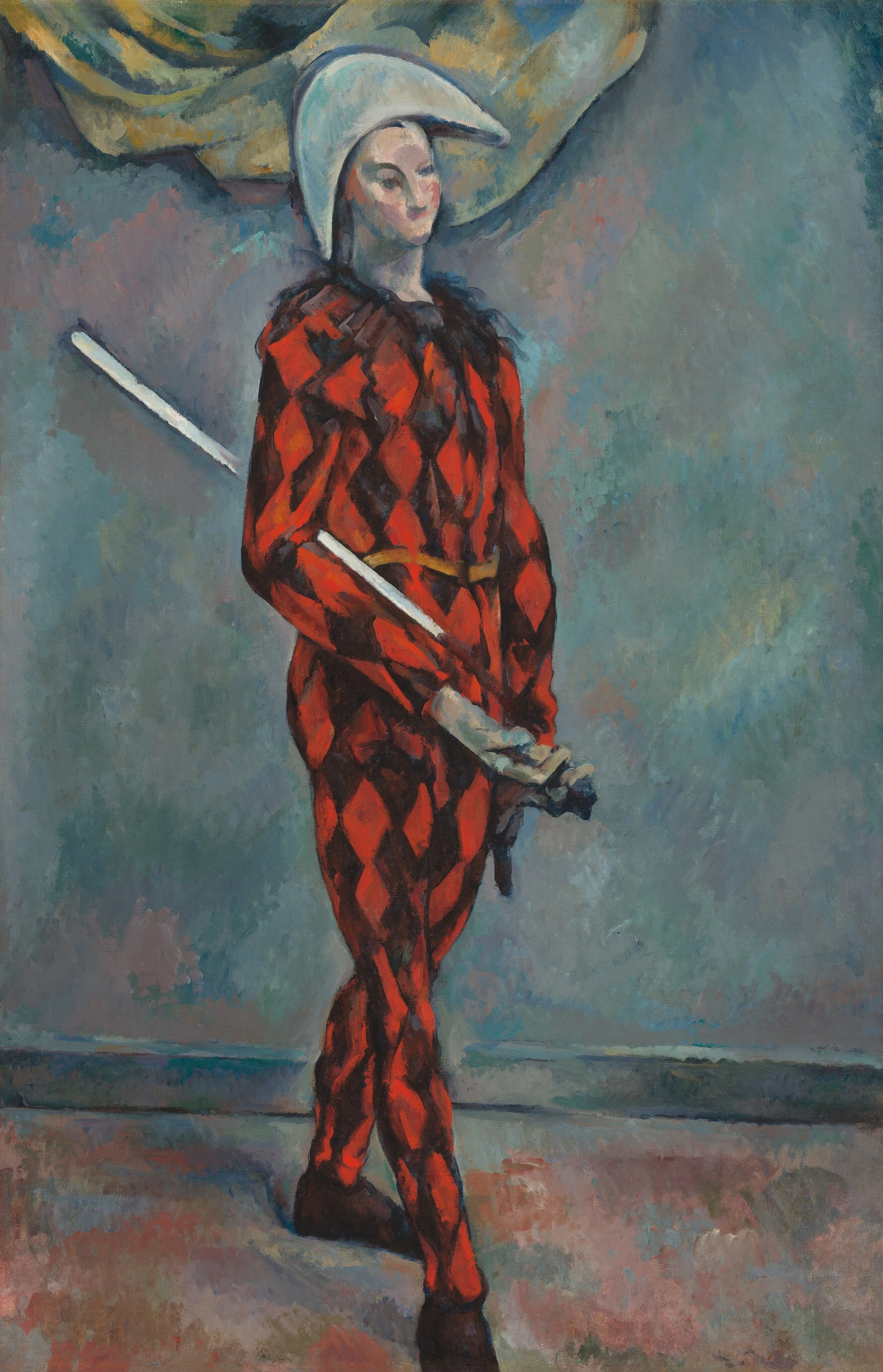

Left: Harlequin by Paul Cezanne, via National Gallery of Art. Right: Moschino SS20, via. Vogue.
Ultimately, the harlequin did not wear fashion. Rather, fashion breathed through it. Its costume demonstrates what clothing is capable of when it rejects convention and subtlety, embracing personality as worn on the sleeve. By constructing identity from the ground up, visuals became the forefront of the harlequin character. Minimalism may be polite, but the opacity of minimalism stunts its ability to speak. Spectacle is what it takes to be immortalized and remembered—so fashion, at its artistic peak, must be transformative, loud, and an architect for identity.
Avant-garde operates as a contemporary theatre for fashion, where exaggeration and definition continue to be in high demand. Mugler doesn’t principally strive for appeal, nor are McQueen shows always meant for an everyday eye. Fashion houses seek out the controversial in pursuit of visibility, and this visibility is attained through clothing that reads as ever more unsettling, dramatic, and unique. It isn’t even limited to the fabric; dress is inclusive of hair, makeup, props, and posing, similar to how masks, backdrops, and costuming colluded for the purposes of worldbuilding in commedia dell’arte.
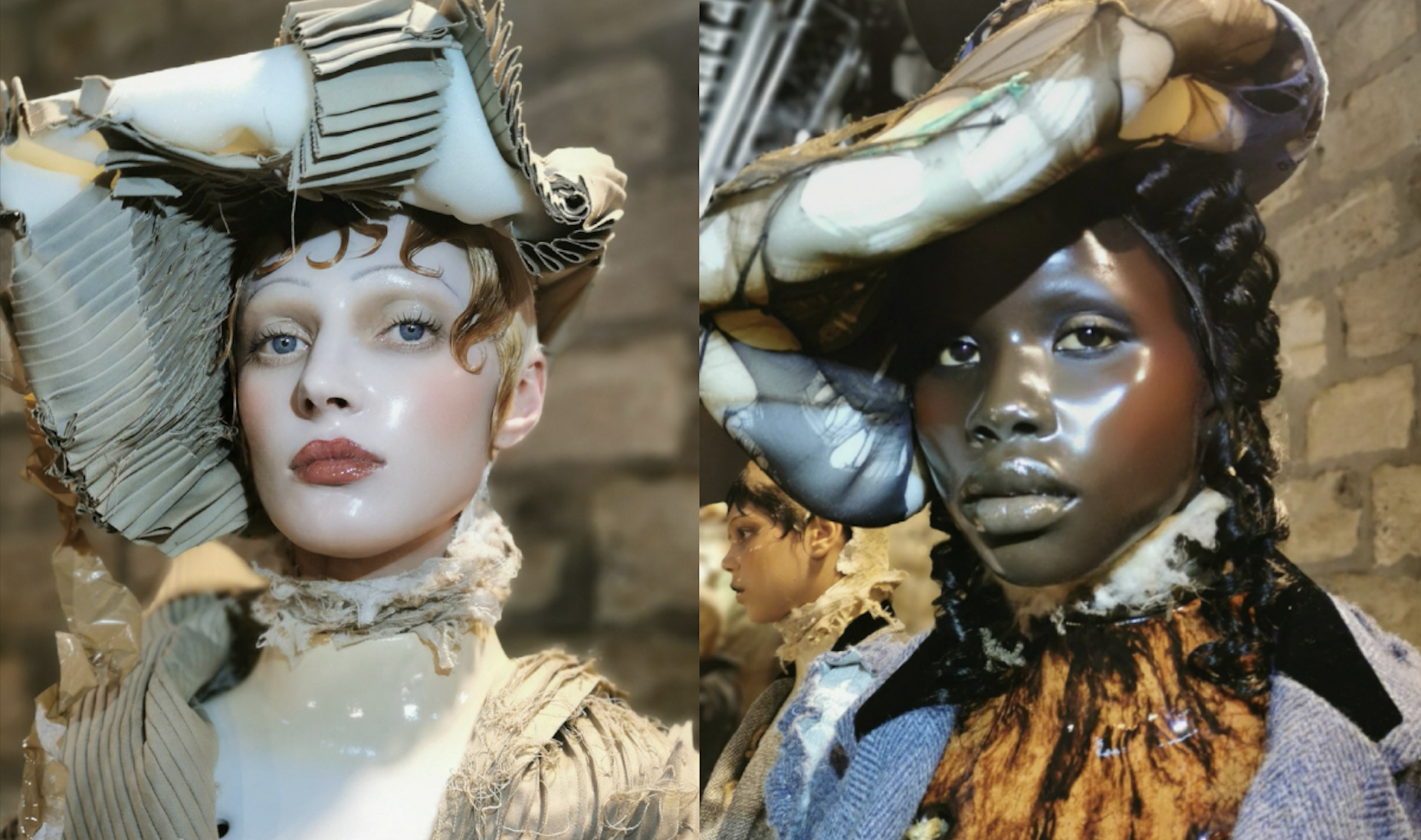
Maison Margiela Artisanal Collections SS2024, via. WBB.
John Galliano explores this concept of theatricality in Maison Margiela's spring/summer 2024 collection, a show memorable for its use of glassy makeup to give its models a doll-like appearance. In these looks invented by renowned makeup artist Pat McGrath, the skin had a lacquered, synthetic effect that bordered on the uncanny—yet vexingly beautiful, especially in combination with the Renaissance-esque, textured gowns shown down the runway. This fundamental tension staged between the sensations of fascination and discomfort is what transformed this runway from a demonstration of dressmaking to an evocative performance art. Fashion was a proponent of theatre, just like theatricality is a proponent of fashion. Be it criticism or wonder, dress lives in the reactions and emotions of its onlookers. Neutrality fails to give it the life it deserves because it fails to embrace risk. Creativity enables it.
Couture might stage risk most visibly, but risk belongs everywhere, even off the runway stage. So how has theatricality translated into street style?
On culture
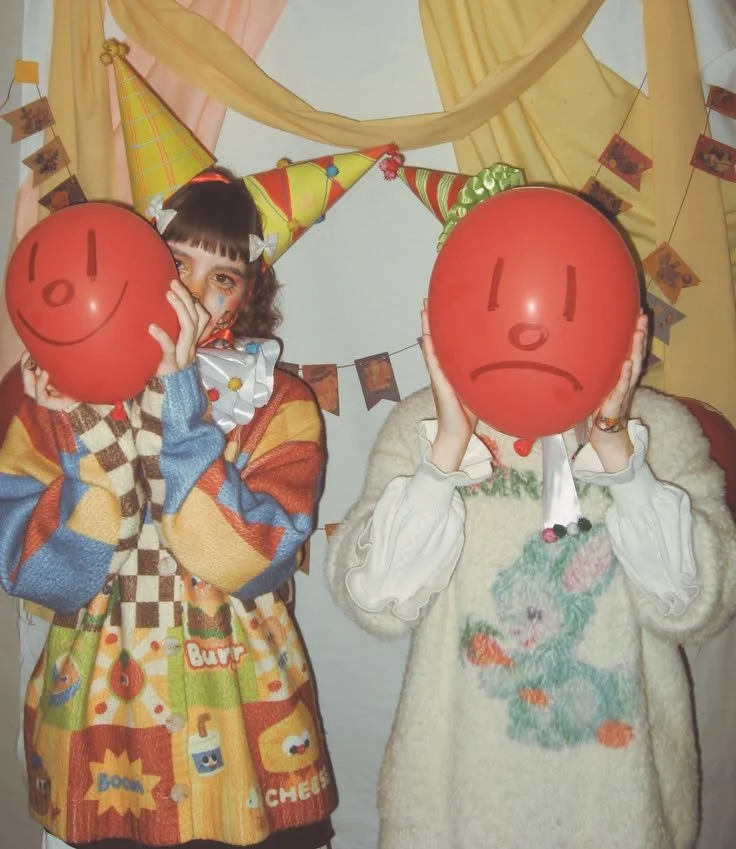
While everyday dress as a whole may have progressed in the direction of quiet minimality, it is not lost on many that fashion is a creative language. While microtrends and online culture can oftentimes be looked down upon by the majority, the cringe factor we experience often stems from a notion that these subgroups express themselves too much, too weird, too loud. In the odd cultural bubble of the 2020 lockdown era, a lot of individuals were liberated to explore their hobbies and participate in their interests to a degree that was never permitted before. Cosplay, filters, and TikTok trends took off like a rocket because they were incredibly freeing, even if, looking back, they resulted in some questionable aesthetic movements. In brief moments in time, people have tried to bring back the same expressiveness found in the boom of online culture. In true harlequin fashion, one of such movements included the short 2021 revival of clowncore; it sprang up unpredictably amidst cow print and crochet tops, seeming to assault the internet with a wonderfully maximalist crash of diamond print, patterned ruffles, and blinding primary color palettes to its outfits. Even though many were quick to make fun of it, it brought back, for a brief moment in time, the playfulness of costume and the delight of being able to fully showcase one’s own identity, trinkets, and ornaments galore.
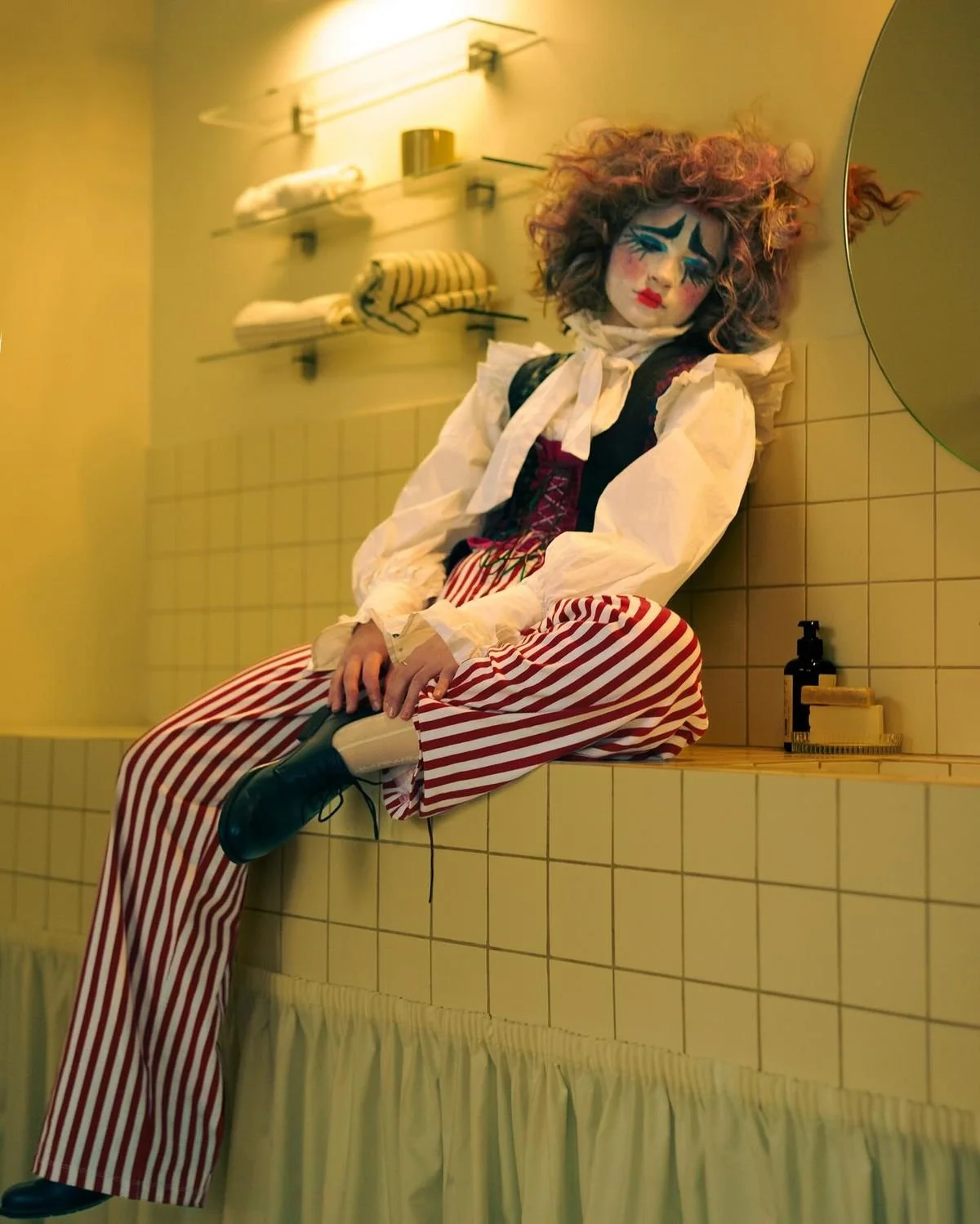
via. vika igolnik.
Clowncore existed at a far end of the theatrical fashion spectrum, and therefore was difficult to accept on a larger scale. However, the anti-invisibility instinct and the desire to break free from the constraint of neutral dress were not lost on the wider community. The revival of 2000s and 2010s fashion is an example of this: Y2K, indie sleaze, 2016 throwbacks. The message that clowncore brought about, confronting minimalism head-on, was not lost on the general population because pockets of mainstream fashion have been doing the same. The dreamlike, ultra-saturated palette of Y2K uses color to reject anonymity. The flash photography, texture, and smudged eyeliner of indie sleaze resist the polish of minimalism just as forcefully. The 2016 revival, strongly tied to the rise of digital platforms like Tumblr, paid homage to its online roots by bringing back hazy sunset filters and Musical.ly dance audios. Under the guise of nostalgia, pop culture has been fighting back against the aesthetic shackles of minimalism, and many people have been quick to invite the rebellion in, opting for stylized self-performance over pared-back neutrality.
For the most part, these aesthetic revivals have been driven by social media. Despite the limited reach these trends feasibly have on the global population, the color and character have been eagerly taken up by teens and those in their early 20s alike, spreading themselves subsequently through visual shorthand. Beiges and greys are not only fading out of favor in fashion specifically, but in film and music as well. From the popping pinks of the Barbie movie to the sparkly pastels of Zara Larsson, the popularity of the bright and the bold signals that antiminimalism might resonate more deeply with wider society than initially thought. First to dress, then to culture; Gen Z, in particular, faced with the tumult of economic and political climates over the last few years, yearns for ways to channel instability into visibility. Amongst rising costs of living, digital overexposure, and a barrage of discourse constantly hanging in the air, self-presentation becomes one of the only variables that can be controlled—in moments of extreme precarity, nostalgic excess and dramatic styling return as counterbalances. This is reclamation: an assertion that we as individuals still exist, despite how insignificant we may seem to be. Optimism necessitates freedom, and no freedom is more gratifying than the freedom of dressing for oneself.
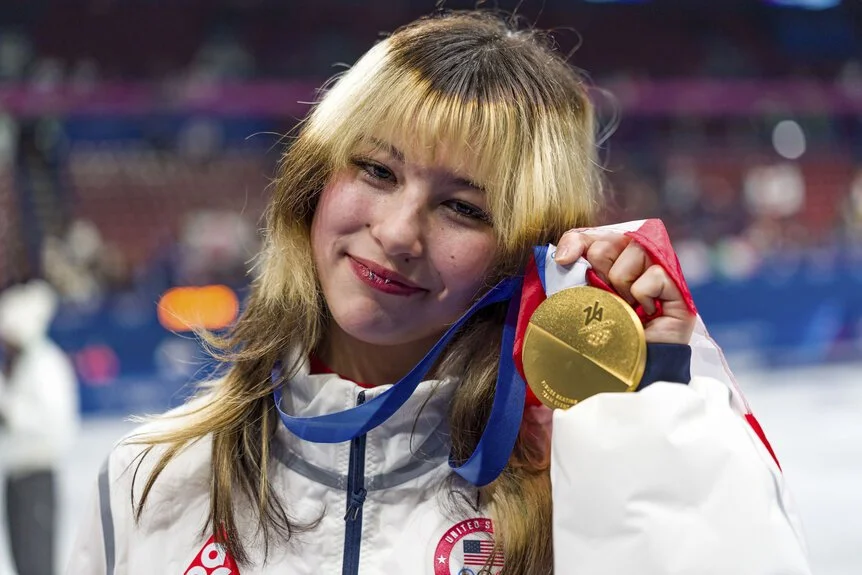
Alysa Liu, via. NBC.
Out with the nonchalance, in with the whimsy. In a world that puts ambivalence on a pedestal, the ability to be playful isn’t childishness, but a sign of maturity—that someone is secure enough in their sense of self to outwardly articulate it. Instantly recognizable for the halo rings in her hair, US figure skater Alysa Liu’s recent skyrocket to fame was, arguably, not just for her athleticism as an Olympic gold medalist, but also her willingness to be openly alternative while representing elite sport. Liu challenges stoicism with a buoyant expressivity both on and off the ice, demonstrating how self-expression remains compatible with success; the universe is an open stage if one so lets it be, and to lean into that theatricality is to be liberated. Whimsy and antiminimalism come hand in hand because play is a fundamental building block for style, the space to be excessive, experimental, and adorned.
It is this space that makes theatricality fashion’s enduring language of expression. Embracing spectacle allows our truest selves to be reflected in an undiluted form. People deserve to be celebrated, and celebration demands visibility. Fashion must be seen.