The Jewel Thief as a Cultural Icon
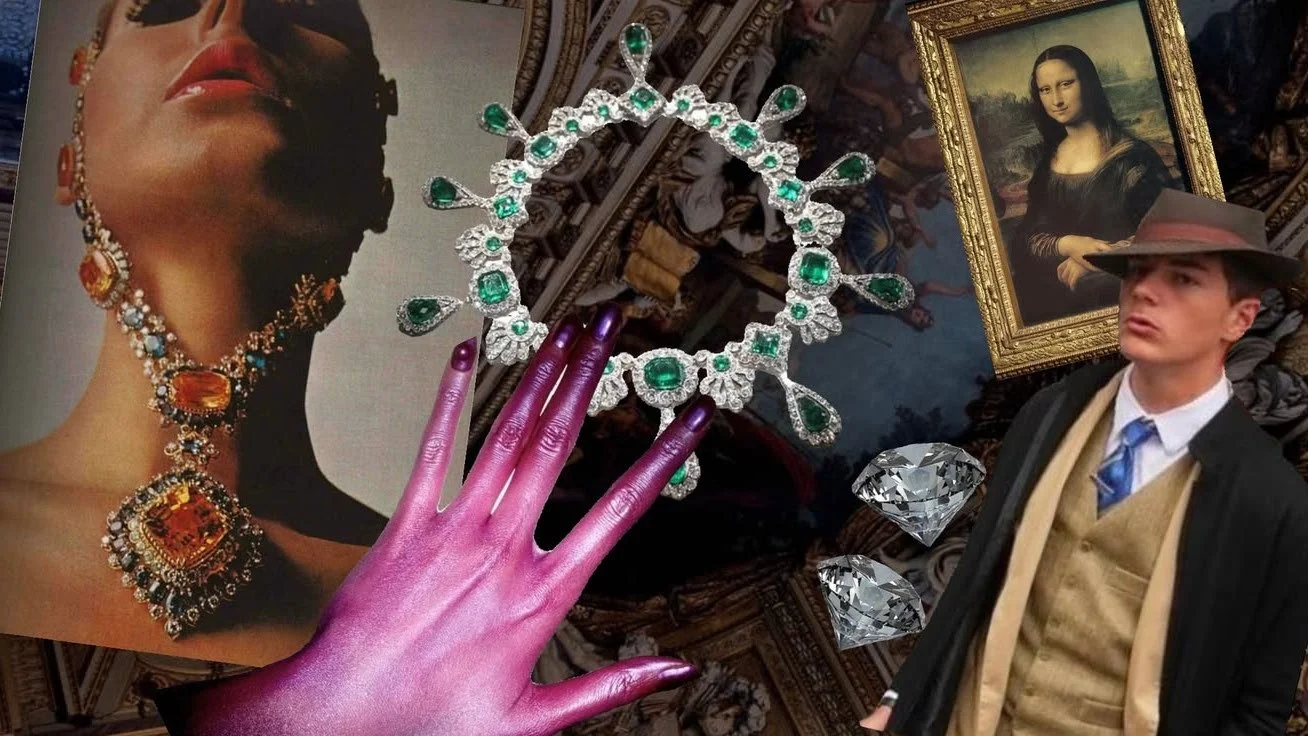
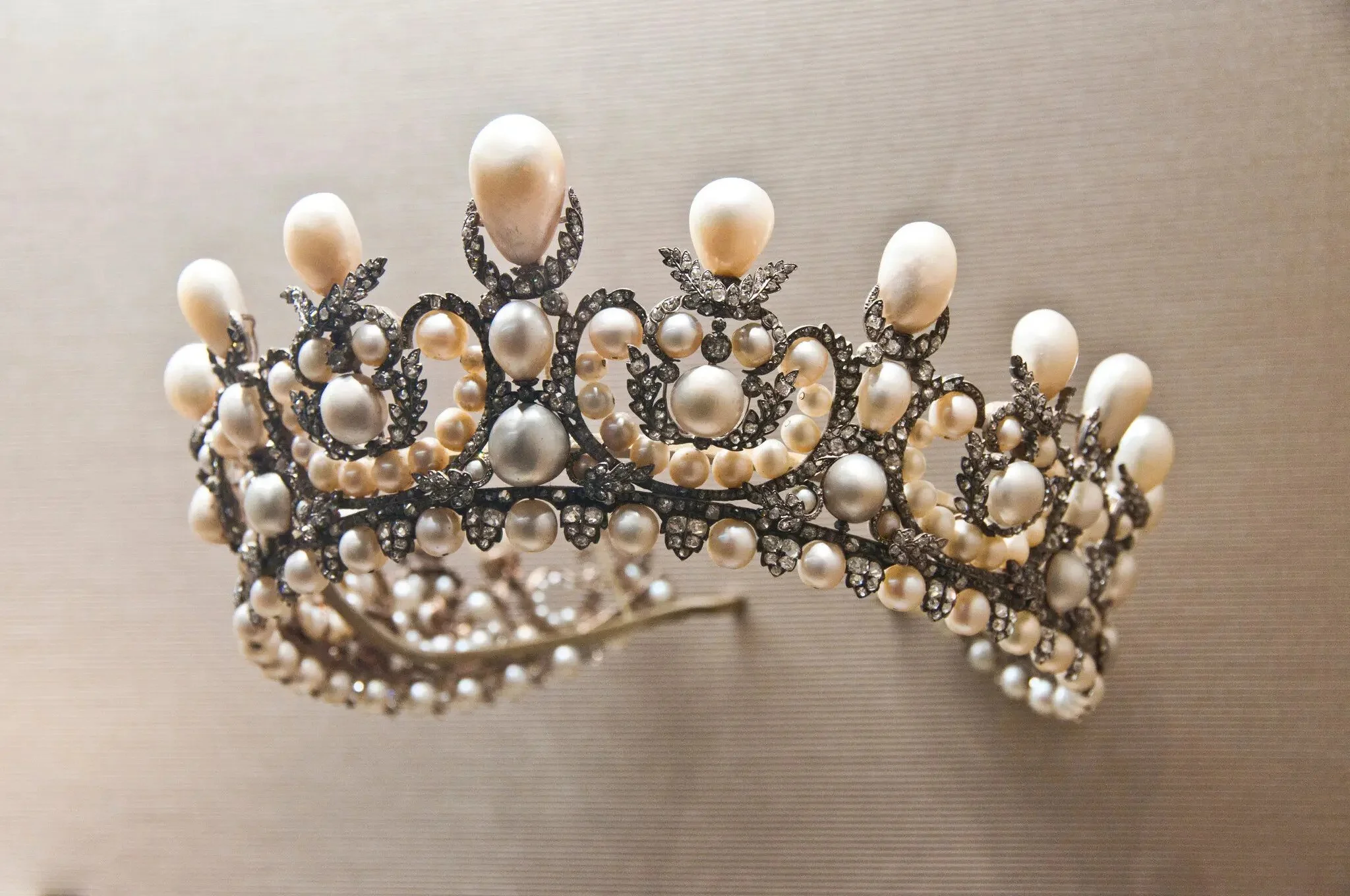
Empress Eugenie’s Tiara - Steve Hamblin/Alamy
There’s something about a jewel heist that's kind of… sexy?
Let me set the scene. It is a quiet Sunday morning in Paris. The Louvre Museum has been open for half an hour, steadily filling up with the general public. At exactly 9:30 AM, a truck pulls up to the back of the museum facing the Seine River, and extends a ladder to a second-floor balcony. This is a common sight in Paris– ladder-mounted trucks are necessary for maneuvering furniture into old, narrow buildings. Two men climb up the ladder, break through the window, and smash-and-grab nine precious objects. This is a less common sight. Then, the pair fly back down the ladder and hop onto their motorcycles, speeding off into the morning light.
In just 8 minutes, these thieves escaped with over $100 million in jewelry. Among the priceless items stolen were a sapphire diadem worn by several European queens, an emerald necklace gifted from Napoleon to his second wife, and a diamond-encrusted brooch worn by French Empress Eugénie.
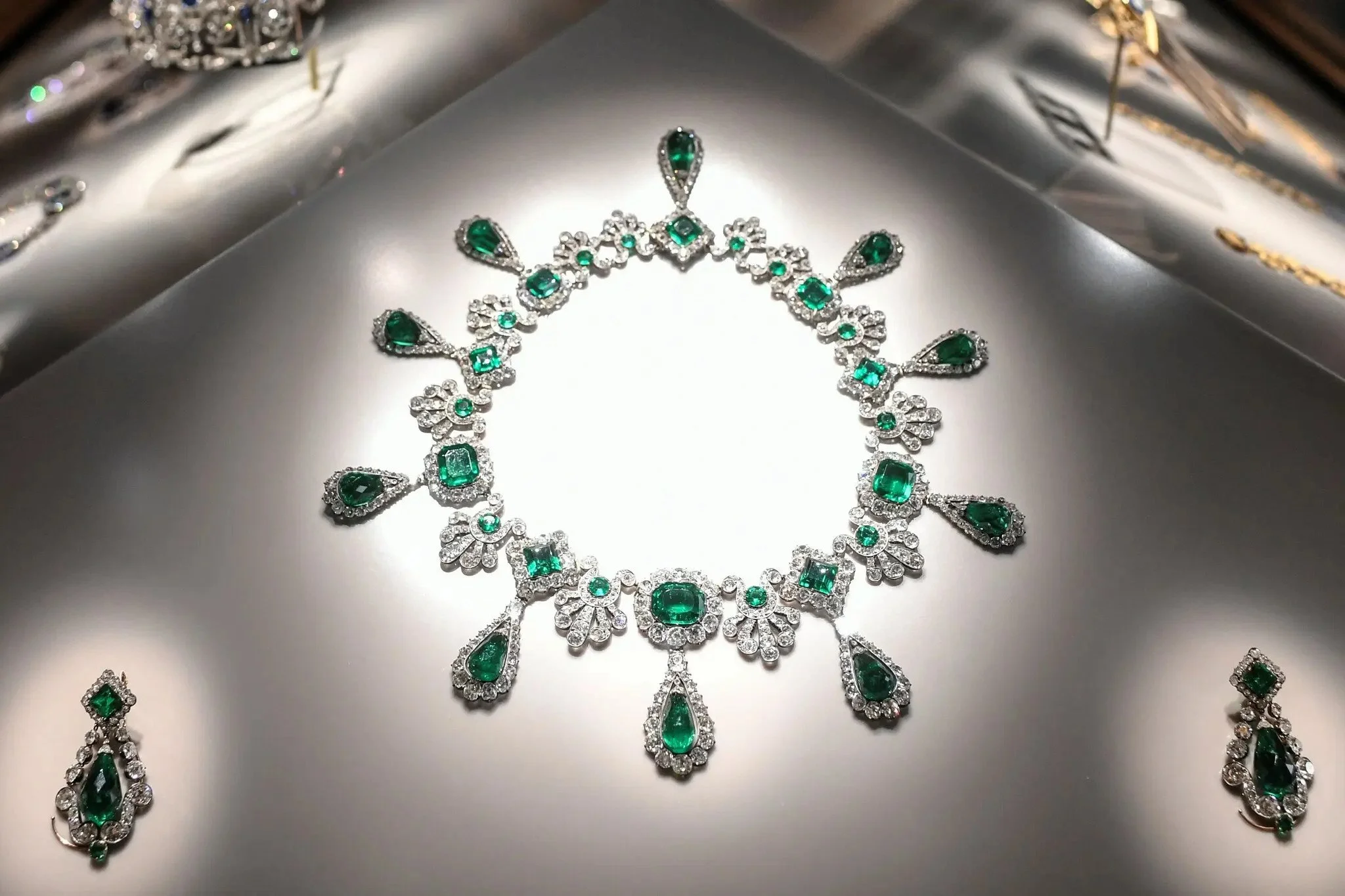
Part of Napoleon’s Emerald wedding gift set - Stephane De Sakutin/Agence France-Presse — Getty Images
The thieves were not armed, and they used surprisingly simple, low-tech tools– there was no jumping over lasers or using grappling hooks to hang precariously from the ceiling. It was a crime so refined you could almost call it chic.
Reactions in the media to this audacious heist were immediate and polarized:
I. Distress
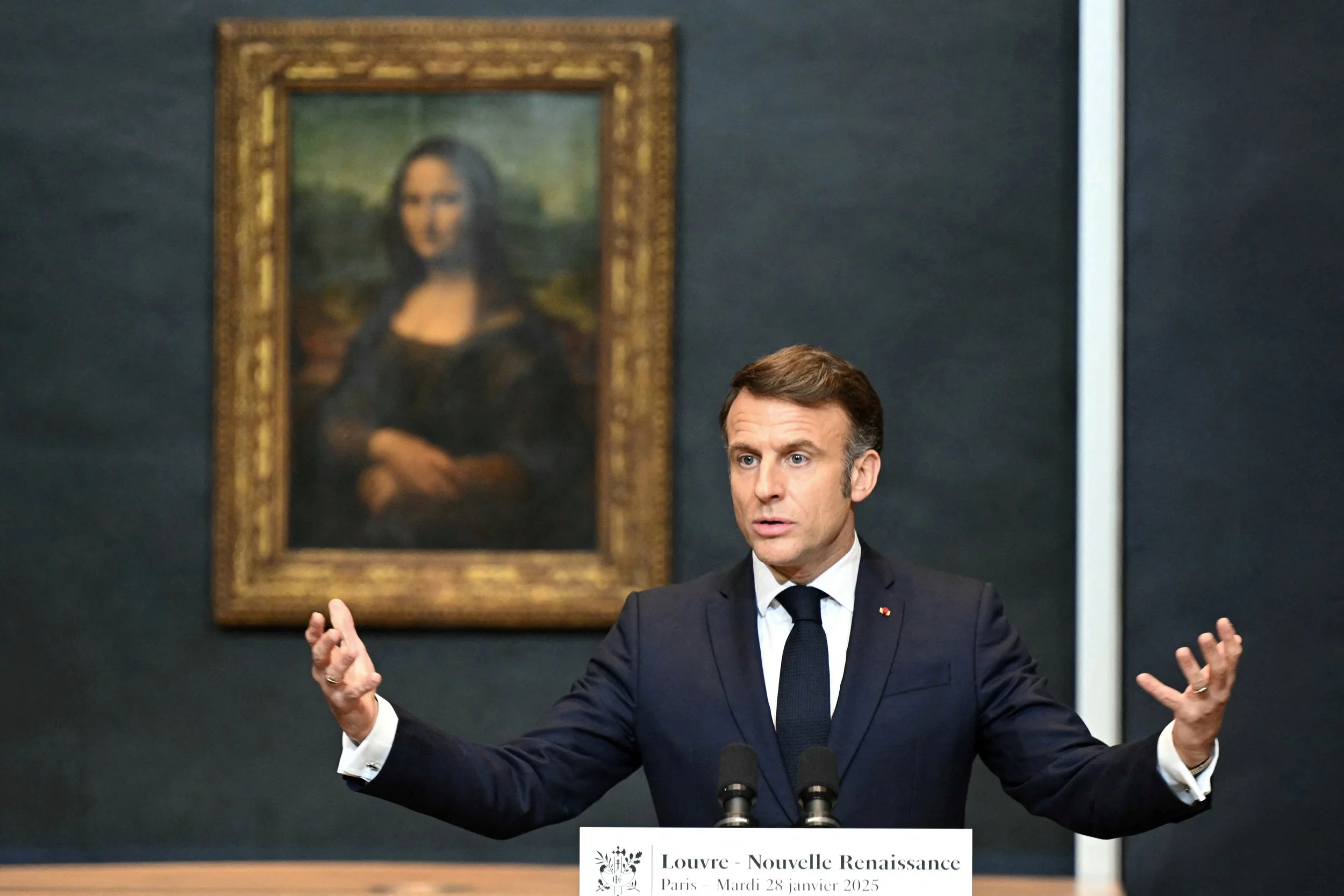
Macron at the Louvre - Bertrand Guay/EPA
Some reactions were rife with shock, horror, and political anger. The items stolen were specifically tied to the history of France, worn by some of the country’s most significant historical figures. In many ways, these stolen museum artifacts are a cultural and historical loss never to be regained. It was a blow to the nation’s soul. On social media, French President Emmanuel Macron wrote that the theft was “an attack on a heritage that we cherish…”, and France’s culture minister called it a “wound”. Macron’s political opponents used the highly publicized and shocking theft to disparage his government. They accused the President and his party of being too soft on crime, using the heist as proof of “a breakdown of the state”. Clearly, there is a power imbued in these priceless objects, elevating them from expensive minerals to symbols of national identity.
II. Amusement
Conversely, many members of the public reacted with humour. Within hours of the heist, social media was flooded with jokes and playful skits. An image went viral of a very dapper-looking teen called “the Fedora Man” photographed at the scene of the crime, with many speculating he was a Poirot-type detective straight from a classic crime novel. He turned out to be just a well-dressed passerby, but that didn’t stop the wild imagination of the public. And because the heist occurred less than two weeks before Halloween, you can guess what inspired many of last year’s costumes.
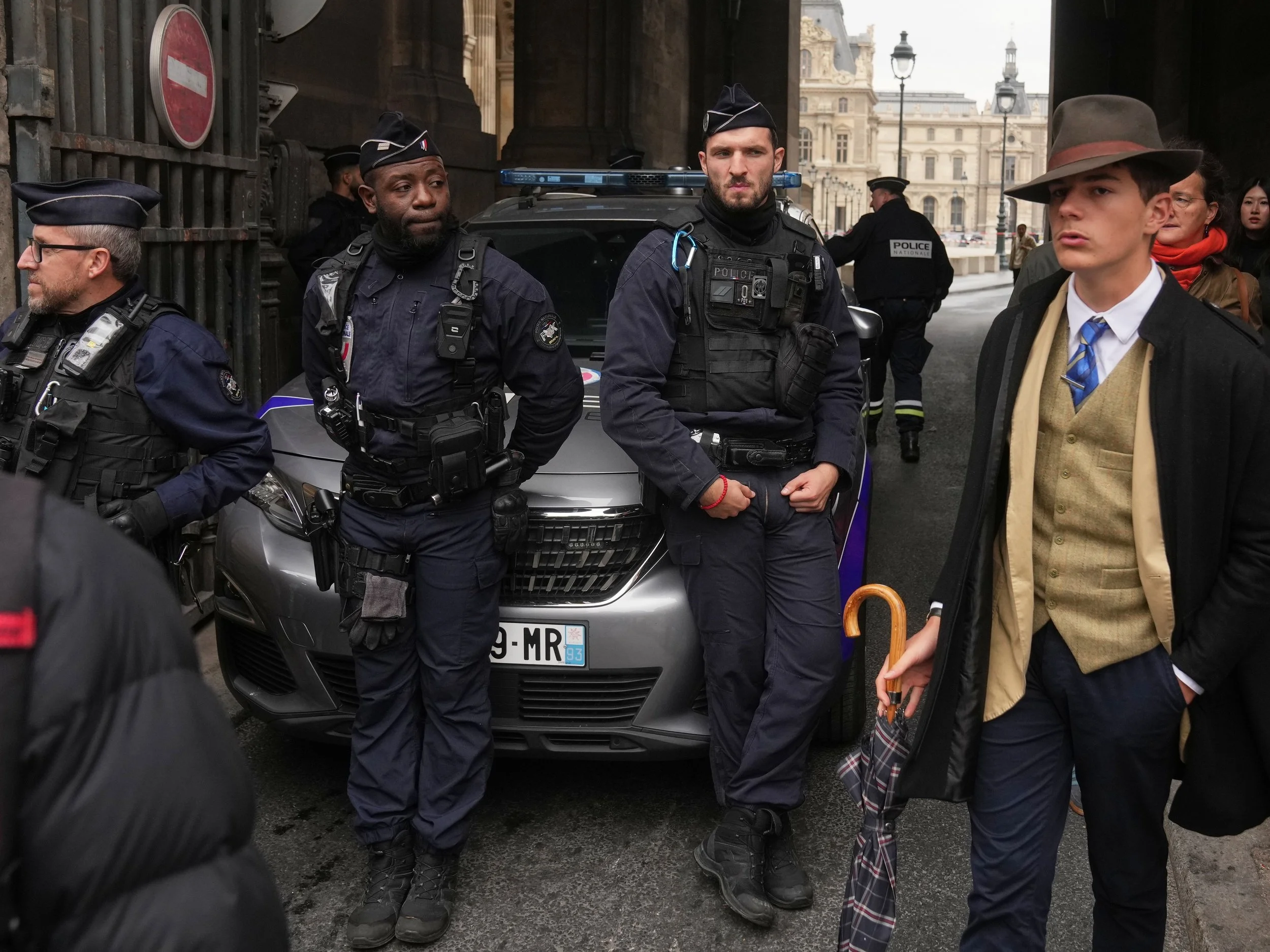
Mystery Fedora Man - AP News

reags.h - TikTok
III. Fantasy
Finally, the heist sprouted many fantastical ideations about the event, evoking an almost admiring, sympathetic response. Schadenfreude, defined as “satisfaction or pleasure felt at someone else's misfortune”, plays a role here. There is something deeply satisfying about watching one of the world’s most prestigious, fortified museums– a symbol of elite cultural gatekeeping and unimaginable wealth– be outsmarted by a couple of thieves with a ladder and power tools. Schadenfreude is not purely malicious. It carries a vicarious thrill, the fantasy that velvet ropes and thick glass separating ordinary people from extraordinary objects can be breached.
Online, the public cast the thieves as almost romantic antiheroes instead of criminals. The archetype of “the gentleman thief” emerged because no one was hurt. There was an air of excitement and intrigue– members of the public flocked to the museum when it reopened in a few days, just to see jewels that weren’t there. These Napoleonic jewels would not be household knowledge, but the heist catapulted them into fame. The same happened to the Mona Lisa, which was not a notable artwork and had little cultural relevance until it was stolen in 1911.
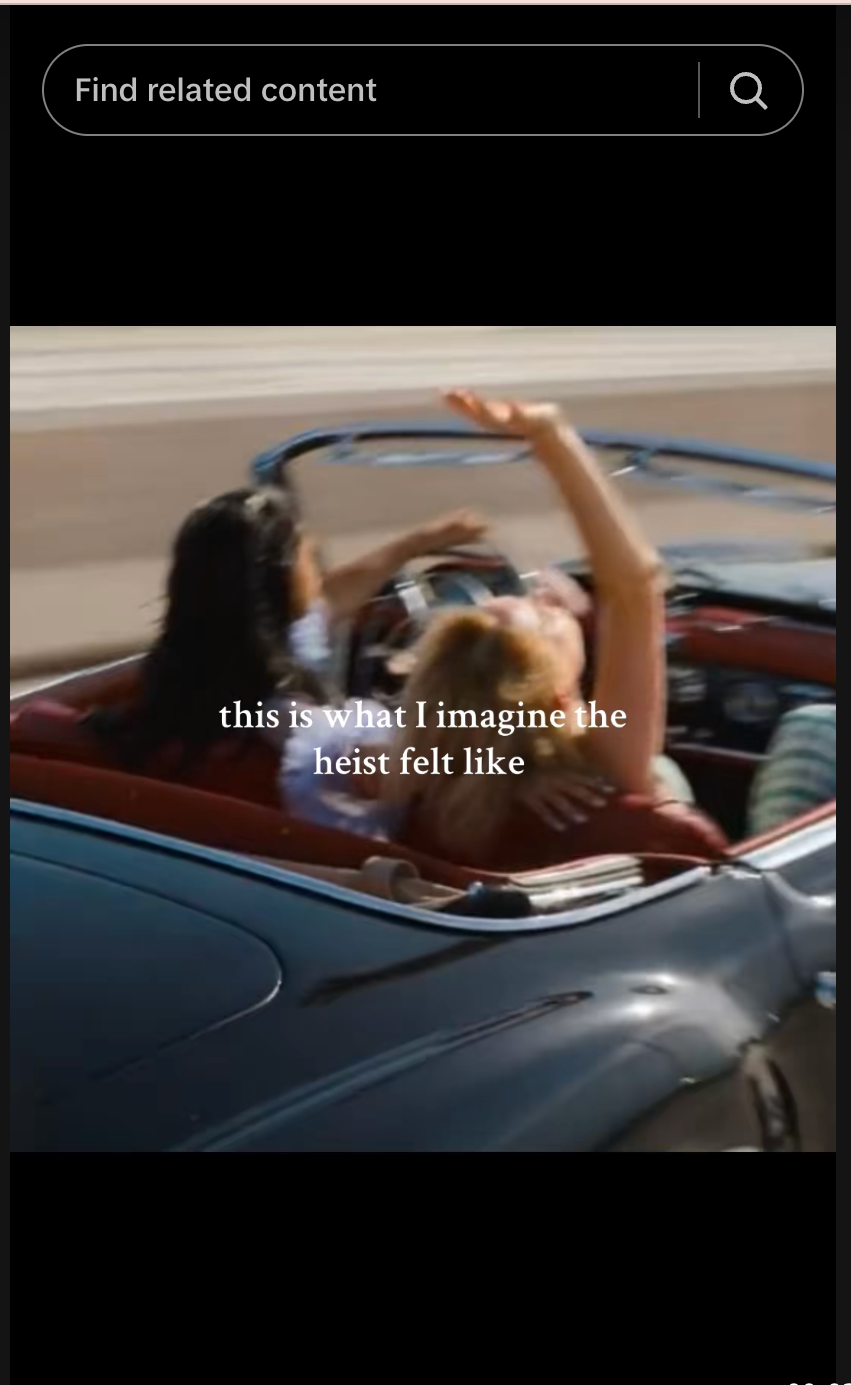
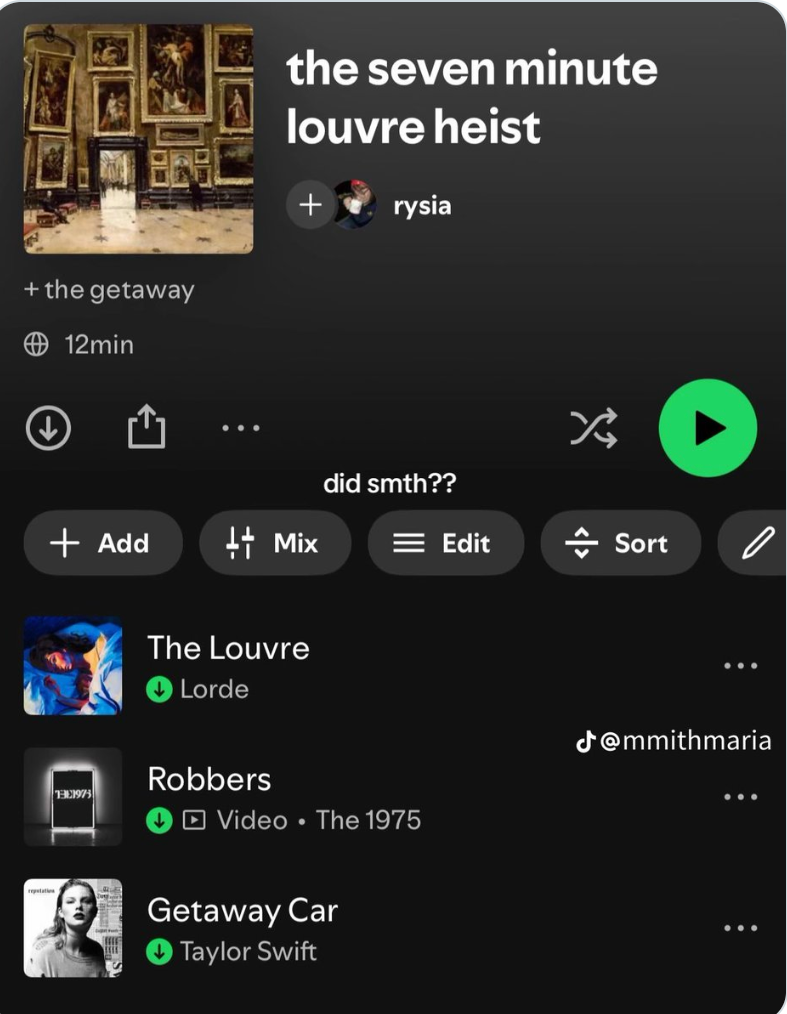
brainwaves222 - TikTok (left) | Spotify Playlist (right)
It’s the fantasies borne from this crime that I think is most worth investigating. Where did these reactions come from? And why does a heist of this kind give so many people a thrill?
I. The unattainable nature of luxury
Jewelry is the apex of luxury. Purely decorative, entirely unnecessary for survival or even of use in daily life. Furthermore, the items stolen at the Louvre were not just expensive objects; they were mythological ones, worn by queens and empresses. Valuables never to be accessed by ordinary plebeians like us, only peered at through thick museum glass. And perhaps that distance is what gives them their power. If they were within reach, they might lose the very mystique that makes them desirable. We are drawn to what is withheld from us. The Louvre heist represents that morally gray perversion, how good it feels to reach for the things we are told we can’t have.
II. Repatriation and the stolen history of jewelry at the Louvre
There’s also the uncomfortable truth that many of the jewels in the Louvre were never French to begin with. They were plundered through conquest, especially under Napoleon’s brutal reign. Emiline Smith, lecturer of Criminology at the University of Glasgow, writes that the stolen Louvre jewels are “products of a long history of colonial extraction. The sapphires, emeralds, diamonds, pearls, and other gemstones they contained were mined across Asia, Africa, and South America. These regions were systematically exploited for their cultural and natural resources to enrich European courts and empires.” Museums around the world are increasingly concerned with the repatriation of precious objects taken from their original context- it’s important to find out who made them, under what circumstances they were taken, and whether they should be returned. A heist forces these concepts into the open in a way a museum label never does. Do these jewels really belong to France in the first place? What does it mean for that answer to be no?
III. Justice through injustice
The polarized public opinions of the Louvre heist start to have a little more context. It’s the collision between class divide, stolen cultural identities, and the natural human intrigue in audacious sums of money and power.
And thus, the jewel thief as a cultural icon is born. It’s an archetype found in many popular movies—like the suave, debonair Cary Grant in “To Catch a Thief”, the stylish Pink Panther, or the gorgeous, Hollywood heartthrob cast of Ocean's Eleven. A heist is akin to a puzzle, a sophisticated affair that demands intelligence and rarely involves violence or bodily harm. The jewel thief is always glamorous, dapper, gentlemanly, clever, and never villainous. He is often a sexy, Robin-Hood type, someone who can play in the world of luxury but is actually ‘of the people’.
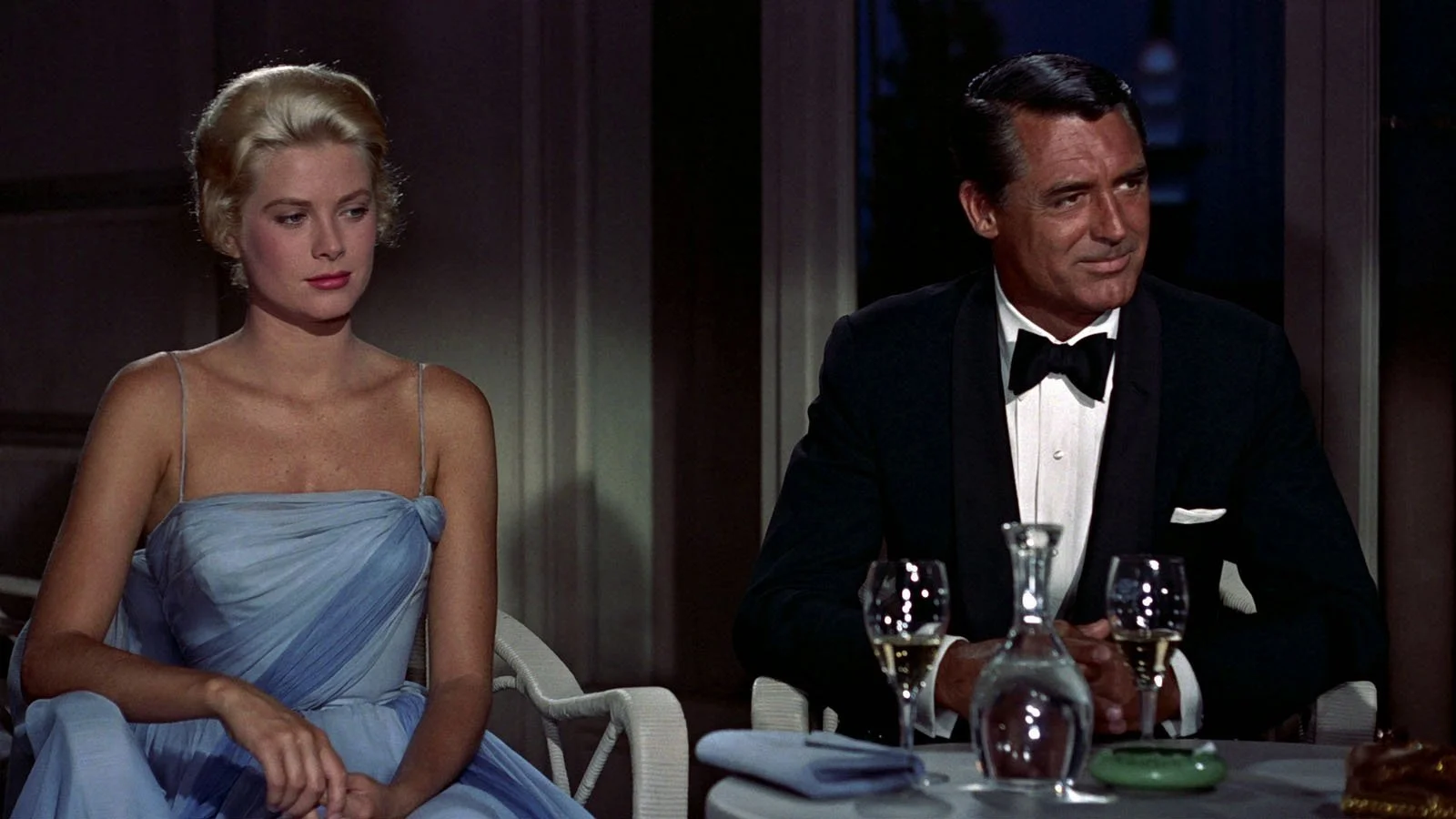
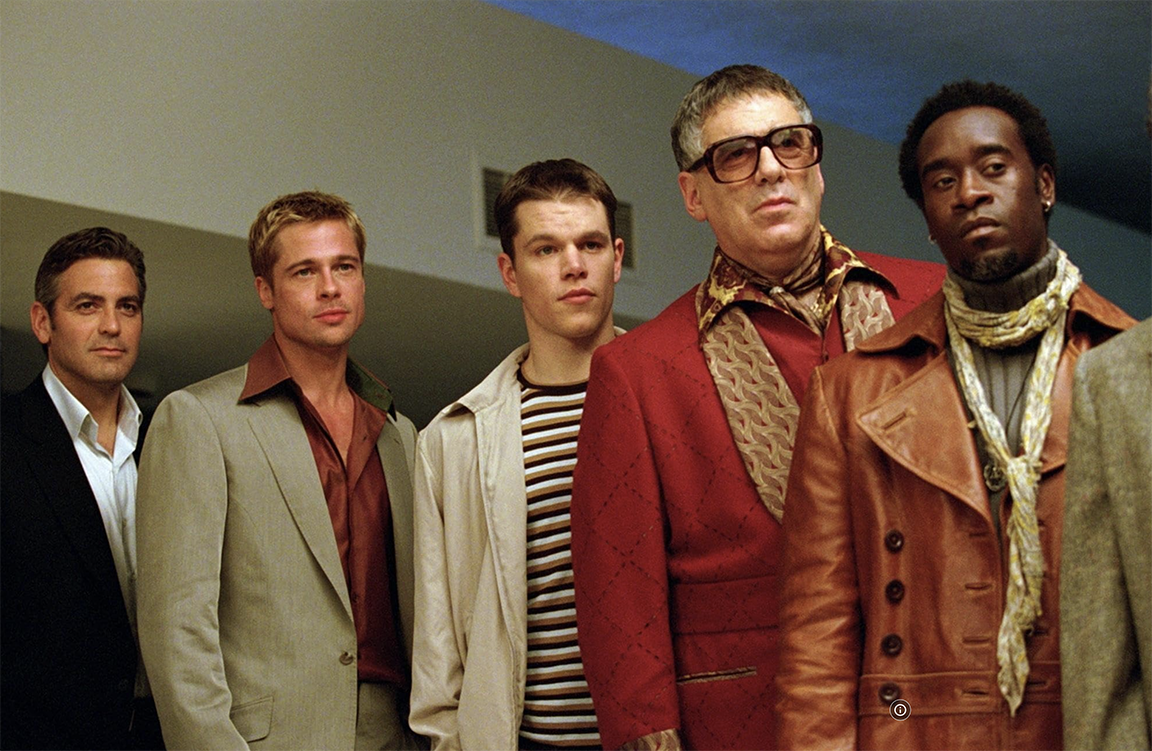
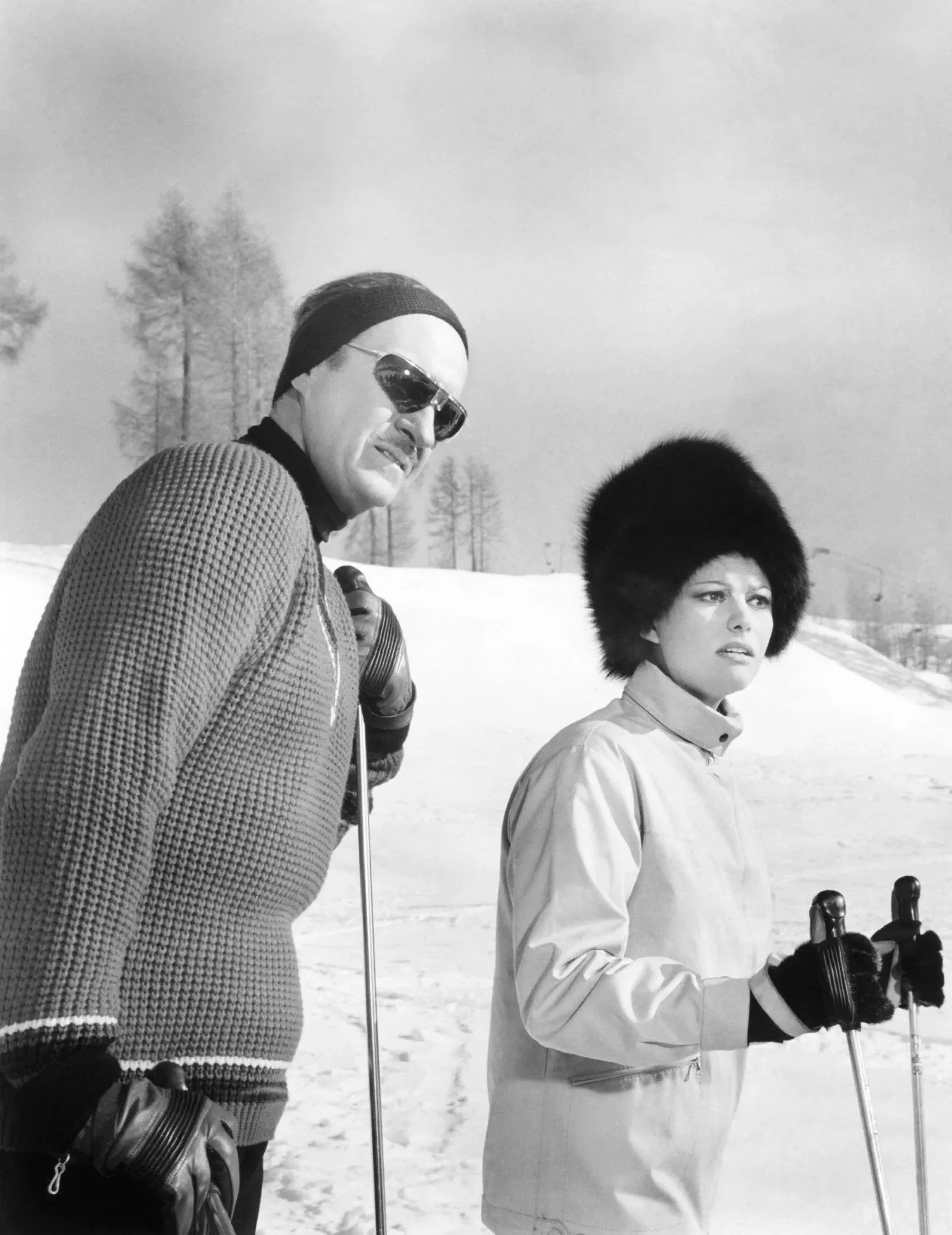
From left to right: To Catch a Thief, Oceans 11, Pink Panther
The jewel thief doesn't just steal jewelry; they steal it back. They take from institutions that are often built unfairly on the backs of others. When two men with a ladder and a power drill outwit centuries of accumulated wealth and power in just eight minutes, something inside of us shifts. For some, it’s horror, for others it's intrigue, or even glee. All because a line has been crossed— that the intangible power hidden in the Louvre jewels changed hands. The glass is shattered, the velvet ropes torn. Luxury becomes fragile, vulnerable. It is revealed for what it has always been. Just an illusion.