

Bratz: More Than Just Lips
Imagine this:
Five girls strutting down LA. They exude a life of excess– but only in regards to their style. Every block or so, a stranger might say something such as, “I like your jacket,” and one of the girls might smile and say, “Thank you.” Others might just stare in awe— and that one hater might stare with judgment. It is their aura and their clothing that define their brazen aesthetic. It’s not simply an identity but rather a form of expression. “It’s giving Bratz.”
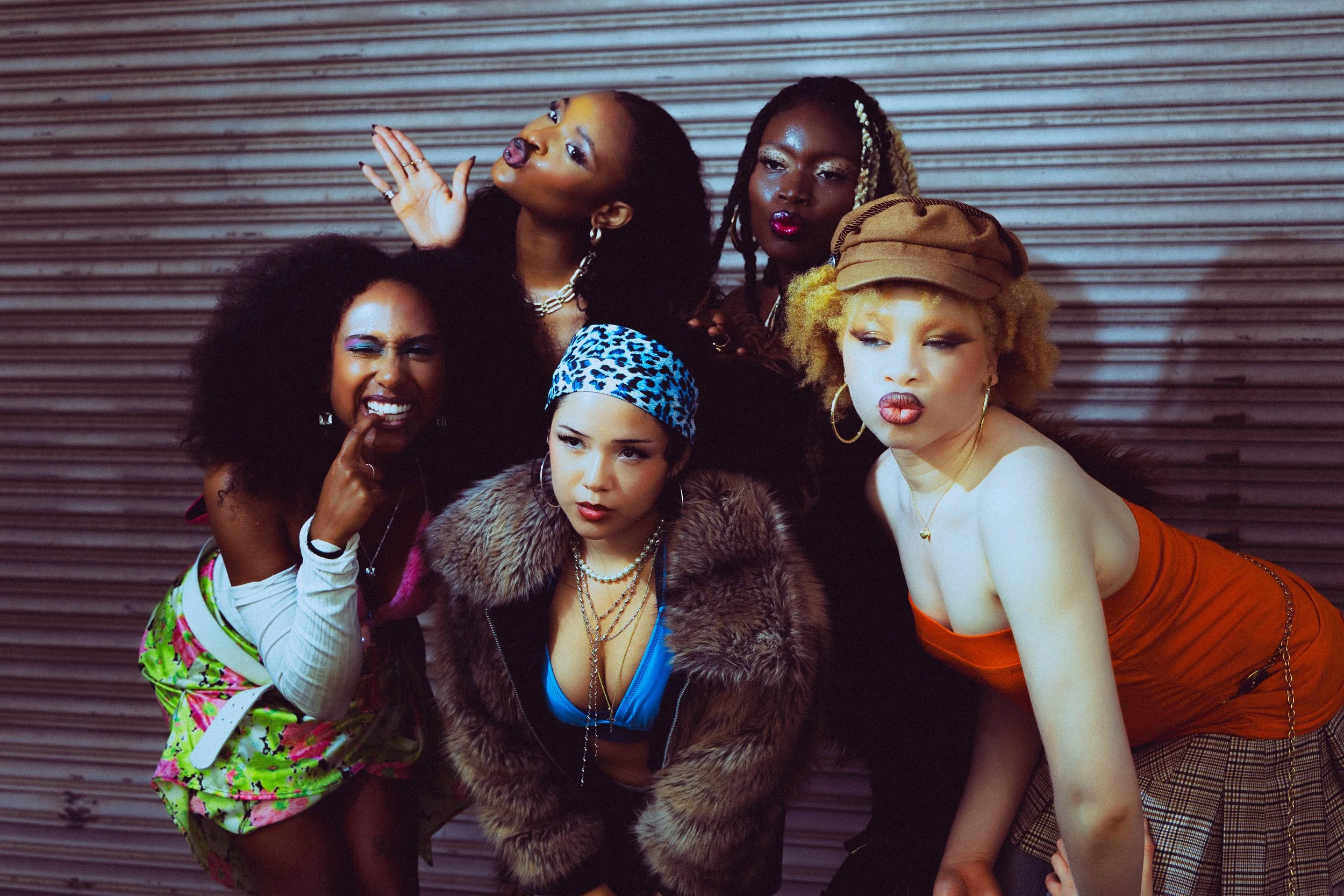
Original photoshoot by FAST at UCLA. Photography by Taniya Cooksey and Umu Diallo. Modeling (left to right) by Harerta Tesfamicael, Talia Balogun, Gabrielle Trujillo, Ayomide Akintola, and Itohan Edihae. Styling by Joanna Gaudet. Hair and makeup by Angel Rose Hova. Production by Chyna Wong-Wui.
The etymology of the word “brat” dates back to the 16th and 17th centuries. The Oxford English Dictionary defines “brat” as a derogatory word that has historically been used to describe a child who is spoiled or poorly behaved. When one thinks about derogatory terms, we think about slurs. Slurs are heavily associated with the oppression of people of color both globally and domestically.
So, we can decode the word “Bratz” as being a reclamation of the term “brat.” Rather than being a word of degradation, it is a term of pride– a word that celebrates being unapologetic for being a young woman with great style.
The Bratz brand debuted in 2001. The brand’s debut marked a significant departure in the doll market from Barbie, who represented the white Eurocentric standard of beauty in America. Therefore, the Bratz brand pushed diversity to the forefront.
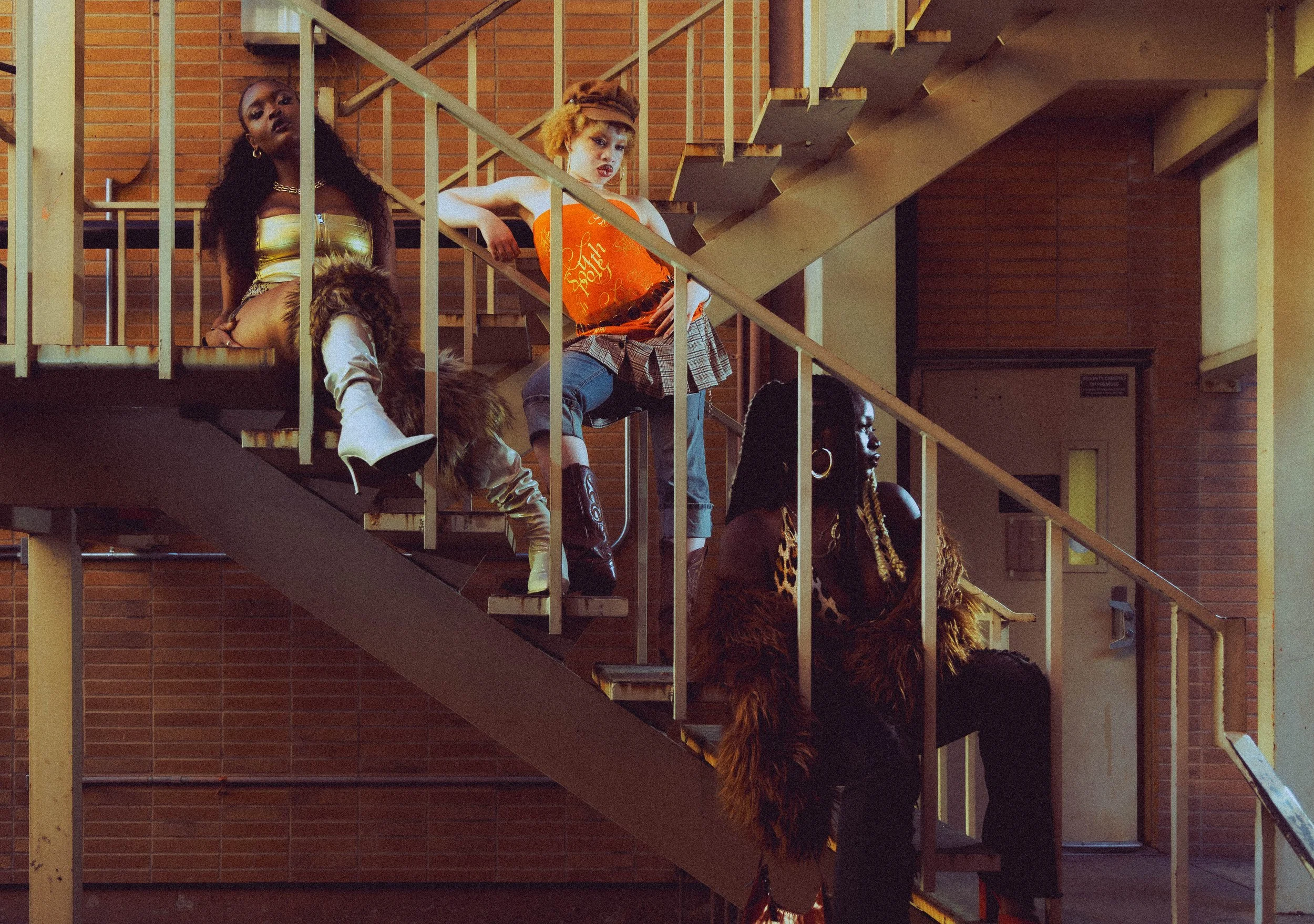
L to R: Talia, Itohan, and Ayomide. Photographed by Taniya Cooksey.
The striking and bold features of the Bratz doll incorporated full lips and heavy makeup, typically associated with looks and trends popularized by both black and brown women. This contrasted heavily with the “clean girl” aesthetic associated with Barbie. The makeup was bold and unapologetic. Bratz were rebellious, and they challenged what it meant to be “American.” After all, Barbie was the All-American beauty.
What makes a Brat(z)?
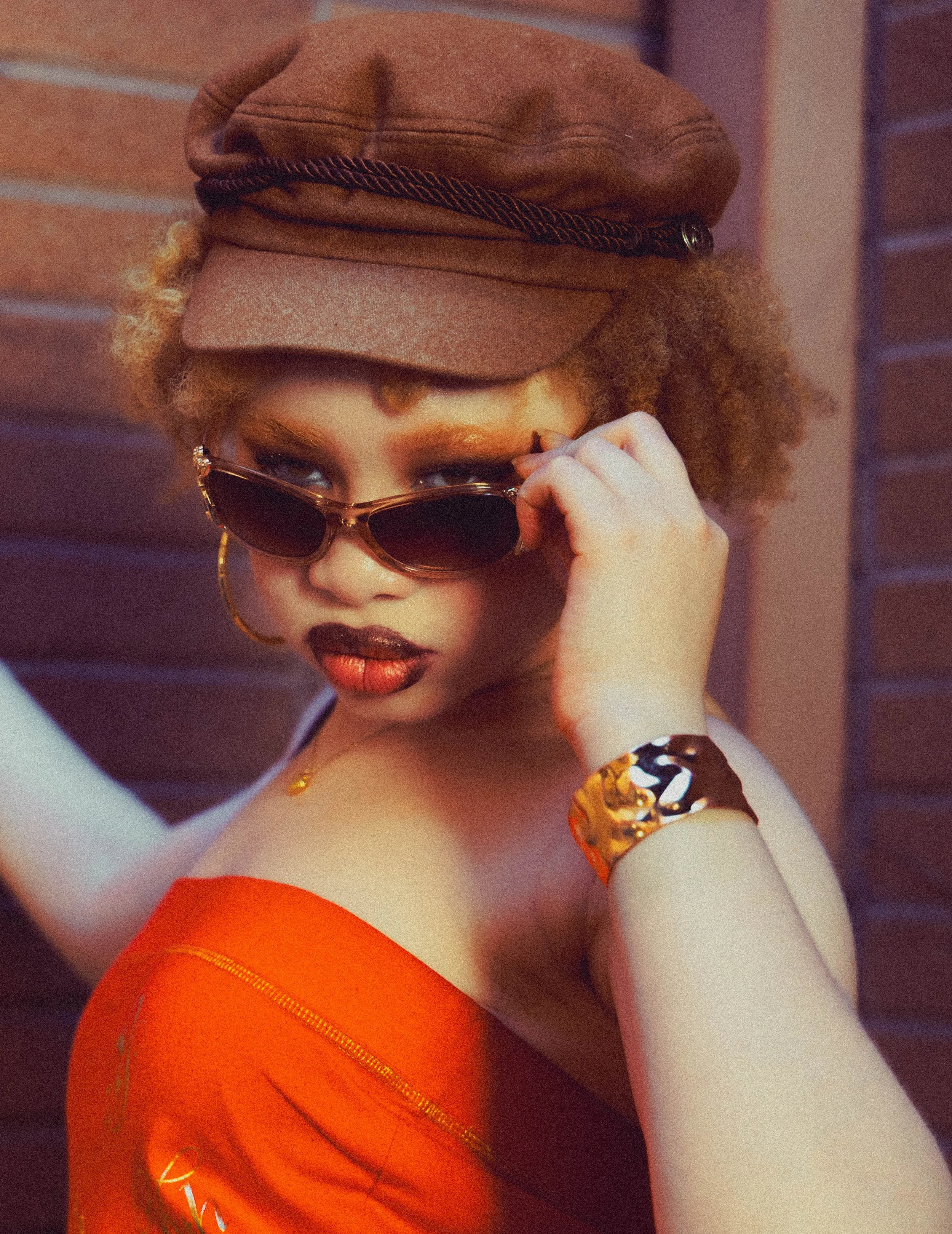
Itohan Edihae photographed by Taniya Cooksey.
A lot of the success of Bratz is a result of their connectedness to culture, which, in this case, included fashion. The McBling aesthetic took over where the Y2K aesthetic had left off; minimalism and monochrome were replaced with boldness, color, and unapologetic luxury. This aesthetic took over all corners of pop culture, ranging from hip-hop music videos, everyday street fashion, and Versace runways. It was no coincidence that when Bratz hit the market, they evolved into a cultural reset.
The full lips of Bratz are considered one of the brand’s signatures. Those plump, colorful lips contrasted heavily with Barbie’s, whose lips were not the striking feature of the doll.
When Bratz debuted in 2001, the mainstream beauty standards were all about thinness. It’s ironic when you think about the beauty standards of 2026, which glamorize full lips as a luxury, but back in 2001, the so-called “Instagram face” did not exist, let alone Instagram. What was once antagonized as being “too ethnic” is now considered the standard of beauty.
The Instagram face is a term coined to describe one of the desired beauty standards enforced in Western society. Notably, it is an exclusive look that prioritizes aesthetic over natural beauty. It is the concept of achieving a face through a slew of cosmetic procedures that achieves a face that is considered photogenic. The “Instagram face” is also associated with an ethnic ambiguity, borrowing features across various ethnic groups– upturned eyes, thin noses, full lips.
The New Yorker wrote about this all the way back in 2019, only a few years after Kylie Jenner had taken social media by storm as the influencer on Instagram. Lip fillers were not even slightly as popular in 2001 as they are now. In fact, the hype of lip fillers that transformed into a mainstream beauty standard that prioritized fuller lips really launched in 2015, something that has been referred to as the “Kylie Jenner Effect.”
Kylie Jenner’s own personal aesthetic that she curated: her full matte lips ushered in a new era of mainstream beauty standards. The “Kylie Jenner Effect” showcased the power of social media and, in turn, created a problematic perception of beauty. It pressed the question: Did someone need full lips to be considered beautiful? Snapchat and Instagram filters seemed to point to yes, given the filters that changed the natural appearance of people's faces.
So, you might be wondering, what does this have to do with Bratz? Well, let's think about what being beautiful meant in 2001. Being thin, being white-presenting (maybe with an obnoxious spray tan), and definitely blonde. Now of course, there’s nothing wrong with that, after all, we all love Barbie and early 2000s it-girls such as Lindsay Lohan. But the issue is, the concept of an “All-American Beauty” was exclusive and erased blackness and brownness by prioritizing not just whiteness, but features associated with whiteness, such as thinner lips. That’s why the Bratz made such a splash.
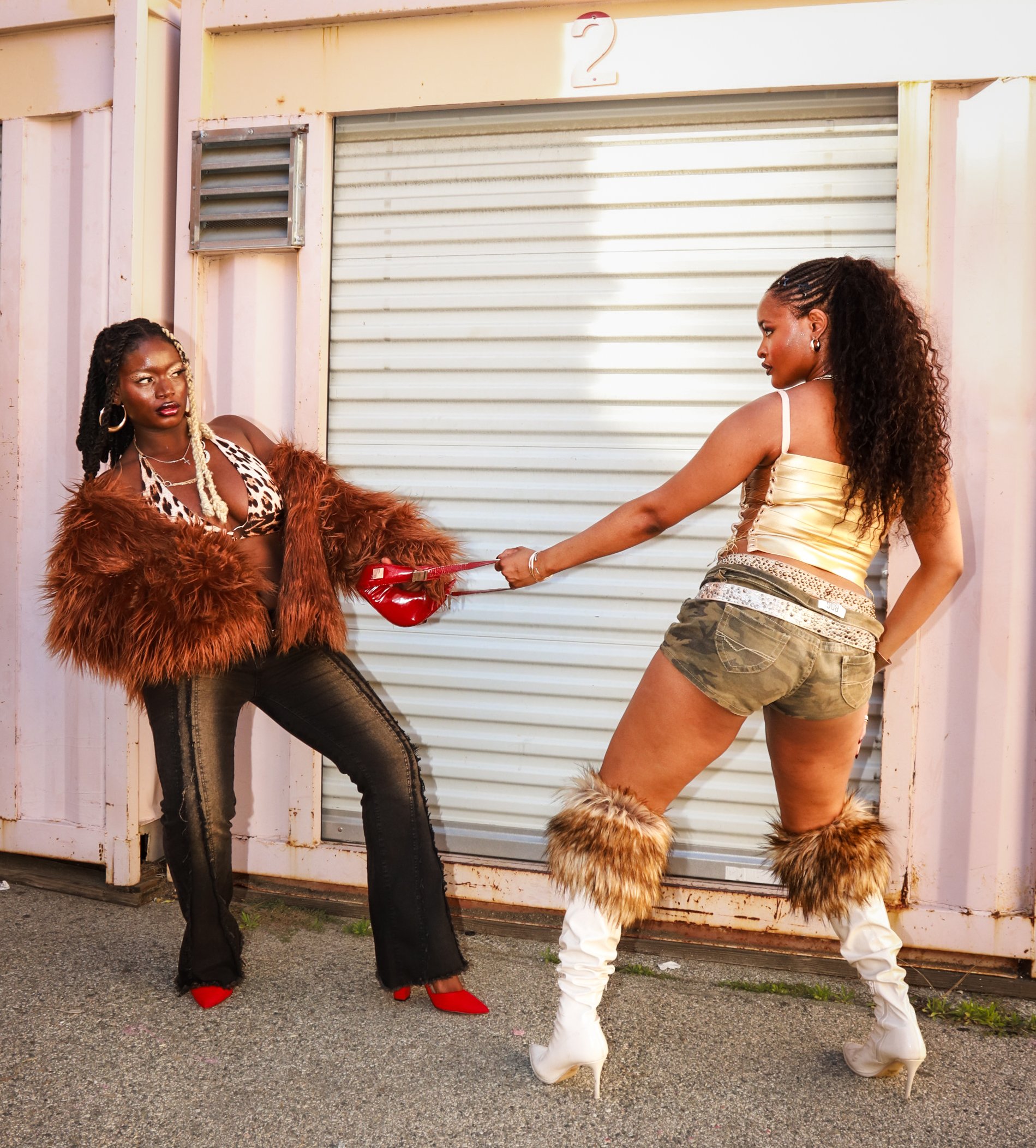
L to R: Ayomide Akintola and Talia Balogun playing tug-of-war with a red purse. Photographed by Umu Diallo.
The Bratz were not a singular character or doll, unlike Barbie. The Bratz included four main characters: Sasha, Yasmin, Jade, and Cloe, all of whom were distinct in their styles and personalities. The difference in race and ambiguity of ethnicity enabled more people to see themselves in the dolls. There was not just one look, or a single doll, or even a main character. The Bratz were a collective.
Excess versus Minimalism
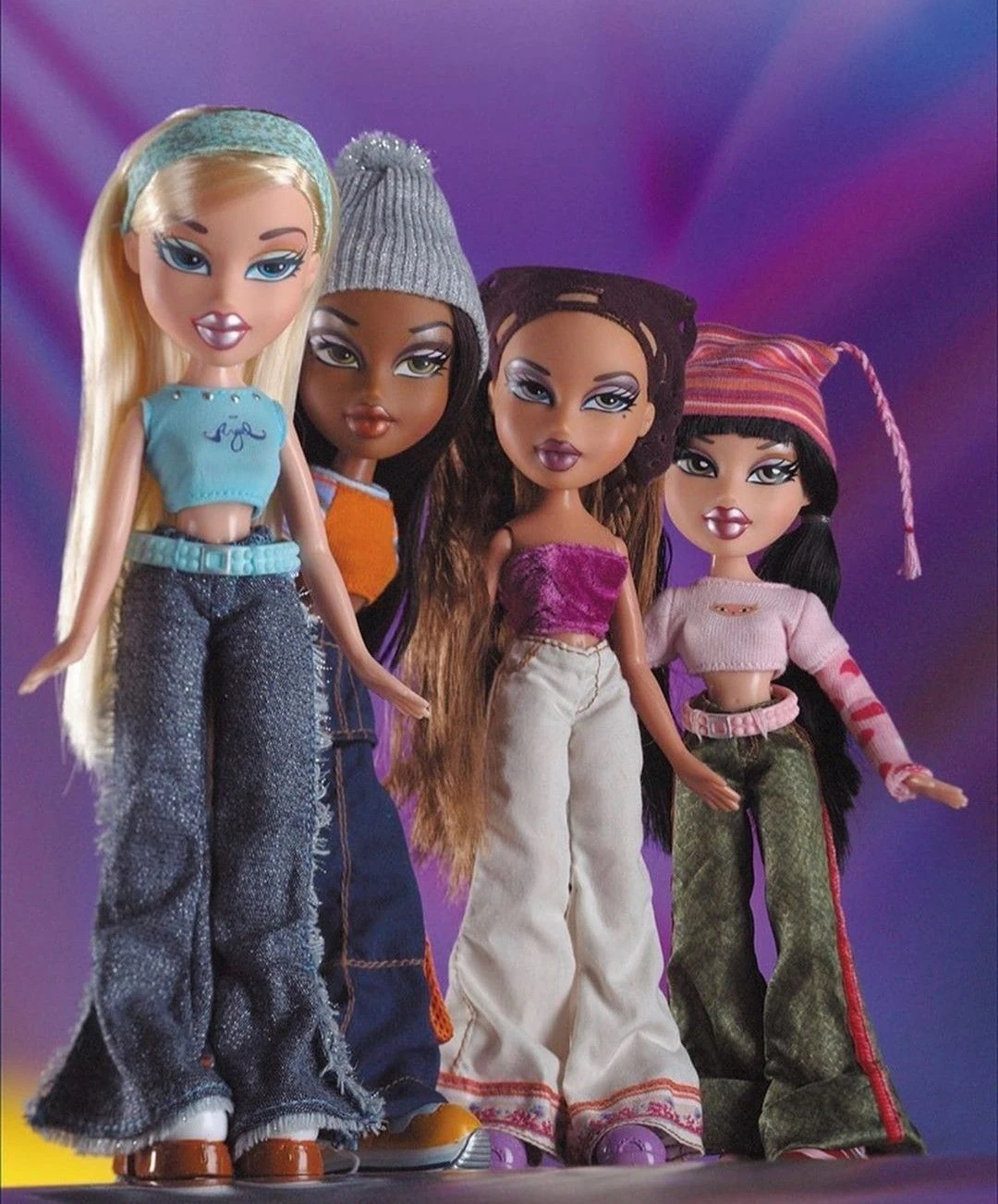
L to R: Cloe, Sasha, Yasmin and Jade from the very first Bratz line. Source: Bratz Fandom Wiki.
Excess has often been associated with being tacky or gaudy. I’m sure you’ve all heard the phrase “less is more,” or the famous Coco Chanel quote: “Before you leave the house, look in the mirror and take one thing off.” A lot of these attitudes towards fashion prioritize minimalism and put down maximalism. Even the alleged jest that Dame Anna Wintour made, “Versace dresses the mistress, Armani dresses the wife,” places minimalism on a pedestal. Versace fully embraced the McBling aesthetic in the 2000s and has always been associated with bold colors, patterns, and maximalism since its founding.
The Bratz themselves challenged that notion of minimalism. They were packaged with full accessories, oversized shoes, and that iconic baggy silhouette. It was not just about their racial or ethnic diversity, but their appreciation of the excess. Excess is a means of making yourself visible without apology. It’s Rihanna at the Met Gala, Lady Gaga during her The Fame era, or the runway challenges on RuPaul’s Drag Race.
The Bratz motto, “The Girls with a Passion for Fashion,” highlighted how streetwear was just as fashionable as haute couture. Yasmin’s bandana, Cloe’s athleisure headband, Sasha’s pom pom beanie, and Jade’s cat beanie were essentially on the same level as a $500 Prada headband. The style of the dolls offered a mainstream alternative to what was perceived to be stylish or simply fashionable. Street fashion is also accessible, which further underscores the inclusive nature of the Bratz. Seems to me these girls would jump at a chance to thrift just as much as they would at the chance to wear Alaïa.
The Modern Bratz Girl
The aesthetic of Bratz is an attitude, and the models for this shoot, Ayomide “Ayo” Akintola, Talia Balogun, Itohan Edihae, Harerta Tesfamicael, and Gabrielle Trujillo, each portrayed their own version of a Bratz doll. From their styled hair to their colorful makeup, each one of the girls represented a version of the modern Bratz girl. Not to mention, each model was a woman of color. Ranging from Eritrean, Nigerian, and Mexican roots.
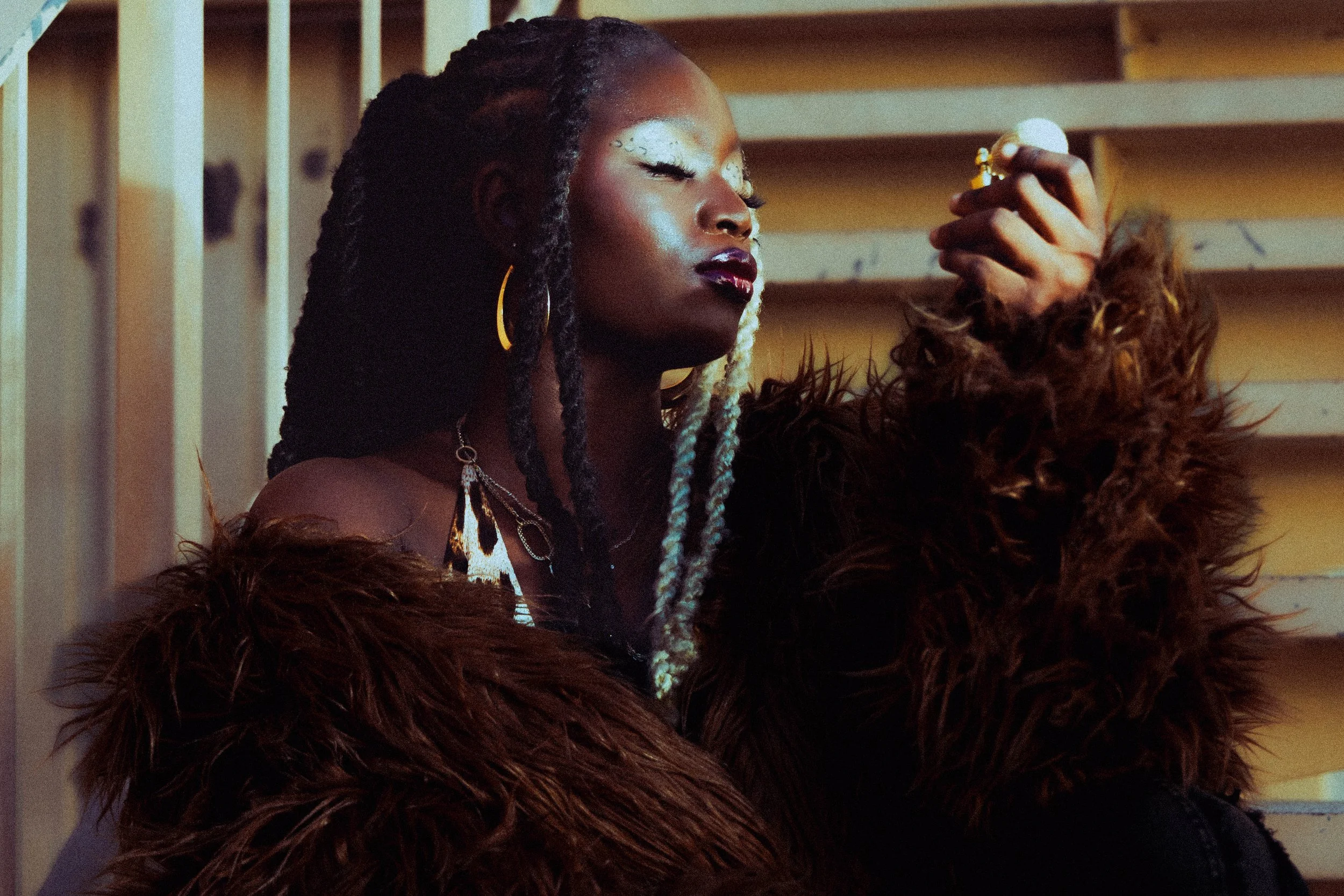
Ayomide Akintola photographed by Taniya Cooksey.
Ayomide’s entrance was nothing but short of effortless confidence. “I like how my face looks with and without makeup,” she told me as she waited to get her face done by the makeup artist Angelina “Angel” Rose Hovanessian.
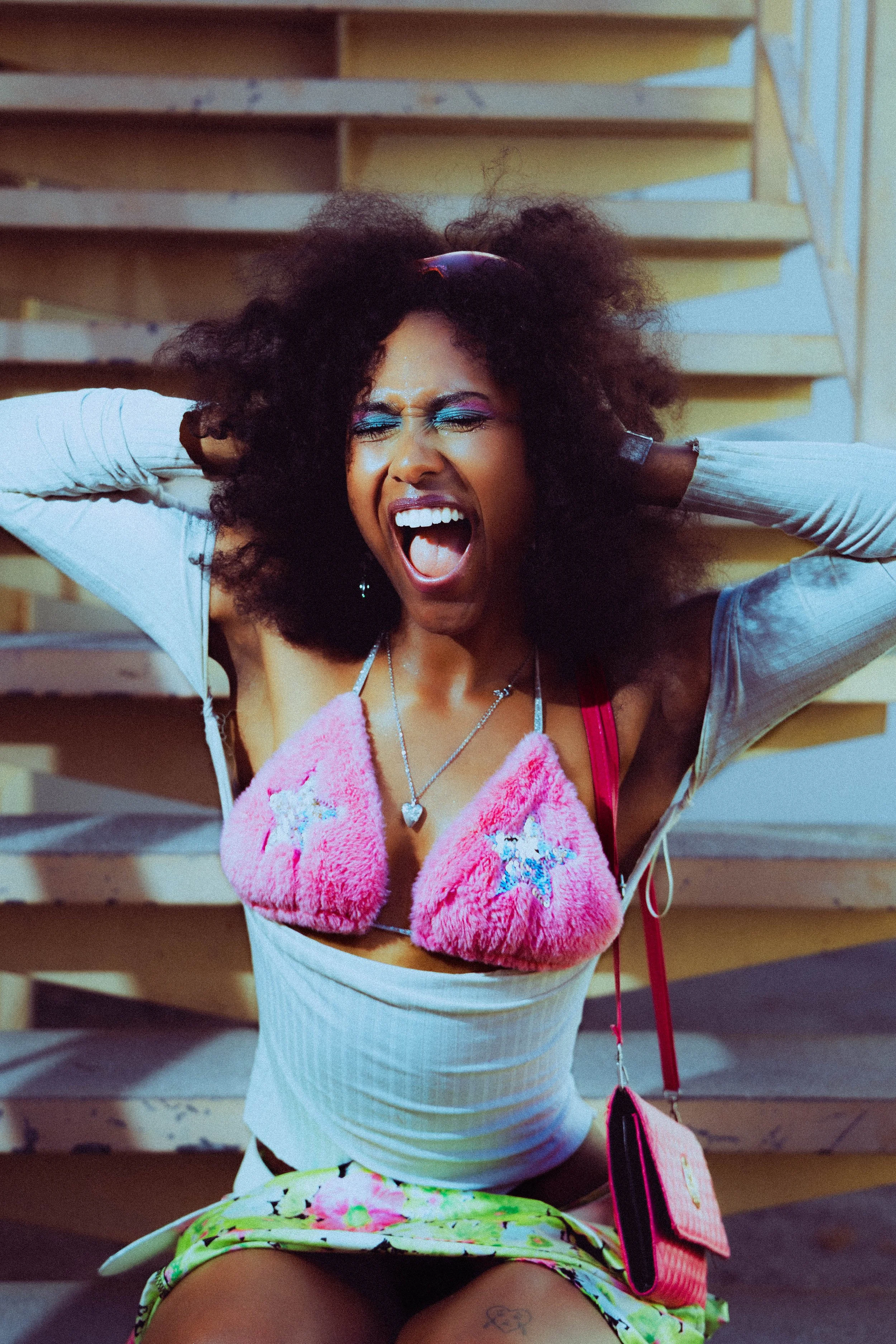
Harerta Tesfamicael photographed by Taniya Cooksey.
All of the models were dressed by designer and stylist Joanna Gaudet, in individual yet cohesive looks that paid homage to the Bratz girls of the past and present. Ayo was draped in a brown fur shawl, with a complementary leopard print bikini top, and boot-cut jeans reminiscent of the Bratz Rock Angelz line. Her red pumps perfectly complemented her deep cherry glossed lips and mesmerizing leopard-printed eyeshadow.
Talia was styled in a golden top that appeared to reflect every angle. Her camo shorts paired with a studded belt and the most fabulous white boots (accompanied by a faux fur trim) captured the very essence of a doll. Her black-star lipstick moment was even done by herself.
Itohan looked straight out of a 70s fashion ad. Her styling was reminiscent of the 70s revival that so much influenced the McBling aesthetic associated with the early 2000s. Her orange-red top–paired with gold jewelry, a brown plaid skirt, capri jeans, and brown boots–was pure diva. Her lip-liner was peak Bratz.
Harerta captured the Bubblegum Bling aesthetic that has resurfaced in the years since COVID. Pink, bold, and hyperfeminine. Her motif was a silver star, and she surely shone like one. Her makeup was ethereal and yet commanding. When asked about the shoot, she said, “Why suppress ourselves?”
Gabrielle sported a sporty blue headband, which was a nod to both Cloe’s headband and the headbands worn by the Cheetah Girls. She shared that “to be very comfortable in yourself and your skin” was one of her main takeaways of the Bratz style. She was accessorized with big classic hoops, a faux fur coat, a blue bikini top, and a denim skirt. The chunky black platforms and the silver jewelry were everything.
Closing Thoughts
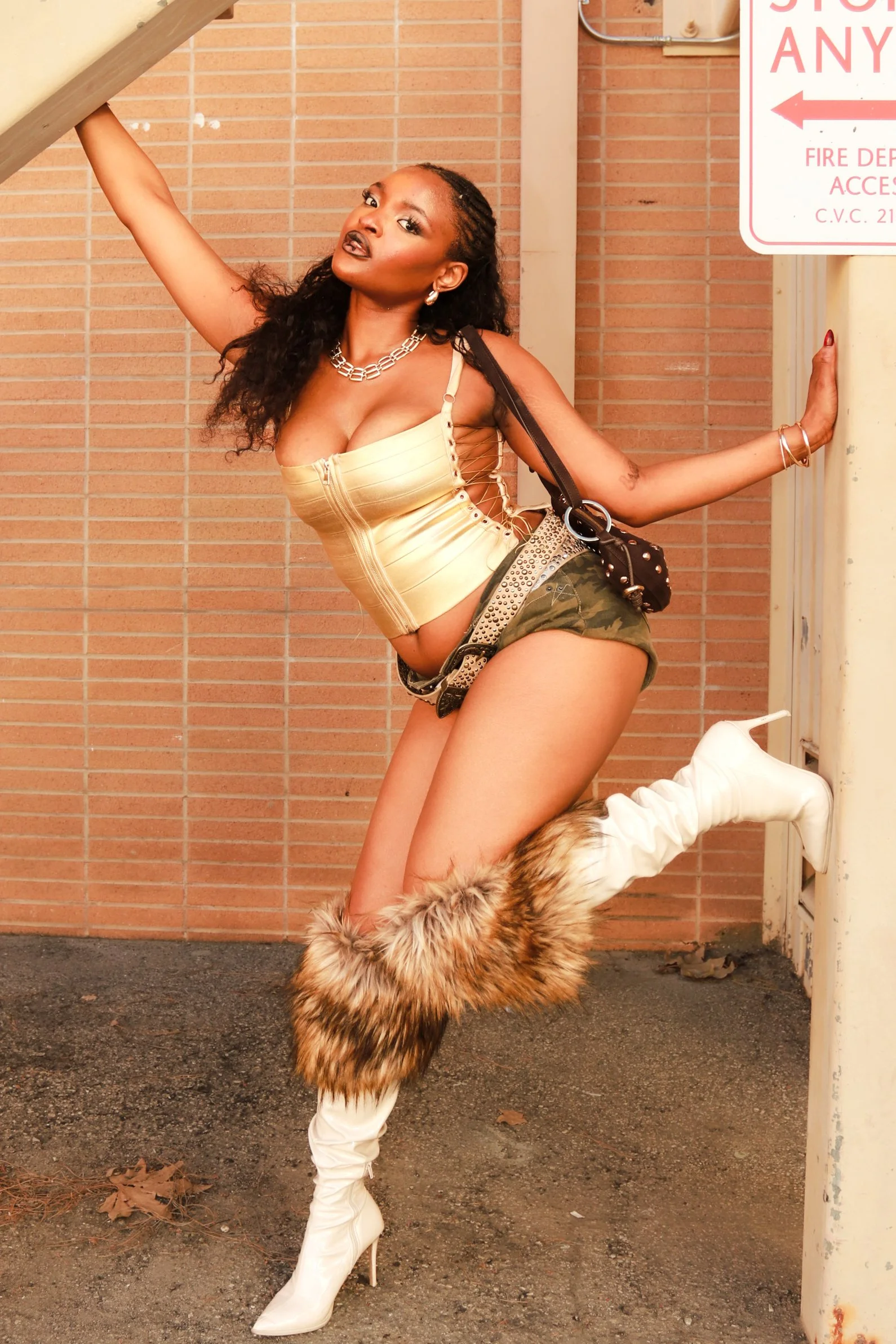
Talia Balogun photographed by Umu Diallo.
Our amazing FAST models, just like the Bratz dolls, are the antithesis of minimalism and Eurocentric beauty standards. After all, there is no single definition of what it means to be an all-American beauty. The branding of Bratz stood apart for its branding and very black and brown coding of its dolls' physical features. It is clear that the dolls were not meant to simply challenge Barbie in the doll market, but to challenge the exclusivity of Barbie. The brand celebrated street fashion rather than denouncing or rejecting it.
The Bratz aesthetic in 2026 is therefore just an extension of what the original dolls represented. They are unapologetic in how they dress, how they style, and how they beat their face. They make their presence known without having to speak a word.
With the popularity of lip augmentation, I think it is important to note that it does not matter how big or small your lips are. Whether someone chooses to get injections, has naturally full pouty lips, or does not touch their lips at all– that is not the point. Lips may be an iconic symbol associated with Bratz, but it is their clothes that really define them.
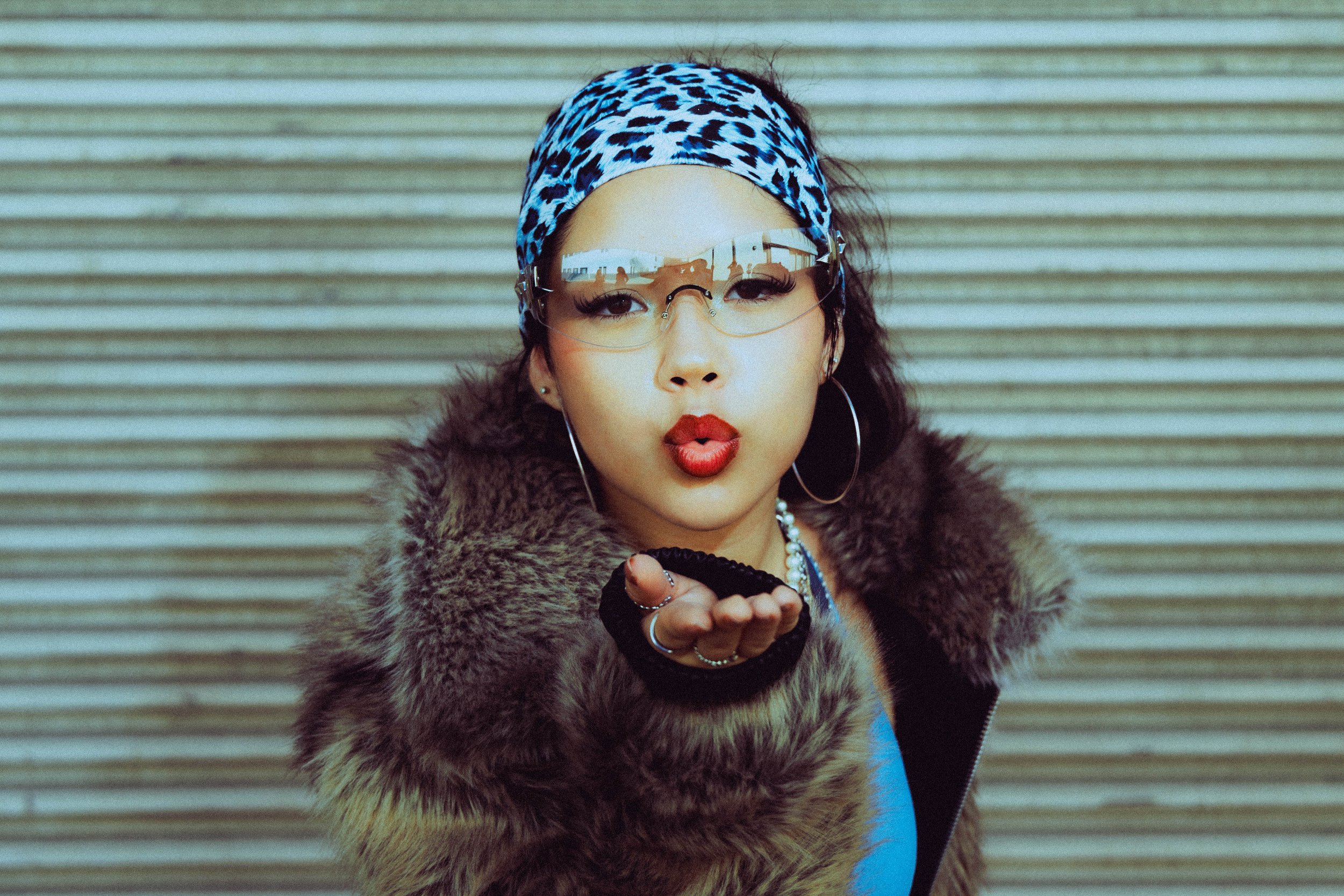
Gabrielle Trujillo photographed by Taniya Cooksey.
Bratz, however, did receive backlash for both their features and their clothes. While there are valid arguments to be made about the potential sexualization of some of the dolls that followed the first line, it is also important to mention that women being criticized or policed for their clothing is not a new concept. It seems more people were outraged in 2001 about Bratz dolls and Britney Spears showing her navel than about more pressing political issues. Sound familiar?
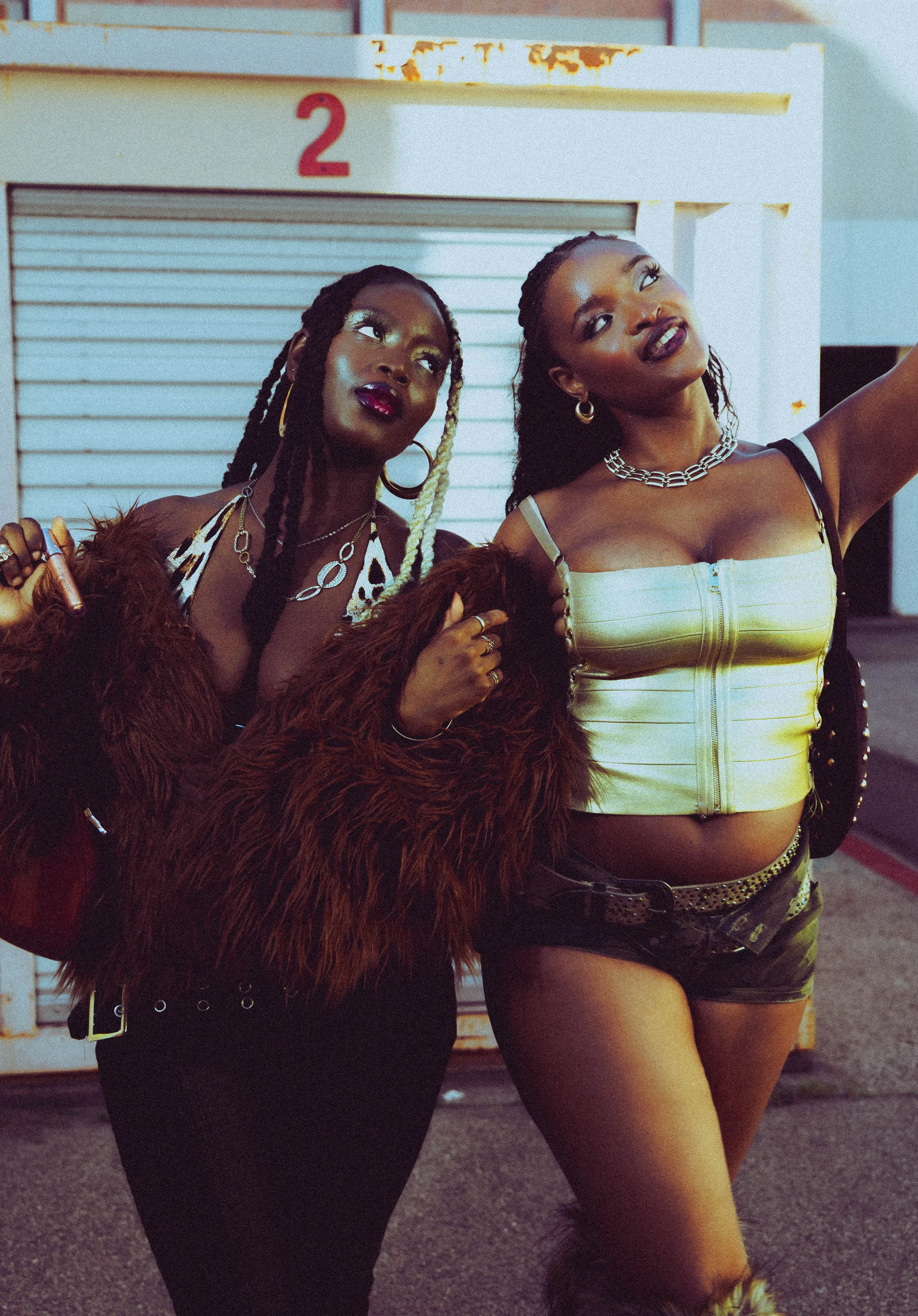
L to R: Ayomide Akintola and Talia Balogun photographed by Taniya Cooksey.
While it is important to remember the influence that brown and black people had on the styling and creation of the Bratz aesthetic, the modern-day Bratz girl is much more than her clothing. She has goals, she has ambitions, and she’s getting that degree (literally). But, more importantly, she’s inclusive. Anybody can be her. With or without Juvederm!