

Library Science: Fashion’s Gone Literary
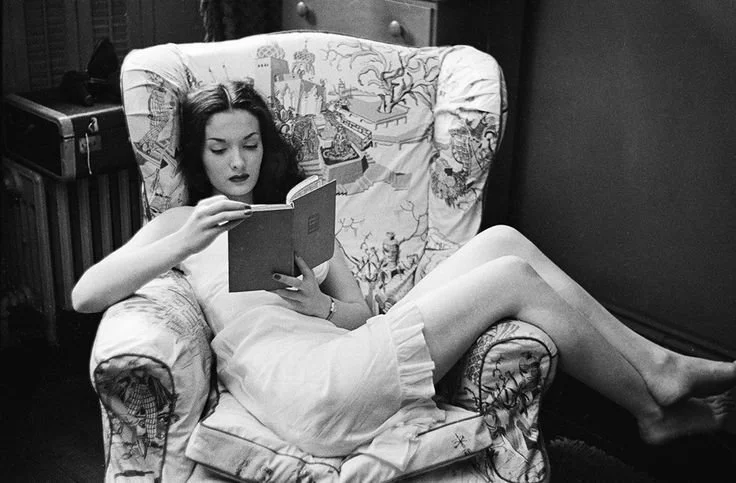
Image Courtesy of Pinterest.
On one sultry night in May of 2024, celebrities, fashion figureheads, muses, and moguls swanned beneath the vaulted ceilings of the Metropolitan Museum of Art. Draped in archival and custom couture, they gathered to ring in the Met Costume Institute’s “Sleeping Beauties: Reawakening Fashion” exhibition. “Sleeping Beauties” was about pieces so delicate and damned that they can only be worn once before they wilt away. The Met Gala is, and perhaps always will be, a world all of its own; it is a shining, ephemeral utopia materializing once a year within a city rapidly fracturing into those who can afford it and those who cannot.
And the 2024 Met Gala was a night to be remembered, not for the extravagant display alone, but for the Palestinian Liberation demonstration that threatened to disrupt it. As South African singer-songwriter, Tyla, stole the spotlight with an ephemeral Balmain gown composed of flocked sand which blighted into a crumbling mini dress as the night wore on, protesters migrated from Hunter College campus, intent on making their “Day of Rage” heard by those who would otherwise silence it. As model, actress, and auteur darling, Zendaya made appearances in two John Galliano looks — one, from Maison Margiela and the other from Givenchy—that matched each other in gothic garden melodrama, students took up keffiyehs and handmade banners reading “BY ANY MEANS NECESSARY” and “ALL EYES ON RAFAH”. As lucky luminaries posed for banks of cameramen snapping desultory shots, shouting out compliments and demands to give us a smile, protesters descended down Park Avenue and Madison Avenue, cut through the barricades erected in Central Park, and barreled through 5th Avenue impediments.
Since its metamorphosis from a circumspect midnight supper into a who’s-who hullabaloo for fashion’s mightiest and brightest, the Met Gala has accumulated and indeed, cultivated, a formidable reputation as one of the few vestiges of high culture; unashamed in defining itself by its insulation, its exclusivity, its clear distinction between what is and what is not cultured, what does and what does not merit tribute. Although the gala is ostensibly a charity fundraiser for the Met Museum’s Costume Institute, the event has since protracted into what can only be described as a celebration of the elite; a sort of ritual worship to their own fortitude, preeminence, and, of course, wealth. Thus, the MET Gala draws upon a vast lexicon of academic theorems, classic literature, historical fashion movements, and distinguished designers for its thematic framework — all of which serve to signify high fashion’s education in “high culture.” So there was a marked irony when, in 2023, J.G. Ballard’s short story, “The Garden of Time” was announced as the dress code for the next year’s MET Gala.

2024 Day of Rage protest. Credit: Karsten Moran for The New York Times
Written in 1962, the story was Ballard’s exacting critique of capitalism, and the formidably ignorant class of elites it renders, who — though well-read and cultured — are oblivious to the world beyond their garden walls. Even without the benefit of hindsight, it is a tale that holds an uncanny verisimilitude over our times — where wealth inequality and the cost of living are higher than they've ever been — but especially so, in the summer of 2024. As students led nationwide protests against the ethnic cleansing of Gaza, Condé Nast, the Met Gala’s primary sponsor, narrowly thwarted a union walkout the morning before the gala.
As the Met Costume Institute’s curator Andrew Bolton told the New York Times, neither he nor the museum’s leadership thought much of the tale’s prescience when selecting the story as a theme. They thought — myopically – only of the tale’s whimsical qualities: the majestic Palladian villa embroidered with a garden of glass-stemmed flowers containing mystical properties to turn back time, the count and countess who spend their days poring over illuminated manuscripts, playing out Mozart and Bach on the harpsichord. They did not, however, think of the tale's end. When there were no more flowers to be harvested and no more time to be made, the Count and Countess surrendered to the mob that they had been staving off for ages. The crowd breaches the villa, the books are toppled from their shelves, the harpsichord is broken into firewood, and the couple transforms into oxidized statues, artifacts of a lost time.
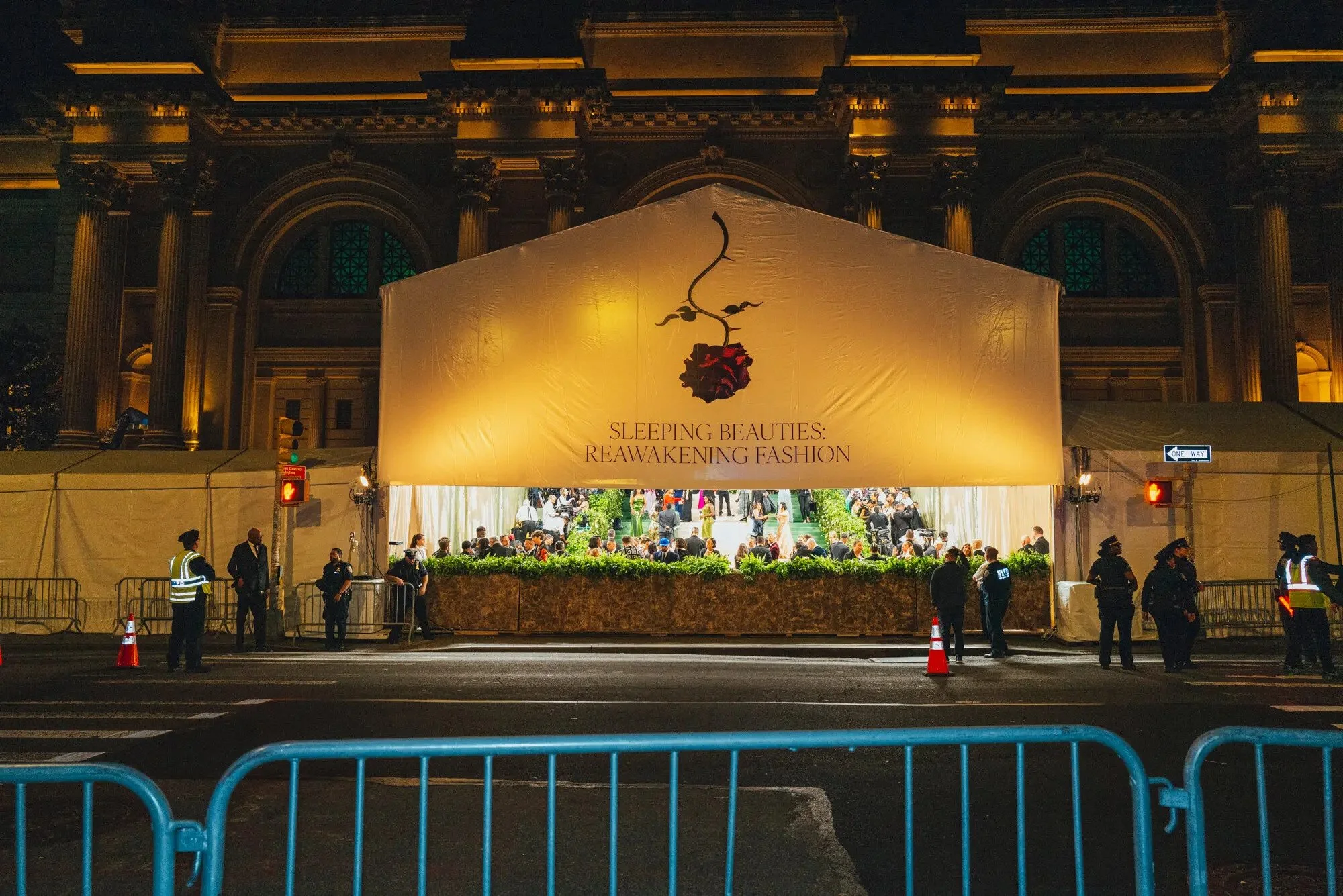
The 2024 Met Gala. Credit: Sara Konradi for the New York Times.
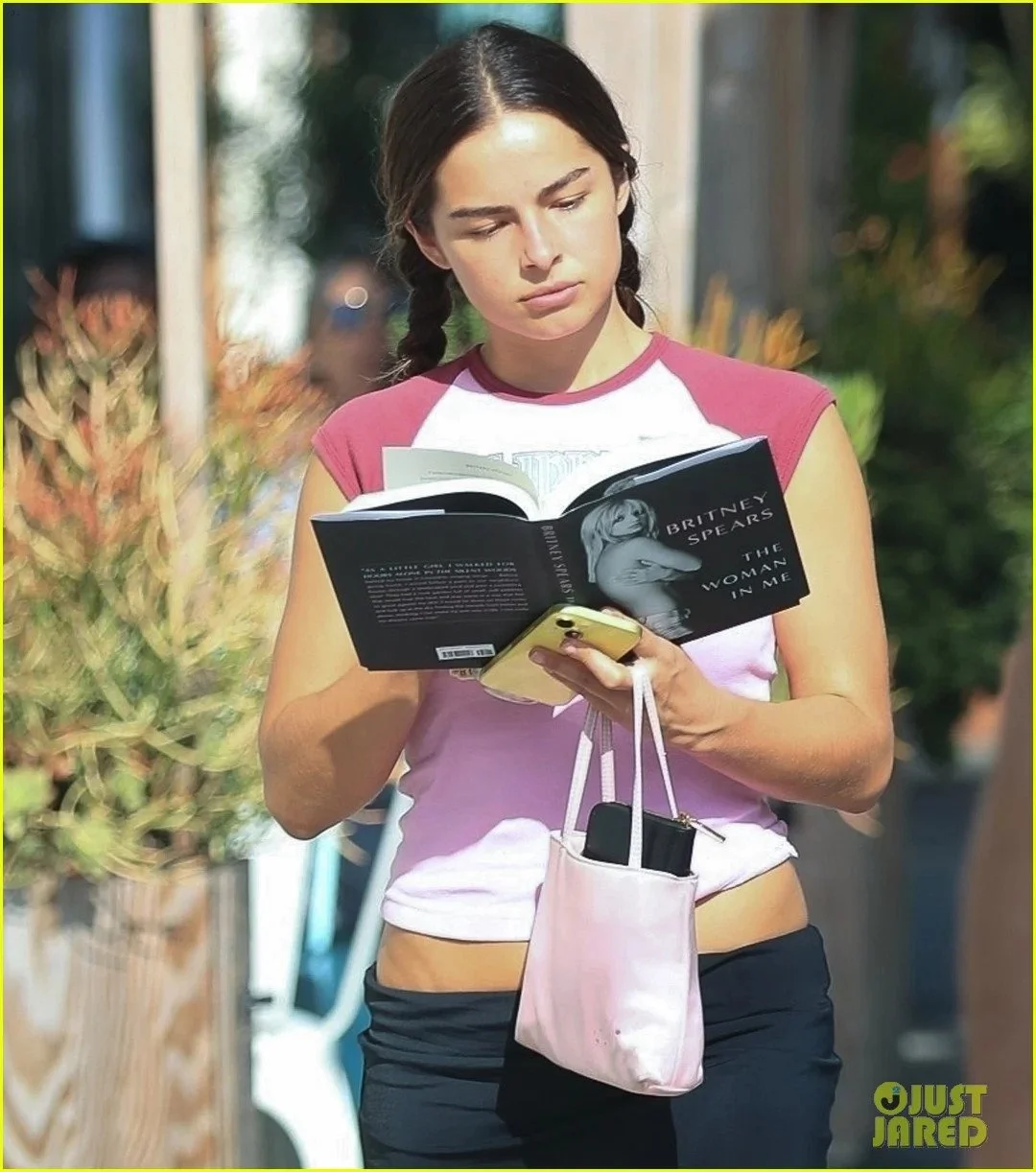
Addison Rae reading Britney Spears’ memoir. Credit: JustJared.
The 2024 Met Gala was the only iteration in recent memory that was able to effectively embody its theme, not on its own merits, but because of the very social forces it sought to exclude. The demonstrations were just one block shy of transforming fashion’s biggest night into a twilight of rage, and while NYPD officers were able to curb the protest before this occurred, one has to wonder how long the elite can reach into their garden of time to halt the tides of change before they run out of flowers. As the gulf between the wealthiest and the poorest Americans grows, we are thus demulsified into two factions: those who can only read about uprisings, hardships, and injustices, and those who can live them.
Fashion has always been referential, involving a revolving corpus of art, photography, history, music, and all varieties of culture — high and low — yet the theme (and the irony thereof) of the 2024 MET Gala punctuates a particular era in time wherein high literature is akin to high fashion. With the emergence of celebrity book clubs such as Kaia Gerber’s Library Science and Dua Lipa’s Service 95, literature-inspired luxury campaigns from Miu Miu’s book shop pop up and Saint Laurent’s Proustian promotional short film, and the literary affinities of high fashion darlings from Addison Rae to Timothée Chalamet who clutch books on paparazzi walks, the worlds of high literature and high fashion are no longer orbiting one another, but being flattened into a singular, marketable entity.
The favorable market shift towards literature is a curious ascendancy because if current studies prove true, Americans read less than ever before. The National Assessment of Educational Progress and Education Resources Information Center reported that roughly two-thirds of elementary, secondary, and even college students struggle to read and comprehend at a sufficient level. Amongst other witchhunts, the right wing — empowered by the second coming of the Trump administration — has imposed bans on various books containing “inappropriate” content across school districts and public libraries. By all metrics, the general public is becoming less and less interested in literature, but the shimmery and sundered world of high fashion has never been more inspired.
Otessa Moshfedgh, acclaimed author of My Year of Rest and Relaxation, has become an ambassador for Prada, penning a collection of ten short stories inspired by ten looks from the brand’s Spring/Summer 2025 collection. In 2018, Loewe released $590 limited-edition classics sets, accompanied by a campaign of smoldering models posing with enviable cloth-bound hardcovers of a tenth-grade reading syllabus. Josh O’Connor balances a boater atop his head as he (supposedly) reads Madame Bovary, Stella Tennant’s mouth hinges open suggestively as she pages through Don Quixote. Brands are repackaging bookish affinities as high fashion under the banner: “READING IS SEXY” (a la Rory Gilmore). And yet — in spite of fashion’s burgeoning fascination with intellectualism — mum was the word on one of the largest youth-led movements in the nation’s history, nursed in the country’s elite college campuses, spurred on by the intellectuals and cultural critics whom much of high fashion fancy themselves to be scholars of. The fashion world’s silence on Palestine (and other pressing political causes, for that matter) is not an unfortunate coincidence; it is the ultimate objective of so-called high culture — to derive novelty out of intellectual pursuits whilst discarding the inconvenient ideologies that often contradict the foundation of segregating culture entirely. To strip Swann’s Way of the demonstrated destructive effects of society pursuits over personal and communal enrichment; to erase the censure on self-obsessed intellectual subjectivity from The Secret History; to mine “The Garden of Time” for its luster and lyricism, whilst disregarding the commentary on class warfare outfitting nearly every sentence. Because inspiration is sedentary, equivocal, safe; mobilization is active, explicit, dangerous.
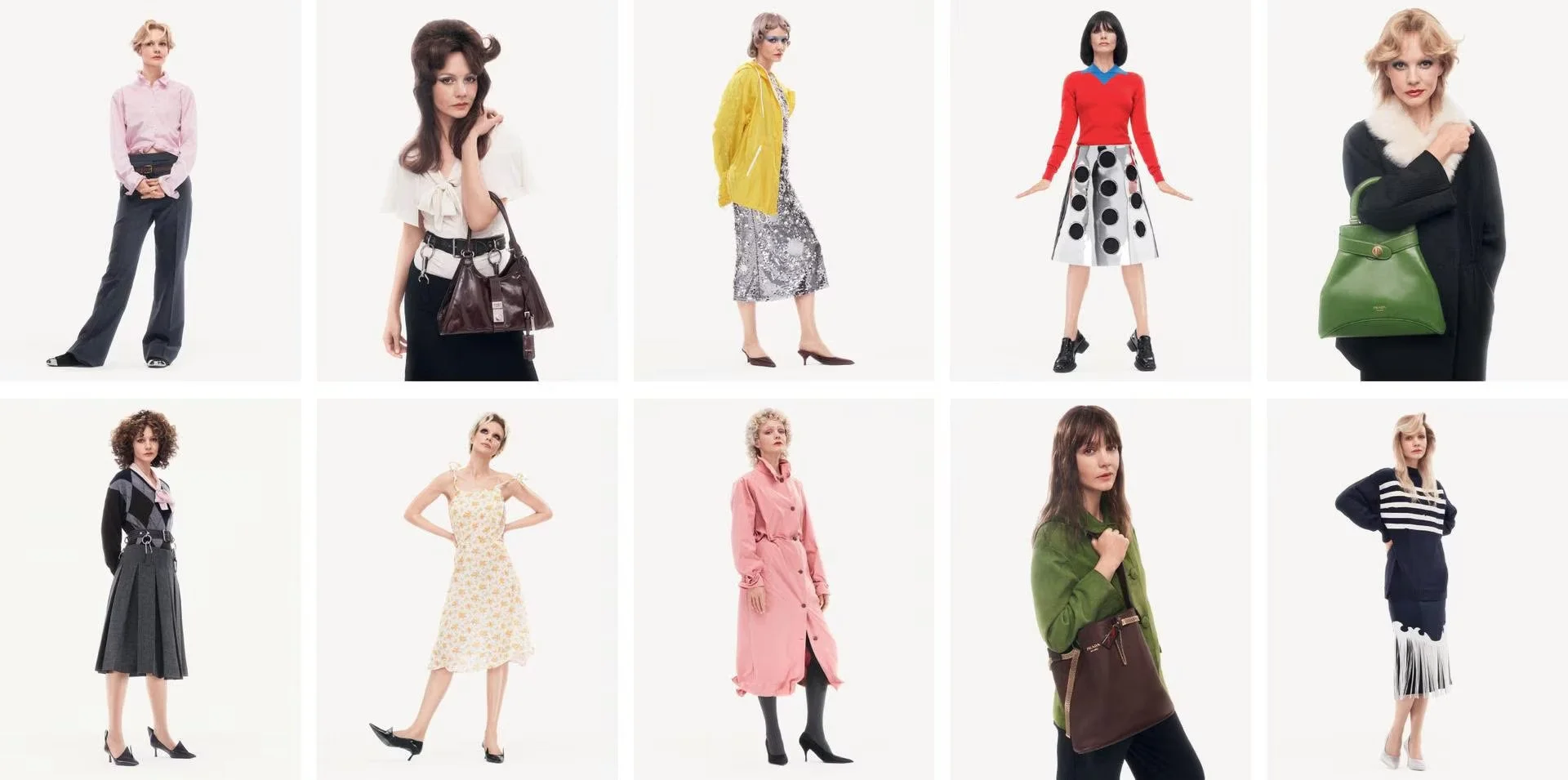
10 Protagonists, Prada project made in collaboration with author, Otessa Moshfeght. Credit: Dazed Digital.
As literacy rates embark on a steady decline, leisurely reading and intellectualism have become more obscure — more precious. While high fashion’s embrace of literary fiction could be graciously interpreted as the industry’s rebellious rejection of cultural anti-intellectualism which has been abound in recent years, inflamed by the Trump Administration's vendetta against both private and public education, a more solemn evaluation would see it as a celebratory rejuvenation of the leisure class and appropriation of academia without consideration for any of the associated class politics or critical analysis. Fashion’s embrace of literary fiction could be the harbinger of our new Gilded Age, where being well-read — or rather, the performance of being well-read — is now a luxury in and of itself.
The Literacy Crisis
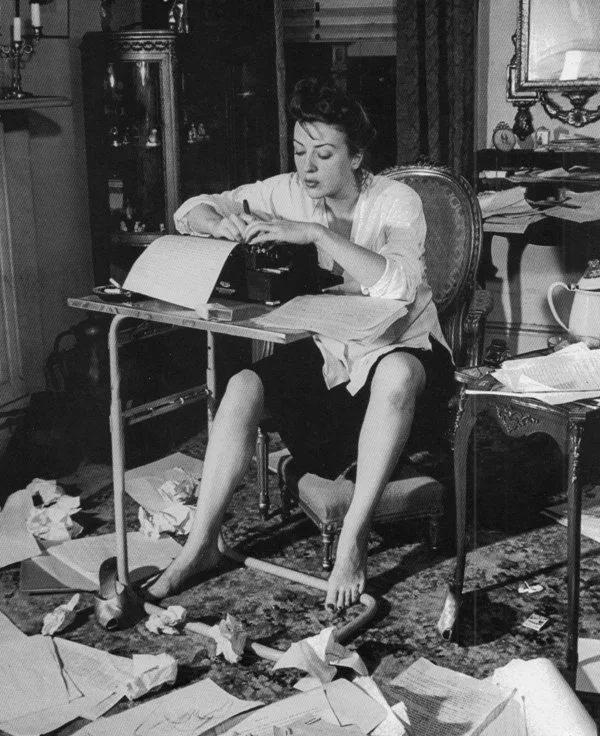
Burlesque Star, Gypsy Rose Lee, writing her first book, The G-String Murders, in 1941. Credit: Books for Victory.
In 1955, Rudolf Flesch published, Why Johnny Can’t Read — And What You Can Do About It, an endorsement of whole language learning over the predominant reading instruction at the time, phonics. Flesch opens the book with a letter to Mary, Johnny’s mother, informing her that her son can finally read — or he will if he is only exposed to whole language learning in school. “I think Johnny will go to college,” Flesch writes to the allegory, “He has a very good mind, as you know … Johnny’s only problem was that he was unfortunately exposed to an ordinary American school.” He compares the education in America to that of Italy, Austria, West Germany, Norway, and Spain, writing that “there are no remedial reading cases” in these countries, or “practically anywhere in the world except the United States”. Flesch’s book was largely influential and partially responsible for influencing the American public school system to transition from phonics to whole language learning. However, Flesch — and many professionals who hold any weight in the conversation — make no mention that Johnny may not get enough to eat or get enough sleep. Johnny may have an undiagnosed neurodivergence, or come from a household where English is a second or third language, or simply not spoken at all. Or Johnny may be Gen-Z. Regardless, even with the adoption of whole language learning in many public school districts across the country, Johnny still cannot read.
The existence of literacy as a status symbol is not without precedent. Widespread comprehensive education is a relatively new innovation of the mid-19th century. In medieval Europe, where literacy was generally reserved for the upper crust of society — clergymen and aristocrats — the reading population of various European countries sat at roughly 10% or less by 1500. Naturally, most of what was read and written was done by men and consisted primarily of liturgical texts written in Latin, which were wholly inaccessible to the general population. The invention of the printing press in the 15th century and, beyond that, the Industrial Revolution in the 18th century, stirred a degree of class consciousness among working populations, many of whom began demanding fair prospects for their children and education. This led to the institution of state-sponsored public education across the West in the 19th century. Education, and by proxy, literacy, has been an issue of political import ever since, and more specifically, who has the right to those privileges has been politicized for ages, especially in the United States.
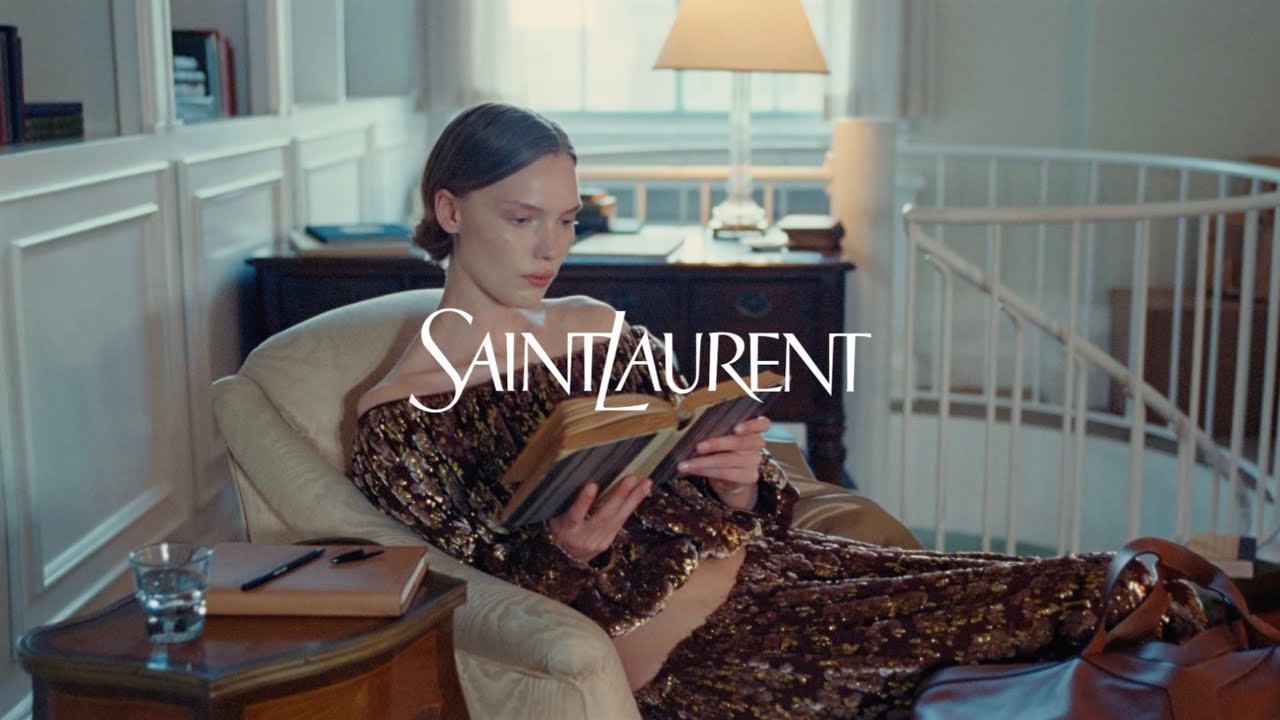
Still from Saint Laurent short film inspired by Marcel Proust’s In Search of Lost Time.
From the historic discrimination of women in higher learning institutions to the battle Black Americans faced in ensuring proper education for themselves and their children, literacy has been withheld as a means to subjugate and suppress minority populations. Such policies, along with other societal and political factors, have created a widening gulf between the highest and lowest performing students. No Child Left Behind (NCLB), the controversial policy signed into law by President George W. Bush, was an attempt to ameliorate the learning disparity by introducing annually standardized tests. Theoretically, the law incentivized school districts to ensure all students were proficient in reading and mathematics; in practice, however, NCLB penalized schools and teachers who did not have the resources to meet these standards. While many of the original statutes laid out in NCLB have since been revoked or otherwise ceded to state-level governance, the legislation created a bipartisan trend of meddling in public schooling. The transition to Common Core, along with the ongoing debate over whole language learning versus phonics instruction are indicative of a broader trend towards experimentation that swept public schooling in the late 2000s and 2010s. destabilized and disrupted Gen-Z’s educational experience, and more importantly, put the question of how we should be reading and how we should be learning into a constant state of flux.
While Gen-Z is reportedly on track to become the most educated generation, outpacing Millennials and Gen X in college enrollment and high school diploma or GED obtainment, they are also on track to become the most illiterate. Literacy does not constitute the base ability to read and write, but rather the ability to comprehend. To be challenged by literature and media, to process, to illuminate, to sit in discomfort and confusion requires a degree of stamina and tolerance that many studies indicate Gen-Z has either sloughed off or never developed to begin with. In the notorious article published in The Atlantic on the elite college students who struggled to work through a book in a week or two, this crisis was placed in stark and rather melodramatic terms.
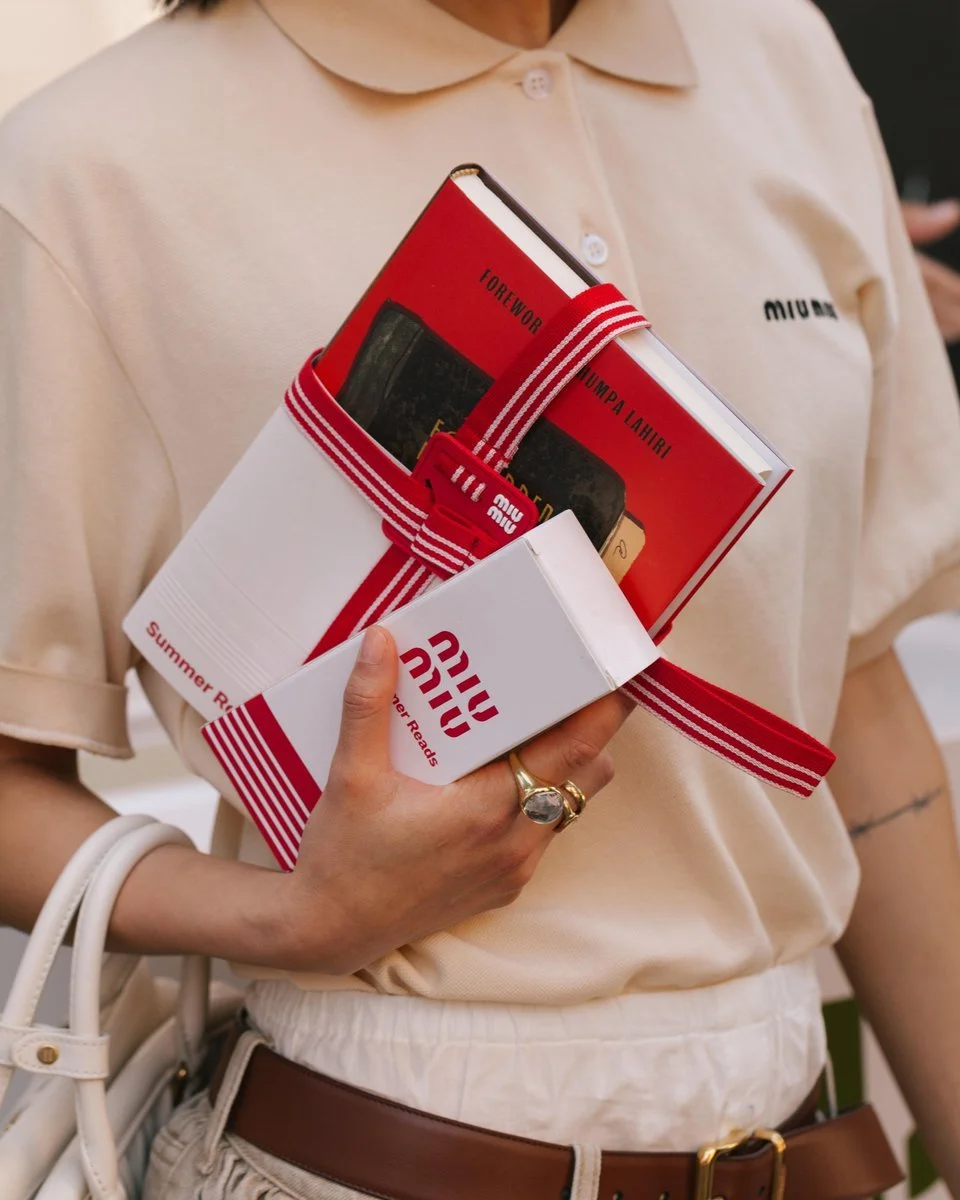
From Miu Miu’s June 2024 Summer Reads pop-up promotion.
Gen-Z is routinely lambasted for their lack of media comprehension — of which critics frequently frame Gen-Z’s "sensitivity" or “social media addiction” as the primary culprit — yet this perceived intellectual poverty does not exist in a vacuum. It is the logical conclusion of the systemic degradation of public schooling, a deficit only further compounded by the disruption that two years of quarantine caused. In an article on the impact of quarantine closures on early education, Dana Goldstein wrote for the New York Times, “Children in every demographic group have been affected, but Black and Hispanic children, as well as those from low-income families, those with disabilities, and those who are not fluent in English, have fallen the furthest behind.” Affluent children who may struggle with reading or mathematics can afford tutors to fill the gaps in the education system. Poor children — many of whom are neurodivergent, BIPOC, or in unstable home environments — cannot. Though the Biden administration attempted to make strides in salvaging the literacy of these children, the Trump administration’s efforts to defund and abolish the Department of Education have all but effaced it. The President carries out litigious vendettas against elite universities, accompanied by prolonged efforts to cut federal funding not just for the arts and humanities, but for the sciences as well.
Though Gen-Z’s social media addiction may supply part of their storied illiteracy, it is not the whole story. Studies have indicated that social media halves our attention spans, makes us more anxious and withdrawn, and poisons us with misinformation, yet we are dependent on it anyway. Like drugs, gambling, or any other addiction, it is not governed by reason. With the rise of AI comes a promise to eliminate most white-collar jobs, and with it, an air of existential dread. The experience of being Gen-Z is the mastery of tactical dissonance, hedonism, practiced indifference, and above all, pessimism. An instinctual belief that the good parts of life and of culture — if there ever were any — have vanished. Unlike doomscrolling, reading cannot provide a sedative for this. It cannot grant the immediate gratification of several hundred likes on a post or arguing with a troll in a comment section. With what little time a given person has between work and school, it tracks that they should choose the activity with the highest yield in dopamine. This is the byproduct of a piecemeal education composed of excerpts, articles, short stories, and political cartoons, and not full books. That is, for the majority of Gen-Z who had no other resource but public schooling for which to learn how to read.
Reading books, then, signals the enviable virtue of self-control. It is a privilege to read on routine, habit, and leisure alone. It is also a matter of willpower, an expression of authority over one’s own life, time, and mind, all of which have been increasingly preyed upon in the digital age. Reading has always been a measure of tolerance and education, but we are returning to a place where reading is becoming a status symbol again, and nowhere else is this retrograde more apparent than in high fashion’s newly kindled literary fixation.
Performative Intellectualism
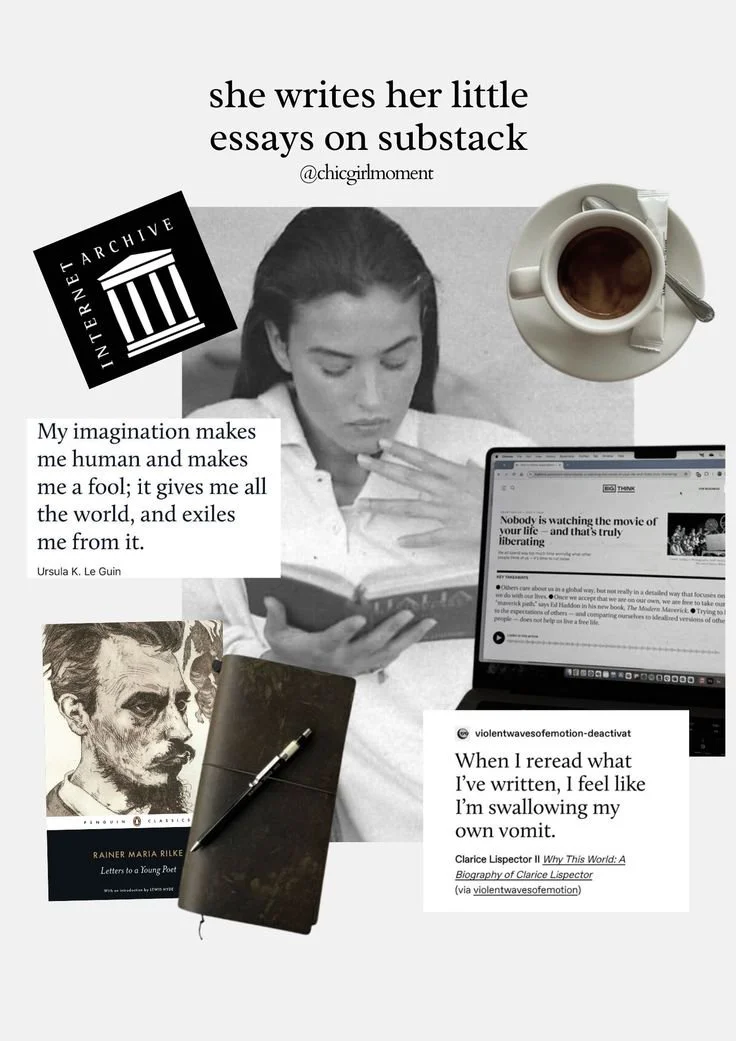
In his book, The Anxious Generation: How the Great Rewiring of Childhood is Causing an Epidemic of Mental Illness, American social psychologist Jonathan Haidt postulated that Gen-Z experienced a “phone-based childhood” as opposed to a “play-based childhood.” Gen-Z, he says, were the first to experience puberty with “portable portals” into a digital world. Gen-Z does “play,” or rather, they make believe, though not in the ways that their parents once did. Social media is, after all, a sort of pageantry. We are served up a constant carousel of picture-perfect lives: European holidays, luxurious clothing, unblemished skin. Influencers sell more than just themselves and their lifestyles; they sell exclusivity. Before, our favorite game was “luxury.” Our new favorite game is intellectualism. This is not because it is necessarily aspirational in the dominant culture, but because — like holidays, luxury clothing, and flawless beauty — society has commodified it. The public intellectual is all but extinct, replaced instead with the performative intellectual.
As Fordham Political Review states, anti-intellectualism is on the rise, with Americans distrusting institutions — particularly media and science — more than ever. This trend has diffused to Gen-Z, in both the “cruel kid” young conservatives who yearn to use slurs again and the young liberals and leftists who pass around memes that mock “being too woke.” Much like influencers, high fashion is able to tap into this fervor and turn into something sleek, fetching, yet altogether inoffensive.

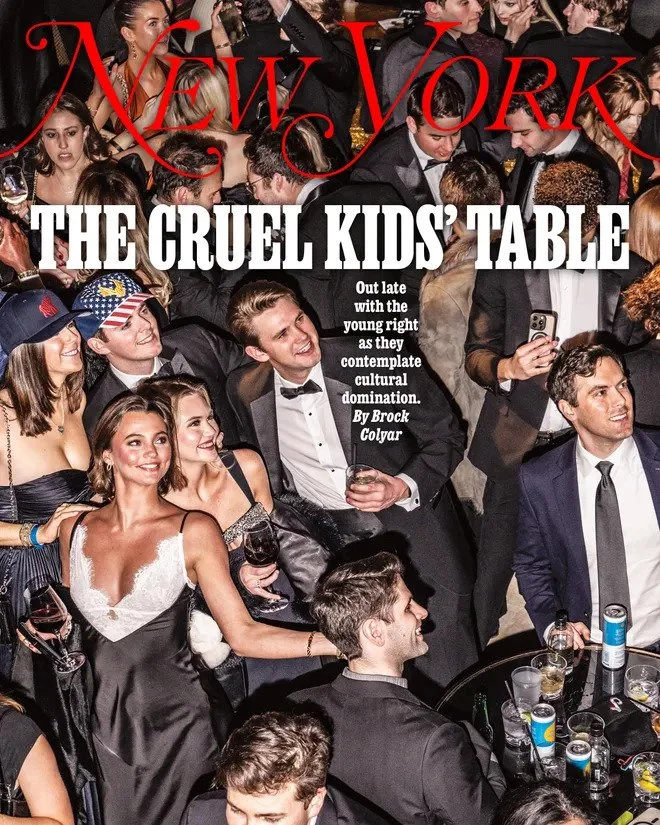
Anti-intellectualism is on the rise on both the left and the right. Credit: Polyester Zine (left) and New York Magazine (right).
As consumption of high fashion garments becomes more accessible due to rental sites and indiscernible “dupes,” fashion houses and figureheads are turning to a more reliable means of high culture and literature to maintain an air of inaccessibility and distance from the masses. In selling $95 book bag charms of I Know Why the Caged Bird Sings or Sense and Sensibility, fashion is erecting a barrier to entry that may prove more impregnable than wealth: literacy.
“READING is Sexy”

Elle Fanning for Coach x Penguin Random House book bag charms.
In 2024, model, actress, and it-girl Kaia Gerber announced her new book club, Library Science, which has since featured many of the same titles that may easily appear as a Coach book bag charm, a Miu Miu pop-up offering, or sandwiched in an aesthetically pleasing Instagram dump. “Reading is so sexy,” Gerber mused to The Guardian. Among the Library Science selections are The Lover by Marguerite Duras, Sex and Rage by Eve Babitz, Slave Play by Jeremy O. Harris, In The Dream House by Carmen Maria Machado, and Play It as It Lays by Joan Didion. Literary fiction, translated novels, memoirs, and assorted classics are favorites of the fashion world and of the burgeoning “literary influencer.”
Doomsayers and alarmists have read the tea leaves of TikTok neologisms and declining literacy rates as omens that we are on the slow descent into a post-literate society. Many of them view the popularity of the “romantasy” and dark romance genres, Colleen Hoover, and other “BookTok” favorites as further evidence of this inclination. It is perhaps for this reason that high fashion rarely touches genre fiction. “BookTok” often circulates books that come with a more accessible threshold, which repels those in high fashion who work to cultivate singularity and superiority. However, this distinction is not as stable as it would appear, as the very “lowbrow” reading culture high fashion attempts to distance itself from, continues to sustain the industry it now aestheticizes.
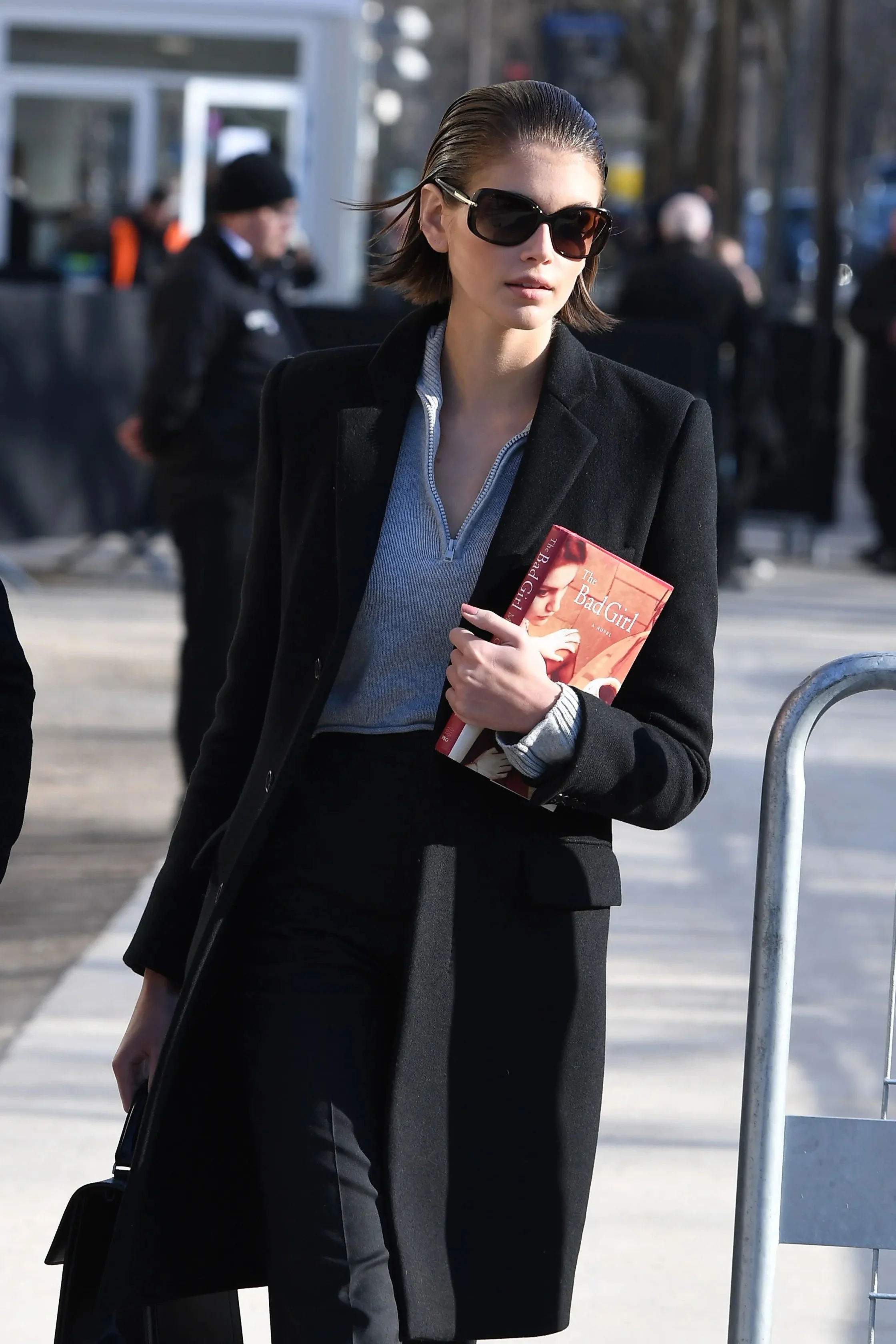
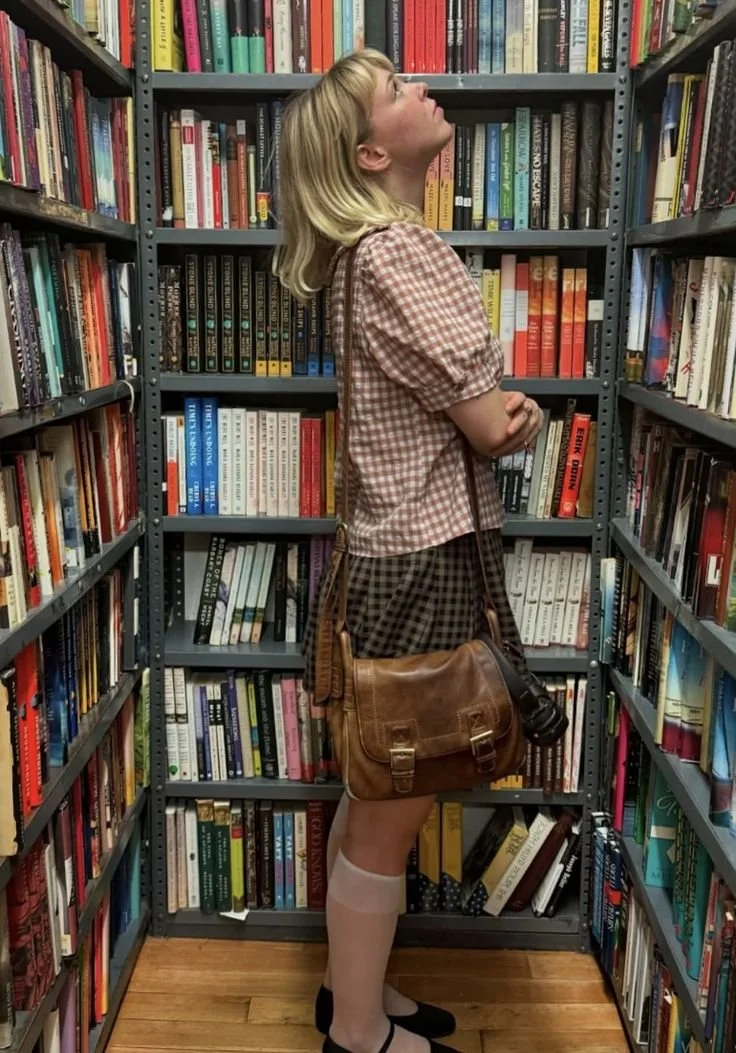
It is arguably the genre writers — those whose books find acolytes among the very demographic that literary purists despise — that have saved somnolent bookstores across the country. Despite projections made only a few years ago that Barnes & Noble would go the way of its former rival Borders, the bookseller opened 60 stores in 2024, 2025, and plans to open 60 more in 2026. Reason stands that the same could be said about “literary influencers” who post their “hot girl books” to millions of dormant readers. Innumerable readers would have never found their favorite book were it not for an aesthetic Instagram post, or perhaps a luxury bookish event.
The books we read shape our individual identity, promote abstract thought, engender empathy, and they also help us find community, which, beyond books, is something Gen-Z is desperate for. Learning to read is a right, learning to think is a muscle, and it's one that every novel, no matter the pedigree, can help develop.