

PORTABLE ARCHITECTURE: WORKWEAR
First designed to weather the world. Later, the runway.

Original photoshoot by FAST at UCLA. Photography by Taizo Nakayama and Ji Anurakdaenthai. Creative direction by Sissi Ho. Modeling by Ashlyn Kelly, Hareta Tesfamicael, and Nicole Ershaghi. Styling by Jesus Tejeda-Leon. Production by Sydney Baek, Chyna Wong-Wui, and Sukhmani Bhangal.
Few styles rival the versatility of modern workwear. Relaxed silhouettes, muted palettes, and durable compositions of corduroy and canvas have risen as widespread staples in everyday fashion – hardly anyone owns a wardrobe without denim today. While it may lack the vibrance of Y2K or the theatricality of avant-garde, workwear excels in delivering both practicality and aesthetic; pieces can be mixed with ease, given their synergy. Weighty drapes found in jackets, for example, offer both sturdiness and textural depth that can be further enhanced through effective layering. Durability, detail, and ease: qualities that render pieces visually compelling, while still forgiving enough to last.
Clothing may reflect our self-identity, but also behaves as an adaptive shell that can help shield, protect, and complement our lives daily – like a functional second skin. Workwear was born out of this philosophy, using utility as a baseline and pushing it to an extreme. In fact, what began as a strictly utilitarian wardrobe was later reinterpreted by designers. Function became not just a pragmatic language, but a visual one. What follows is an exploration of not just where workwear originated, but how it evolved; this article maps out the roots, the reinvention, and the discourse that has positioned it as one of the most enduring and culturally relevant styles across recent decades.

Photoshoot by FAST at UCLA.
ORIGINS OF WORKWEAR
“Work” is a vague term. From the gritty labor of construction zones or the mundane filing at an office job, any job fits the category of “work”. Officecore and academia offer their own aesthetic vision of professional identity, and, strictly speaking, are also technically “workwear” in their own right. However, workwear in fashion most often references the looks worn by those in blue-collar trades, whose uniforms are engineered around strenuous physical demand.
Because every fabric chosen and stitch made affects how garments perform on the body, real workwear is designed for efficiency. Denim, for instance, emerged from mining culture, where workers needed pieces that were adequately tough to withstand rough labor, but also flexible to accommodate a range of motion. The fabric needed to behave like an extension of themselves: twill weaves sturdy enough to resist abrasion, yet elastic enough for crouching, hauling, and climbing. Even the color was highly intentional, since colors like deep indigo and washed blue were convenient for concealing grime accumulated over long shifts.

American miners wearing Levi’s. Source: The Cut.

Photoshoot by FAST at UCLA.
Another example includes carpenter pants, the blueprint for modern cargos. The abundance of pockets running down the sides adds a touch of convenience for those who regularly find themselves needing a place to put their keys. Those pockets were a necessity for those who worked in them – ruler pockets, hammer loops, and double-knee panels accessibly sewn into the fabric of their pants. As such, many parts of the average workwear garment were functional constructs hung onto the human body. Each part supported the rhythms of everyday tasks, so the clever compartmentalization of a carpenter’s pants was an integral element to their uniform, much like the skeleton of a building.
Workwear, in many ways, bore more semblance to architecture than fashion; before style even factored in, materials were selected not for looks, but durability. For example, canvas, while heavy, has an excellent capacity to endure friction, much like the masonry that protects a building from erosion. Gore-Tex, developed decades later, combines both ventilation and insulation by keeping out moisture and expelling heat. Even copper rivets in jeans were a significant detail introduced by Levi Strauss and Jacob Davis, the metal reinforcing stress points in the pants. Since miners often carried heavy tools, this dealt with the problem of their pockets constantly tearing. The purpose of textile technology was to fortify the worker, and this idea once ruled all aspects of workwear design.
EVOLUTION, DECADE TO DECADE

Photoshoot by FAST at UCLA.
The appeal of functional, stylized clothing was, expectantly, quick to spread. As workwear left the job site and soon entered alternative subcultures and runways, its audience also drifted dramatically.
In the ‘70s and ‘80s, workwear first found itself embedded in countercultural style. Skate and punk scenes gravitated toward brands like Dickies and Red Kap not just for their affordability, but for durability and symbolic associations. Since workwear hadn’t yet been commercialized and its materials were built to survive abrasion, it naturally found a home amongst teens that spent their days scraping concrete, as well as those who wanted to show their alignment with the working class.
The rise of hip-hop also pushed workwear into the limelight, ushering in well-known labels like Carhartt and Ben Davis during a period of increasing class visibility. The bold, dramatic silhouettes of oversized jackets with extra-large pants offered a fresh, magnetic look. Thus, in many ways, workwear was introduced to the palates of the greater public, solidifying itself as a marker of community, identity, and grit.
By the 90s, fashion houses began to draw from the blueprint of workwear. This time, they went beyond reusing and recycling the designs that people had been wearing for decades, but invented new garments that drew inspiration from the philosophy of functionality itself. As high fashion started to reinterpret the look of workwear entirely, they built on a rising perception that industrial garments could be both accessories and tools; this wave of interest not only launched workwear into a new level of mainstream, but later induced profound transformative effects on the production of workwear entirely.

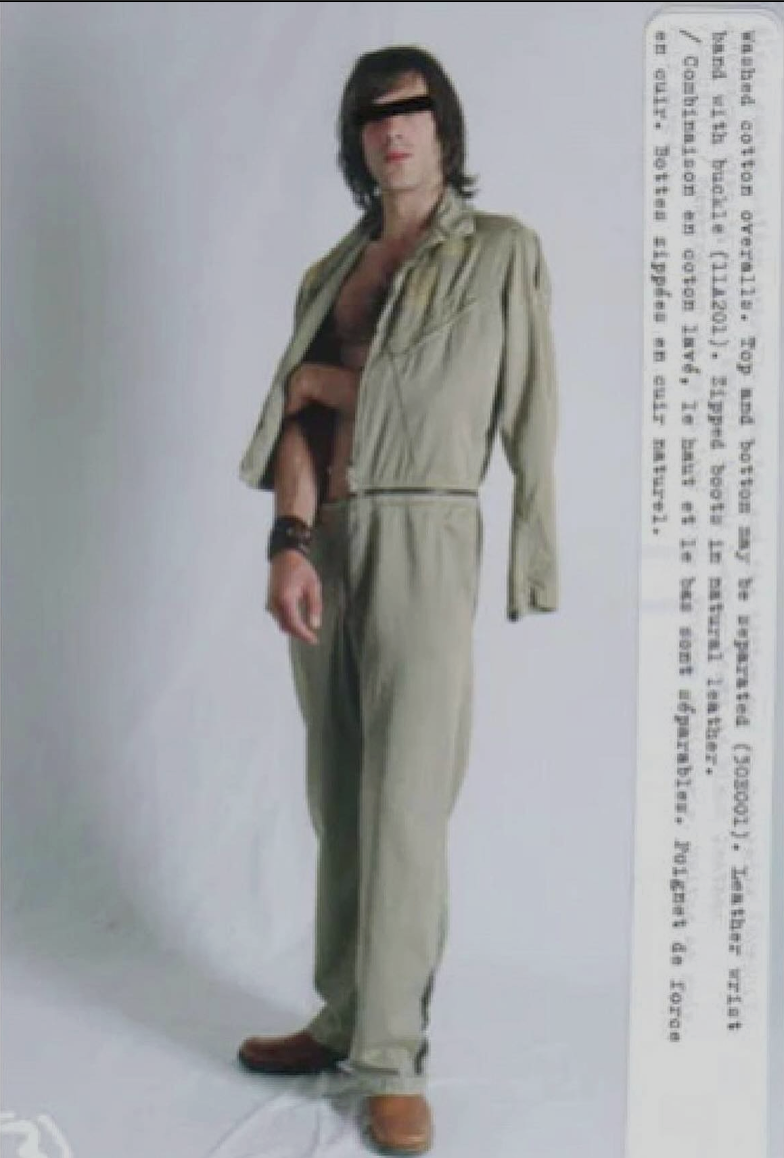
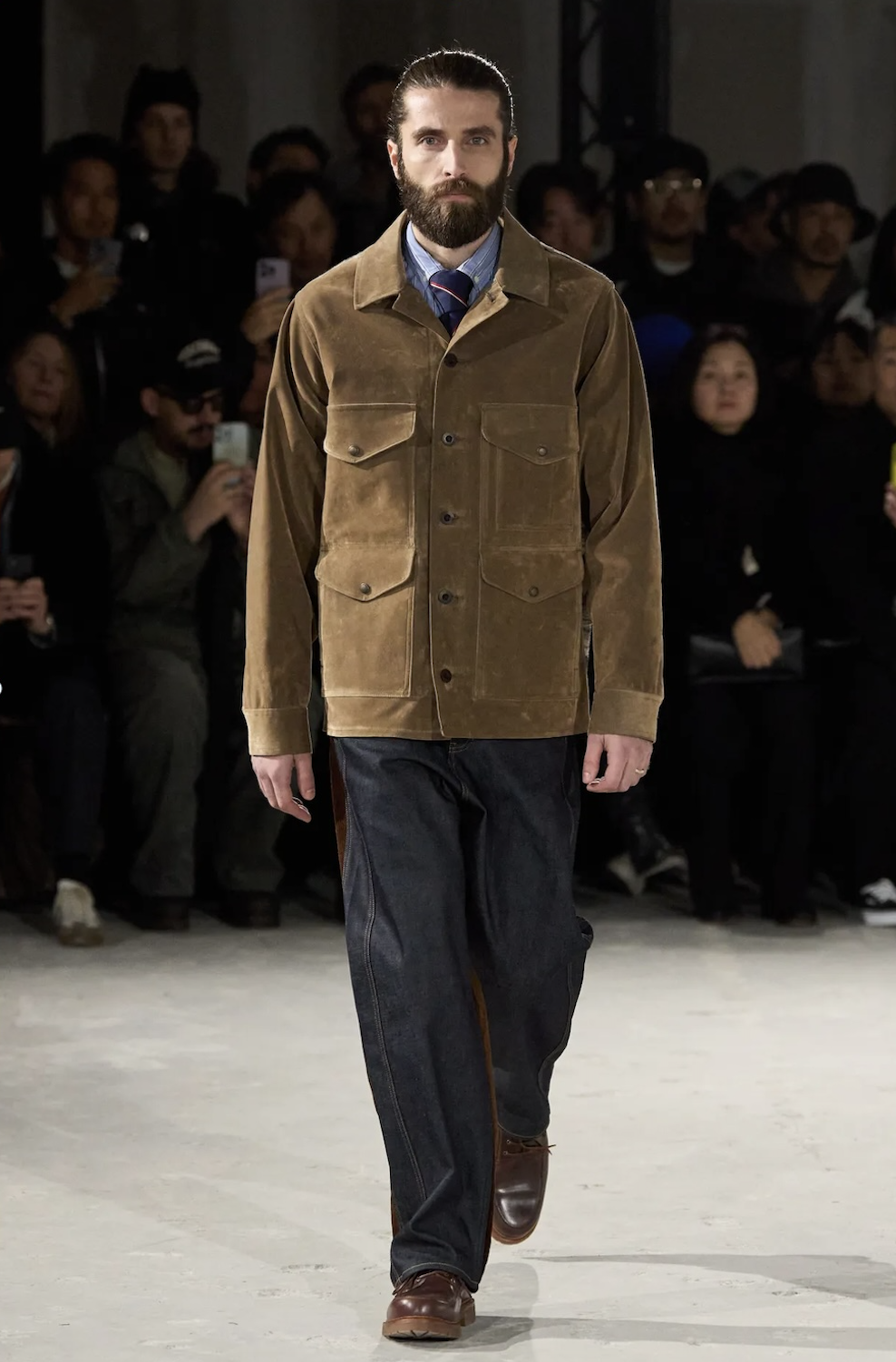
Runway looks from Helmut Lang, Maison Margiela, and Junya Watanabe demonstrating the rising incorporation of workwear elements. Source: Johannes Reponen (left), firsttimesworldwide (center), Vogue (right).
Helmut Lang was one of the earliest to turn municipal uniforms into a line of luxury minimalism. Spring-Summer 1998 incorporated technical gear like reflective tape, EMT-inspired nylon, and tactical vests to stringent, tailored silhouettes. Maison Margiela leaned further into the construction of workwear, producing multiple collections that not only reworked old garments like overalls and boiler suits, but also highlighted the architecture buried inside the fabric. They experimented with highlighting features like seams, rivets, and thermal quilting in ways that credited innovation. In the 2000’s Junya Watanabe drew similar inspiration, focusing more on multi-pocketed garments and paneled construction.
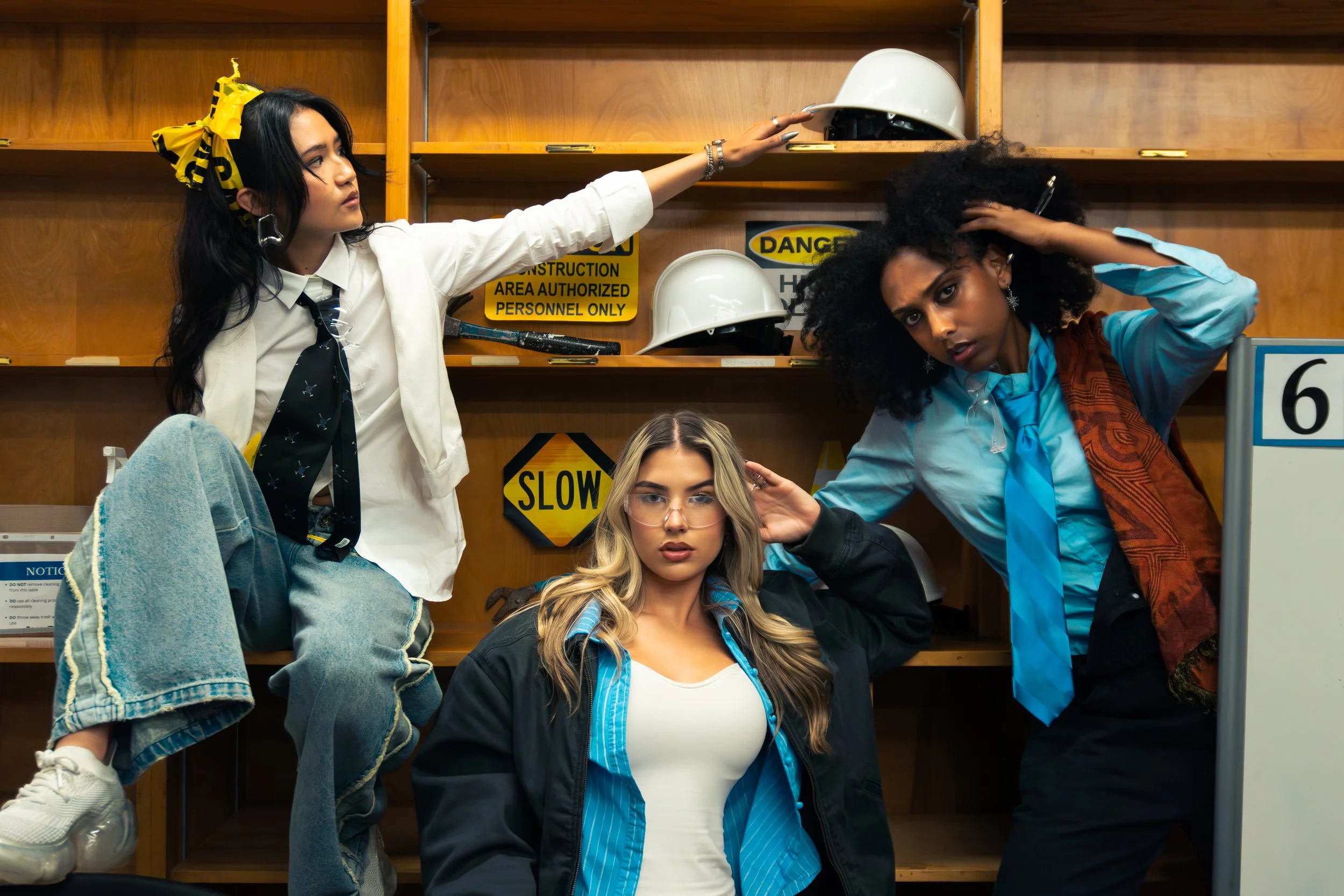
Original photoshoot by FAST at UCLA.
When curating looks for runways, designers no longer made practical considerations their priority. They framed workwear as an aesthetic and the uniform of labor as an artistic medium; labels introducing the notion of function as fashion would, over the years, help redefine workwear as an accessory. While many had no professional need for stiff, weighty coats or twelve-pocket trousers, they grew invested in the look – this was the beginning of a massive market for not traditional workwear, but workwear-inspired clothes.
THE PRESENT: DIALOGUE
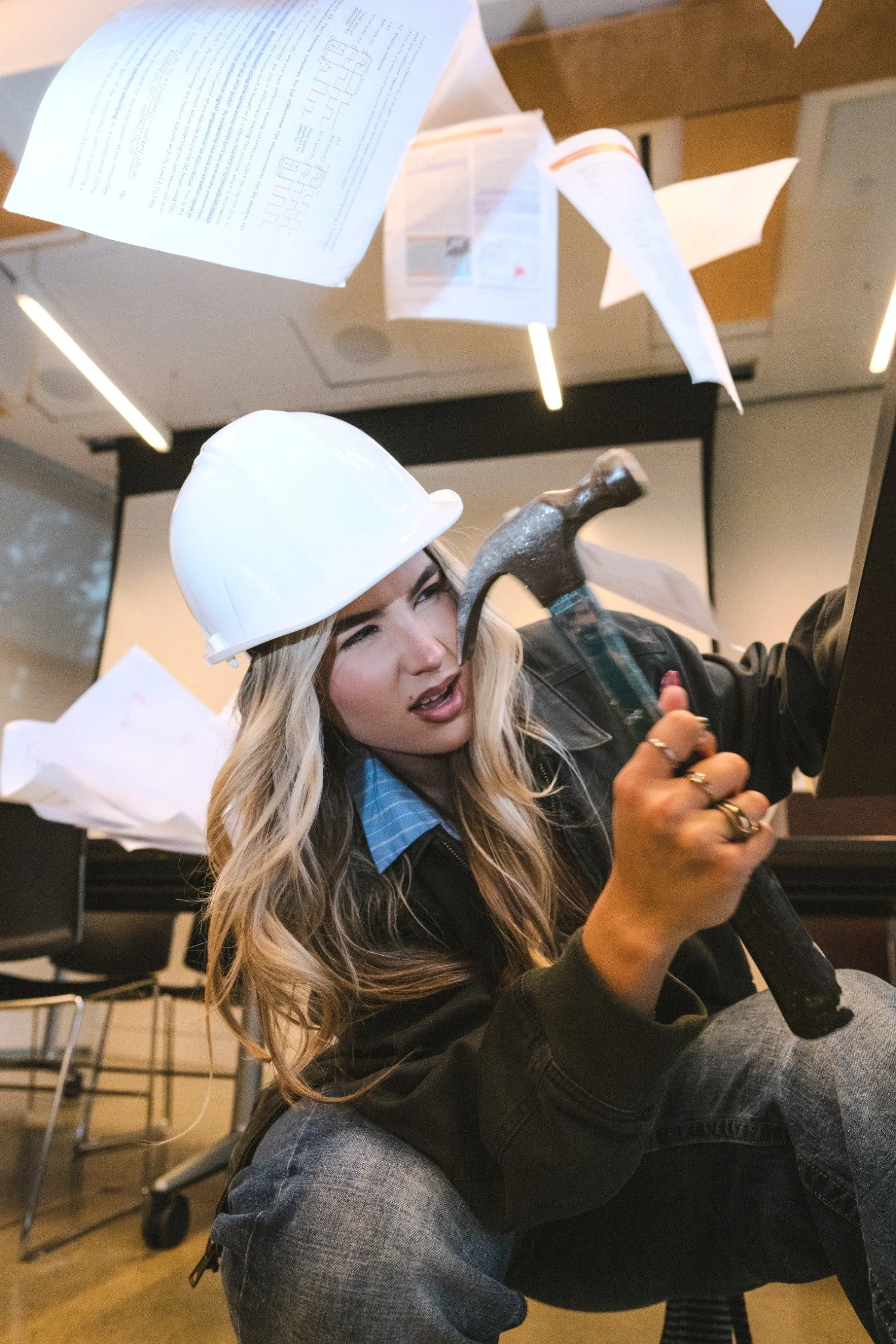
Photoshoot by FAST at UCLA.
As looks proliferated across audiences removed from blue-collar trades, legacy labels started to rework products in order to meet new demands. Carhartt’s original double-front pants are one example of a garment that underwent a major rework over the years; previously made with 12-ounce heavy duck canvas and reinforcements for tool work, Carhartt introduced a new version made with light fabrics and pastel colorways. The only element consistent with the old design were the pockets, kept for visual effect. This highlights the direction that Carhartt took its brand in response to a broadening consumer base, leaning into its evolving status as a fashion brand. This identity vastly differs from its identity years back, when they produced “real” workwear: garments engineered for job sites, not street style.
The design of workwear remains governed by the function-first, architectural logic that shaped its early construction – only in reverse. If utility and protection are no longer priorities for workwear’s audience, wouldn’t the most practical evolution be to cut down entirely? Pieces that once boasted longevity at an affordable price point have long since been phased out in favor of more stylish, but short-lived garments. The drop in quality is a noticeable effect in a lot of clothing; Carhartt jackets were once near-indestructible, and Doc Martens or vintage Levi’s 501s had lifespans over decades. Items made in the last 20 years by any of these brands no longer have the same guarantee. Contemporary workwear calls into question whether pieces still champion the working-class ethos and commitment to sustainability they did 40 years ago, or the legacy’s been erased.
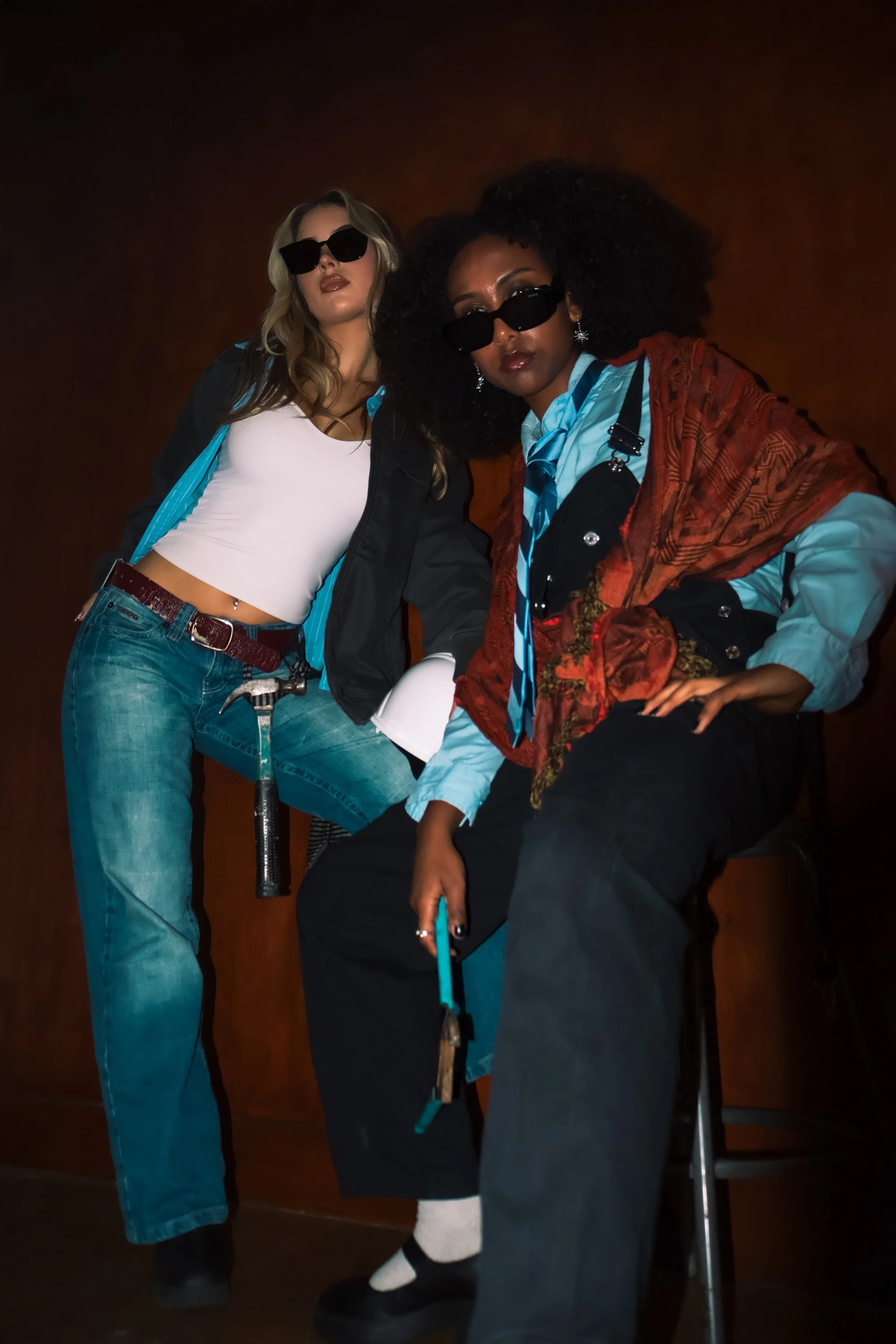
Photoshoot by FAST at UCLA.
A lingering doubt is whether modern workwear deserves to be called “workwear” at all, as the style is inseparable from class identity. Silhouettes belonging to dockworkers, miners, and carpenters that testified to the difficult and dangerous conditions of their work have now been repackaged for audiences with little knowledge of their roots. By stripping workwear of its sociopolitical context, there exists a jarring truth that the uniform that once served the working class now profits the corporations that exploit them.
Still, consumer consciousness is constantly growing. The popularity of thrifting and upcycling is important because quality work garments from the past can continue to be worn and loved today. Resisting fast fashion is a choice, and one that resonates with class-conscious sustainability. Ultimately, fashion itself remains up to interpretation – for those invested solely in the facet of visual self-expression, contemporary workwear may just be a look at their disposal. For others, clothing may be no more than fabric and protection, echoing the sentiments of workwear itself.
The modernization of workwear thus prompts an uneasy question: when is dress political, and when do we pretend it isn’t? Consumers and designers must confront whether they’re preserving a lineage, or stripping it for parts; how fashion is framed determines whether something remains an aesthetic, a history, or something more complex in between.